


Chronic oedema/lymphoedema: under-recognised and under-treated
- PMID: 24618210
- PMCID: PMC7950664
- DOI: 10.1111/iwj.12224
Chronic oedema/lymphoedema: under-recognised and under-treated
Abstract
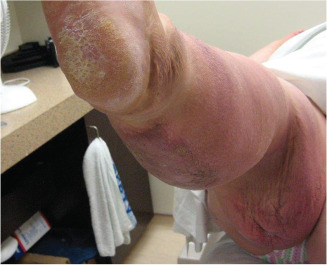
Even though it is estimated that at least 300 000 people in Canada may be affected by chronic oedema/lymphoedema, recognition of the seriousness of this chronic disease in health care is scarce. Lymphoedema affects up to 70% of breast and prostate cancer patients, substantially increasing their postoperative medical costs. Adding to this problem are the escalating rates of morbid obesity across North America and the fact that 80% of these individuals are thought to suffer with an element of lymphoedema. The costs related to these patient populations and their consumption of health care resources are alarming. Untreated chronic oedema/lymphoedema is progressive and leads to infection, disfigurement, disability and in some cases even death. Thus, prognosis for the patient is far worse and treatment is more costly when the disease is not identified and treated in the earlier stages. Although the number of individuals coping with chronic oedema/lymphoedema continues to increase, the disparity between diagnosis, treatment and funding across Canada endures. The reasons for this include a lack of public awareness of the condition, insufficient education and knowledge among health care providers regarding aetiology and management and limited financial coverage to support appropriate methods and materials.
Keywords: Chronic oedema; Compression; Erysipelas; Lymphoedema; Venous insufficiency.
© 2014 The Authors. International Wound Journal © 2014 Medicalhelplines.com Inc and John Wiley & Sons Ltd.
References
-
- The International Lymphoedema Framework . Best practice for the management of lymphoedema – 2nd edn. Compression therapy: a position document compression bandaging, 2012. http://www.lympho.org/mod_turbolead/upload//file/Resources/Compression%2... [accessed on 22 October 2012]
-
- The Canadian Lymphedema Framework . Improving lymphedema education, research and management, 2010. http://www.bclymph.org/Resources/Documents/CLF;%20Education,%20Research,... [accessed on 22 October 2012]
-
- Stout NL, Weiss R, Feldman JL, Stewart BR, Armer JM, Cormier JN, Shih Y‐CT. A systematic review of care delivery models and economic analyses in lymphedema: health policy impact (2004–2011). Lymphology 2013;46:27–41. - PubMed
-
- McLaughlin SA. Lymphedema: separating fact from fiction. Oncology 2012;26:242–9. - PubMed
-
- Ya‐Chen TS, Ying X, Cormier JN, Giordano S, Ridner SH, Buchholz TA, Perkins GH, Elting LS. Incidence, treatment costs, and complications of lymphedema after breast cancer among women of working age: a 2‐year follow‐up study. J Clin Oncol 2009;27:2007–14. - PubMed
Publication types
MeSH terms
LinkOut - more resources
Full Text Sources
Other Literature Sources
Medical
