Review
. 2014 Jun;24(6):377-86.
doi: 10.1016/j.tcb.2014.01.002. Epub 2014 Mar 4.

Mechanisms of functional promiscuity by HP1 proteins

Affiliations
Review

Mechanisms of functional promiscuity by HP1 proteins

Daniele Canzio et al. Trends Cell Biol. 2014 Jun.

Abstract

Heterochromatin protein 1 (HP1) proteins were originally identified as critical components in heterochromatin-mediated gene silencing and are now recognized to play essential roles in several other processes including gene activation. Several eukaryotes possess more than one HP1 paralog. Despite high sequence conservation, the HP1 paralogs achieve diverse functions. Further, in many cases, the same HP1 paralog is implicated in multiple functions. Recent biochemical studies have revealed interesting paralog-specific biophysical differences and unanticipated conformational versatility in HP1 proteins that may account for this functional promiscuity. Here we review these findings and describe a molecular framework that aims to link the conformational flexibility of HP1 proteins observed in vitro with their functional promiscuity observed in vivo.

Keywords: HP1; chromatin; conformational flexibility; functional versatility.


Figures

Figure 1
Figure 1. Domain map and sequence identity of human and fission yeast HP1 proteins
a. Top: Domain map of human HP1α, HP1β, HP1γ and fission yeast Swi6. Bottom: Percentage sequence identity relative to human HP1α. b. Top: Domain map of fission yeast Swi6 and Chp2. Bottom: Percentage sequence identity relative to Swi6. c. Cartoon depicting the domain architecture of HP1 proteins. For a, b and c, light green indicates the N-terminal extension (NTE), yellow the chromodomain (CD), brown the hinge (H) region, blue the chromoshadow domain (CSD) and light red the C-terminal extension (CTE), respectively. For c, only the CD, the H and the CSD are shown for clarity. Sequence identity in a and b was calculated using the Needleman-Wunsch alignment method.
Figure 2
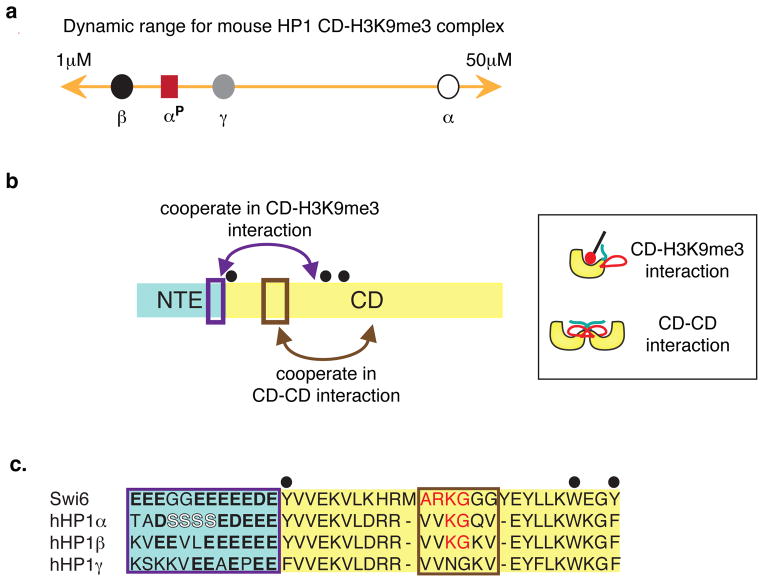
Figure 2. Mechanisms controlling the functions of the chromodomain (CD)
a. Dynamic range of dissociation constants for binding of an H3K9me3 tail peptide to CDs from mouse HP1α (white circle, Kd=35 μM), HP1β (black circle, Kd=5.8 μM), HP1γ (grey circle, Kd=12 μM) and phosphorylated HP1α (red square, Kd=8.3 μM) as measured 67. b. NTE is in light green and the CD in yellow. Left panel: Diagram indicates cooperation between NTE region (purple box) and the CD in mediating CD-H3K9me3 tail interactions and cooperation between the histone mimic loop (brown box) and the aromatic cage (black dots) in mediating CD-CD interactions. Right panel: Cartoons indicating the two types of CD mediated interactions observed in the context of Swi6. The ARK loop in the CD of Swi6 is in red. The H3 tail is in black with the H3K9me3 mark is shown as a red circle. c. Sequence alignment between Swi6, hHP1α, hHP1β, hHP1γ indicates the conservation and divergence of the key residues that mediate the CD-H3K9me3 tail and CD-CD interactions. Interactions between the aromatic cage and H3K9me3 mark are conserved across all HP1 isoforms. The interaction between the NTE and the H3 tail has been shown for Swi6 and HP1α. Interaction between the ARK loop and the aromatic cage has been shown for Swi6. Color-coding is the same as the left panel of 2b. Negatively charged residues regulating the CD-H3K9me3 tail interactions in Swi6 and hHP1α are in bold. Phosphorylatable serines in hHP1α regulating its CD-H3K9me3 tail interaction are in white. The loop residues conserved with Swi6 are in red.
Figure 3
Figure 3. Mechanisms controlling the functions of the chromoshadow (CSD)
a. Structure of the CSD domain of mouse HP1β (blue) in complex with the CAF (PXVXL) peptide (red), constructed using PDB file 1S4Z [Thiru et al. EMBO J.23, 489–99 (2004)] . The numbering of the PXVXL-containing ligand is relative to the central valine (V) and the +5, +6, −6 and −7 residues are indicated with red circles. The residues in the CSD dimer that specifically interact with the different positions in the PXVXL peptide are shown as green and grey circles. For clarity, the CSD residues that interact with position 0 of a PXVXL peptide are shown only on one of the two dimers as yellow circles. b. Cartoon depicting how the CSD domain of human HP1α, β and γ differentially recognizes the PGTVAL motif on histone H3 and the phosphorylation of H3Y41. For clarity, only one copy of the PGTVAL sequence on the nucleosome is shown. c. Dynamic range of CSD-CSD dimerization constants measured for human HP1β (black circle), Swi6 (black circle) and dHP1a (white circle). d. Diagram indicating functional and structural cooperation between the CTE region (brown box) and the CSD of HP1 proteins in mediating CSD-CSD and CSD-ligand interactions. The region of CSD containing phosphorylatable serines in dHP1a (purple box) regulates the CSD-CSD dimerization and CSD-ligand interaction. The sequence of this region is compared with that in human HP1 proteins below. e. Cartoon depicting how, in Swi6, the CD can contribute to strengthening the dimerization of the full-length protein. The CD-CD interaction shown here is the one shown in figure 2b (inset box) and is mediated by the ARK loop in Swi6.
Figure 4
Figure 4. Models for functional versatility of HP1 on chromatin
a. Cartoon depicting how different HP1 conformations can associate with nucleosomes. The spreading competent and spreading limiting conformations are based on recent findings with Swi6. b. Cartoon depicting how different conformations of HP1 on nucleosomes can recruit different protein partners and itself. The white, brown and green shapes refer to possible ligands of HP1 proteins bound to chromatin. The white shape is a CSD ligand, the brown shape is a putative interactor with the CD loop, and the green shape is a putative capping protein that stabilizes HP1 in a closed state. c. Cartoon depicting different possible stoichiometries of HP1 molecules on a nucleosome. The nucleosome depicted here contains a histone octamer (grey), DNA (black) and an H3K9me3 mark (red). Only the CD (yellow), the hinge region (black line), and the CSD (blue) of HP1 are shown for clarity. For a, and b, the depicted CD-CD interaction is mediated by the CD-ARK loop recently found to occur in Swi6 and described in Figure 2B. For clarity the ARK loop is not shown here.

References

    1. Cavalli G. Chromatin as a eukaryotic template of genetic information. Curr Opin Cell Biol. 2002;14:269–278. - PubMed
    1. Cremer T, Cremer C. Chromosome territories, nuclear architecture and gene regulation in mammalian cells. Nat Rev Genet. 2001;2:292–301. - PubMed
    1. Flemming W. Beitraege zur Kenntniss der Zelle und ihrer Leb- enserscheinungen. Arch Mikroskop. 1878;16:302–436.
    1. Flemming W. Zellsubstanz, Kern und Zelltheilung. 1882.
    1. Heitz E. Das Heterochromatin der Moose, 1. Jahrb Wiss Bot. 1928;69:762–818.

Publication types

Substances