Review
. 2014 May;22(5):261-6.
doi: 10.1016/j.tim.2014.01.011. Epub 2014 Mar 5.

Functional and phylogenetic assembly of microbial communities in the human microbiome

Affiliations
Review

Functional and phylogenetic assembly of microbial communities in the human microbiome

Afrah Shafquat et al. Trends Microbiol. 2014 May.

Abstract

Microbial communities associated with the human body, that is, the human microbiome, are complex ecologies critical for normal development and health. The taxonomic and phylogenetic composition of these communities tends to significantly differ among individuals, precluding the definition of a simple, shared set of 'core' microbes. Here, we review recent evidence and ecological theory supporting the assembly of host-associated microbial communities in terms of functional traits rather than specific organisms. That is, distinct microbial species may be responsible for specific host-associated functions and phenotypes in distinct hosts. We discuss how ecological processes (selective and stochastic forces) governing the assembly of metazoan communities can be adapted to describe microbial ecologies in host-associated environments, resulting in both niche-specific and 'core' metabolic and other pathways maintained throughout the human microbiome. The extent to which phylogeny and functional traits are linked in host-associated microbes, as opposed to unlinked by mechanisms, such as lateral transfer, remains to be determined. However, the definition of these functional assembly rules within microbial communities using controlled model systems and integrative 'omics' represents a fruitful opportunity for molecular systems ecology.

Keywords: functional ecology; human microbiome; metagenomics; microbial ecology.


Figures

Figure 1
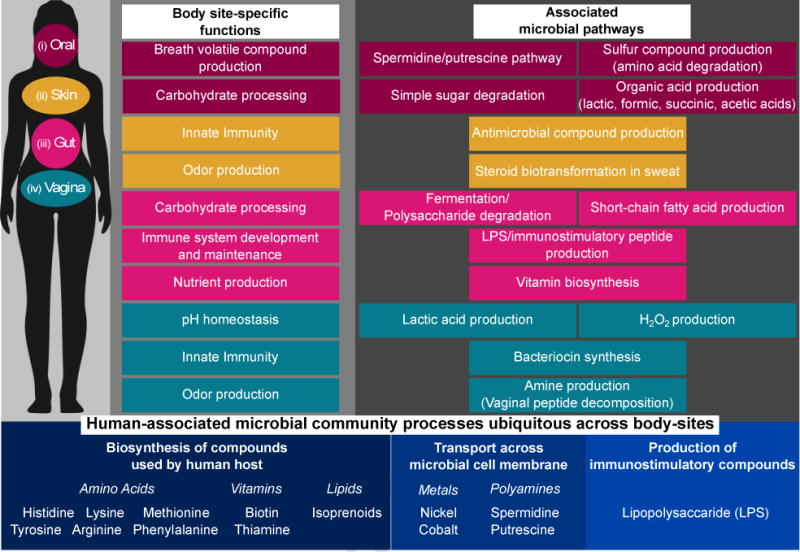
Figure 1. Core microbial processes within and across body sites of the human microbiome
Host-associated microbial communities, particularly those of the human microbiome, often appear to assemble based on collections of functional traits unique to particular niches. Examples shown here include (i) the oral cavity: breath volatile compound production through spermidine/putrescine [59] and sulfur compound pathways (e.g. hydrogen disulfide and methyl mercaptan) [62, 63], as well as energy harvest by amino acid and simple sugar degradation [64]; (ii) skin: release of antimicrobial compounds [65] and odor production by transforming steroids in the sweat [62]; (iii) gut: fermentation and degradation of polysaccharides, producing short-chain fatty acids [6, 57], nutrient (e.g. vitamin) production [6, 57], and immunostimulation [66, 67]; and (iv) vagina: pH maintenance through lactic acid production from glycogen degradation and hydrogen peroxide production [62, 68], bacteriocin synthesis, and odiferous amine production [47, 62]. In addition to niche-specific microbial activities, other host-associated microbial pathways are constituently present across body sites and not typical of non-host-associated microbial (meta)genomes [59], including biosynthesis of host-essential amino acids, cofactors and lipids, transport of metals and polyamines, and production of immunostimulatory compounds [6].
Figure 2
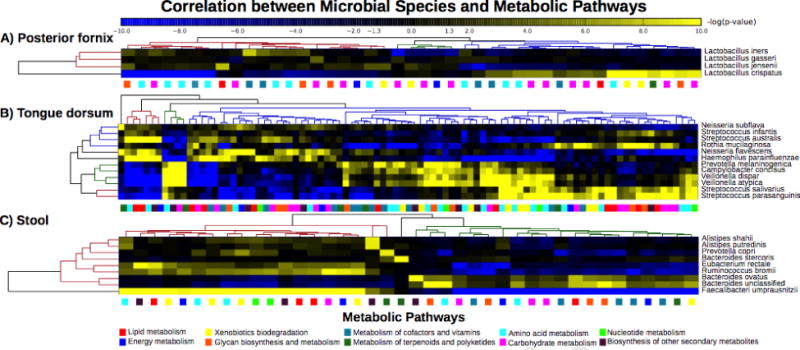
Figure 2. Associations between groups of microbial species and enriched metabolic pathways in the human microbiome
Significant Spearman correlations between microbial species in three representative body habitats and the abundances of metabolic pathways in their metagenomes. Data shown are from the Human Microbiome Project [6] for the (A) posterior fornix within the vagina, (B) tongue dorsum, and (C) gut. In each case one or more microbial species, often phylogenetically diverse, associate with the metabolic pathways enriched in each body site.

References

    1. Brestoff JR, Artis D. Commensal bacteria at the interface of host metabolism and the immune system. Nat Immunol. 2013;14:676–684. - PMC - PubMed
    1. Kamada N, et al. Control of pathogens and pathobionts by the gut microbiota. Nat Immunol. 2013;14:685–690. - PMC - PubMed
    1. Dethlefsen L, et al. An ecological and evolutionary perspective on human-microbe mutualism and disease. Nature. 2007;449:811–818. - PMC - PubMed
    1. Costello EK, et al. The application of ecological theory toward an understanding of the human microbiome. Science. 2012;336:1255–1262. - PMC - PubMed
    1. Borody TJ, Khoruts A. Fecal microbiota transplantation and emerging applications. Nat Rev Gastroenterol Hepatol. 2012;9:88–96. - PubMed

Publication types