


Putative transcriptomic biomarkers in the inflammatory cytokine pathway differentiate major depressive disorder patients from control subjects and bipolar disorder patients
- PMID: 24618828
- PMCID: PMC3949789
- DOI: 10.1371/journal.pone.0091076
Putative transcriptomic biomarkers in the inflammatory cytokine pathway differentiate major depressive disorder patients from control subjects and bipolar disorder patients
Abstract
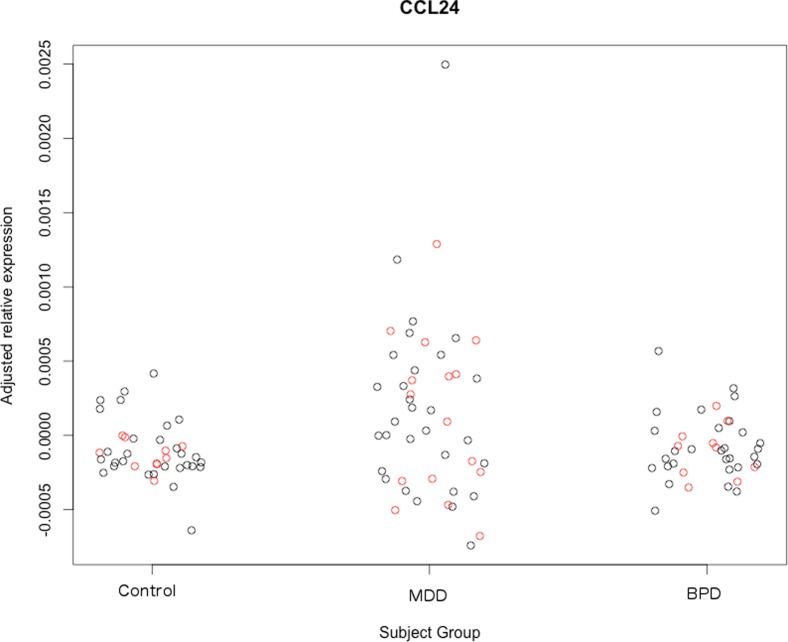
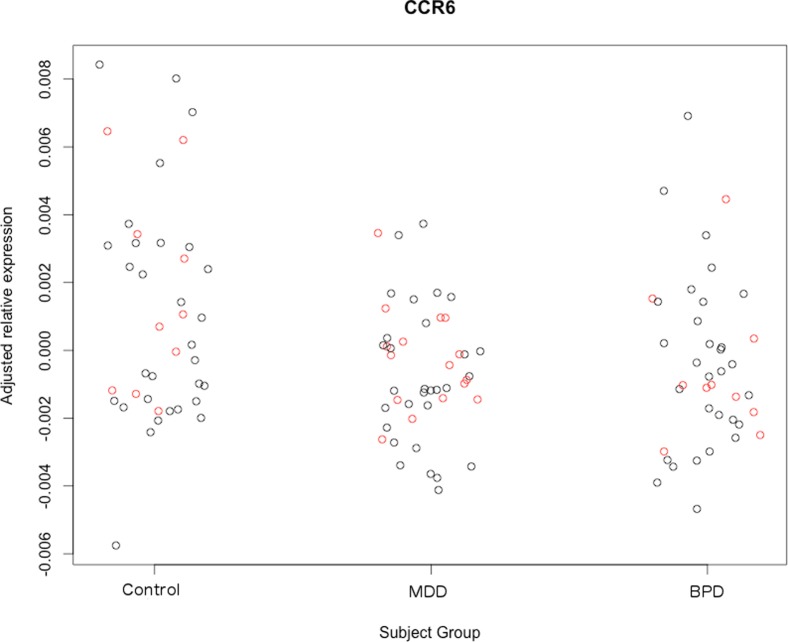
Mood disorders consist of two etiologically related, but distinctly treated illnesses, major depressive disorder (MDD) and bipolar disorder (BPD). These disorders share similarities in their clinical presentation, and thus show high rates of misdiagnosis. Recent research has revealed significant transcriptional differences within the inflammatory cytokine pathway between MDD patients and controls, and between BPD patients and controls, suggesting this pathway may possess important biomarker properties. This exploratory study attempts to identify disorder-specific transcriptional biomarkers within the inflammatory cytokine pathway, which can distinguish between control subjects, MDD patients and BPD patients. This is achieved using RNA extracted from subject blood and applying synthesized complementary DNA to quantitative PCR arrays containing primers for 87 inflammation-related genes. Initially, we use ANOVA to test for transcriptional differences in a 'discovery cohort' (total n = 90) and then we use t-tests to assess the reliability of any identified transcriptional differences in a 'validation cohort' (total n = 35). The two most robust and reliable biomarkers identified across both the discovery and validation cohort were Chemokine (C-C motif) ligand 24 (CCL24) which was consistently transcribed higher amongst MDD patients relative to controls and BPD patients, and C-C chemokine receptor type 6 (CCR6) which was consistently more lowly transcribed amongst MDD patients relative to controls. Results detailed here provide preliminary evidence that transcriptional measures within inflammation-related genes might be useful in aiding clinical diagnostic decision-making processes. Future research should aim to replicate findings detailed in this exploratory study in a larger medication-free sample and examine whether identified biomarkers could be used prospectively to aid clinical diagnosis.
Conflict of interest statement
Figures
References
-
- Jones I, Kent L, Craddock N (2002) Genetics of affective disorders. In McGuffin P, Owen MJ, Gottesman II (Eds.) Psychiatric Genetics & Genomics, 211–245. New York, Oxford University Press.
-
- Craddock N, Forty L (2006) Genetics of affective (mood) disorders. Eur J Hum Genet 14: 660–668. - PubMed
-
- Murray JL, Lopez AD (1996) The global burden of disease: A comprehensive assessment of mortality and disability from diseases, injuries and risk factors in 1990 and projected to 2020. Summary. Boston: Harvard School of Public Health, World Health Organization.
-
- McGuffin P, Rijsdijk F, Andrew M, Sham P, Katz R, et al. (2003) The heritability of bipolar affective disorder and the genetic relationship to unipolar depression. Arch Gen Psychiat 60: 497–502. - PubMed
-
- Nemeroff CB, Owens MJ (2002) Treatment of mood disorders. Nat Neurosci 5 : Suppl, 1068–70. - PubMed
Publication types
MeSH terms
Substances
LinkOut - more resources
Full Text Sources
Other Literature Sources
Medical
