


Electrical synapses and their functional interactions with chemical synapses
- PMID: 24619342
- PMCID: PMC4091911
- DOI: 10.1038/nrn3708
Electrical synapses and their functional interactions with chemical synapses
Abstract
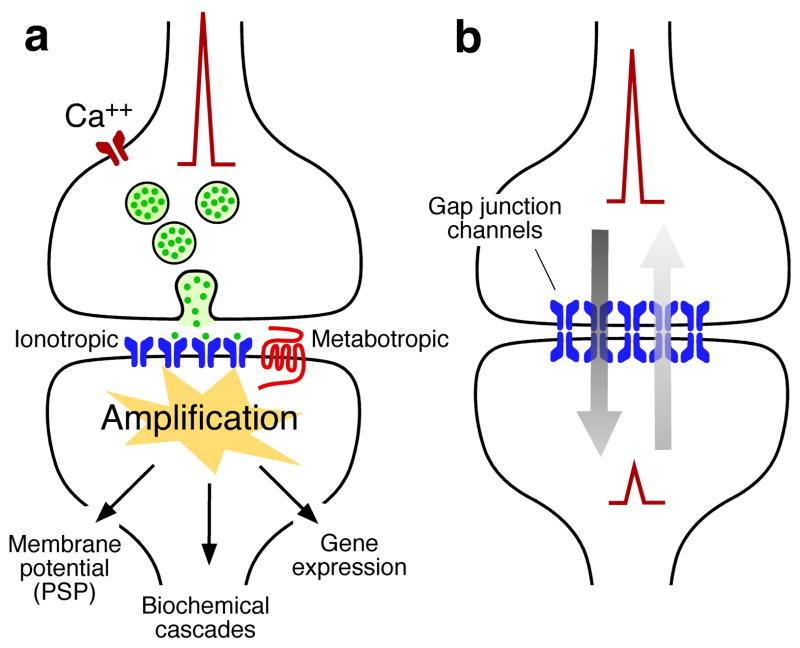
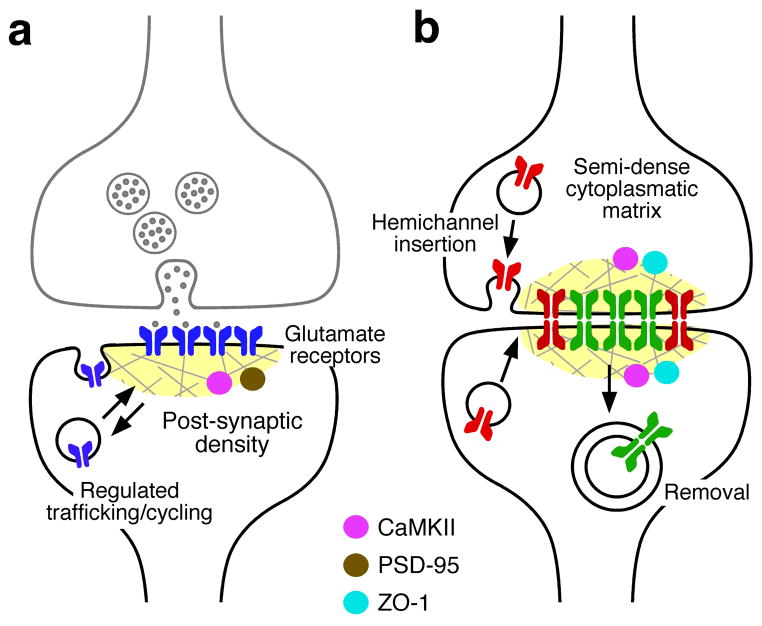
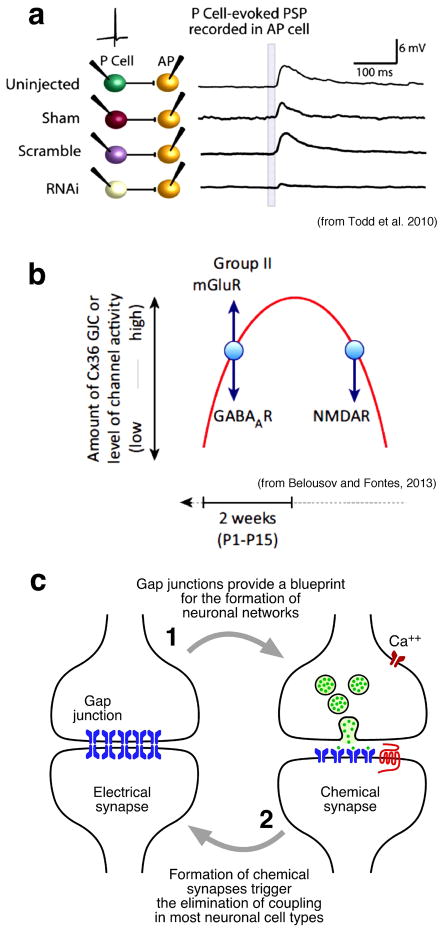
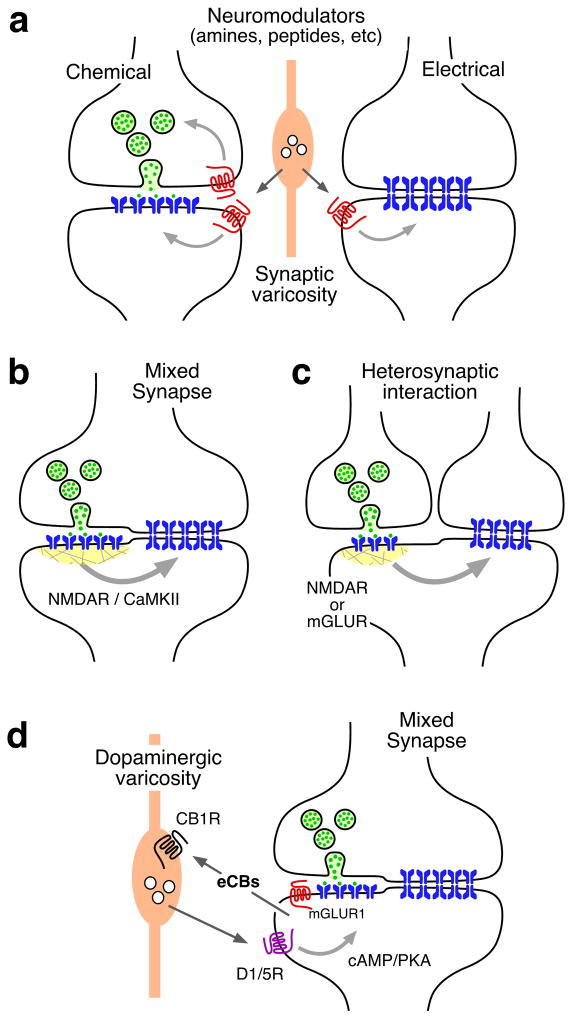
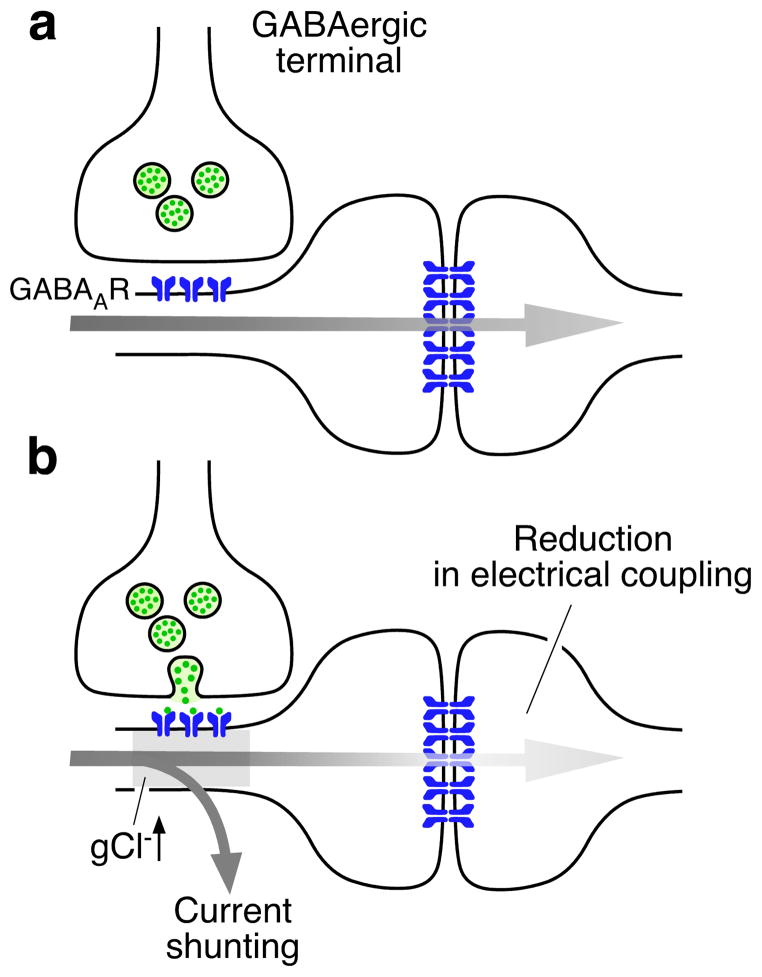
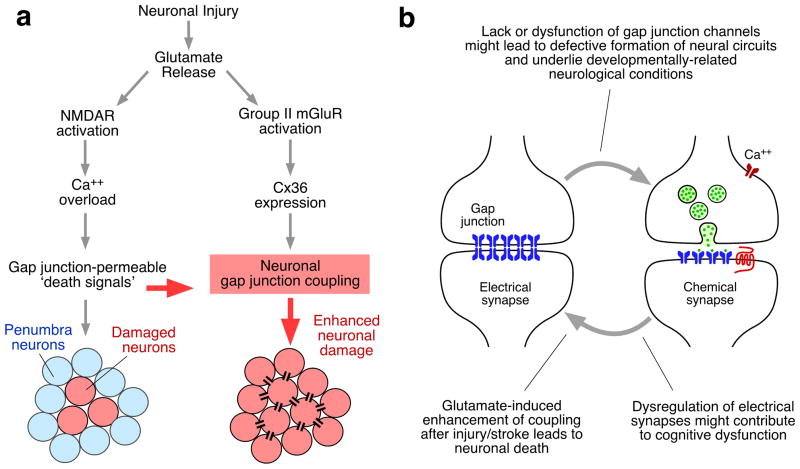
Brain function relies on the ability of neurons to communicate with each other. Interneuronal communication primarily takes place at synapses, where information from one neuron is rapidly conveyed to a second neuron. There are two main modalities of synaptic transmission: chemical and electrical. Far from functioning independently and serving unrelated functions, mounting evidence indicates that these two modalities of synaptic transmission closely interact, both during development and in the adult brain. Rather than conceiving synaptic transmission as either chemical or electrical, this article emphasizes the notion that synaptic transmission is both chemical and electrical, and that interactions between these two forms of interneuronal communication might be required for normal brain development and function.
Figures
References
-
-
The Synapse by Bernardo Sabatini Morgan Sheng | 9781936113026 | Hardcover | Barnes & Noble.
-
-
- Bennett MVL, Zukin RS. Electrical coupling and neuronal synchronization in the Mammalian brain. Neuron. 2004;41:495–511. - PubMed
-
- Zoli M, et al. The emergence of the volume transmission concept. Brain Res Brain Res Rev. 1998;26:136–47. - PubMed
-
- Faber DS, Korn H. Electrical field effects: their relevance in central neural networks. Physiol Rev. 1989;69:821–63. - PubMed
-
- Connors BW, Long MA. Electrical synapses in the mammalian brain. Annu Rev Neurosci. 2004;27:393–418. - PubMed
Publication types
MeSH terms
Grants and funding
LinkOut - more resources
Full Text Sources
Other Literature Sources
