


In vitro fertilization affects growth and glucose metabolism in a sex-specific manner in an outbred mouse model
- PMID: 24621920
- PMCID: PMC4076384
- DOI: 10.1095/biolreprod.113.113134
In vitro fertilization affects growth and glucose metabolism in a sex-specific manner in an outbred mouse model
Abstract
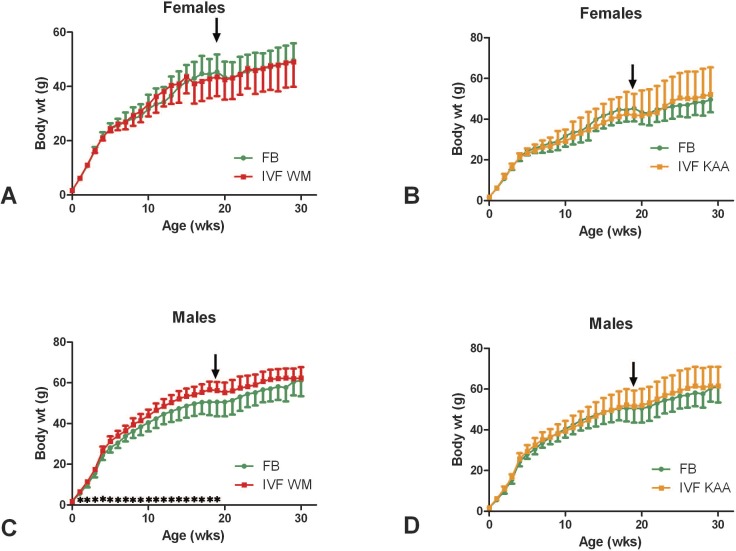
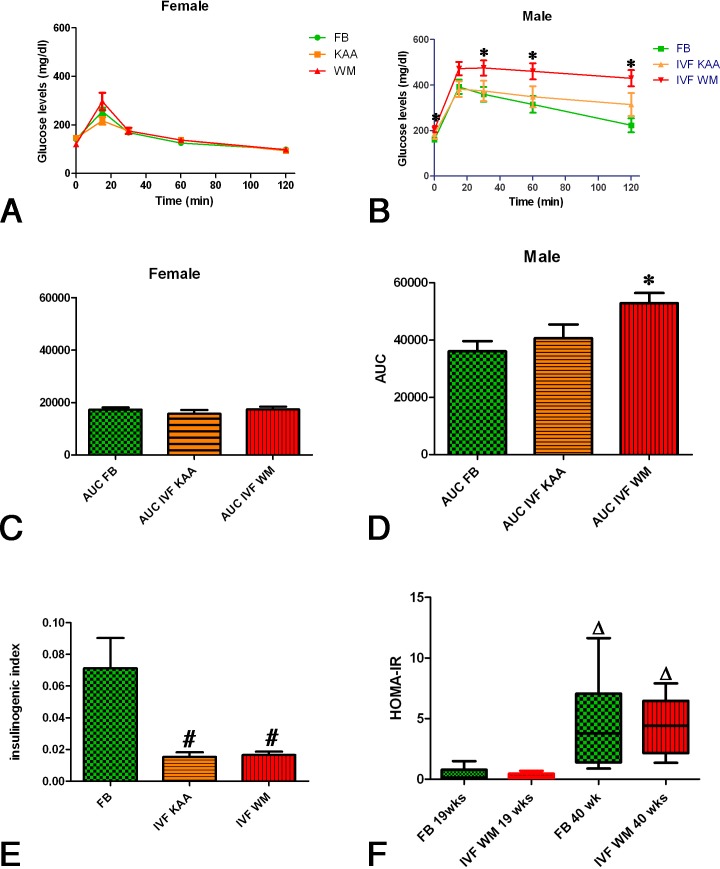
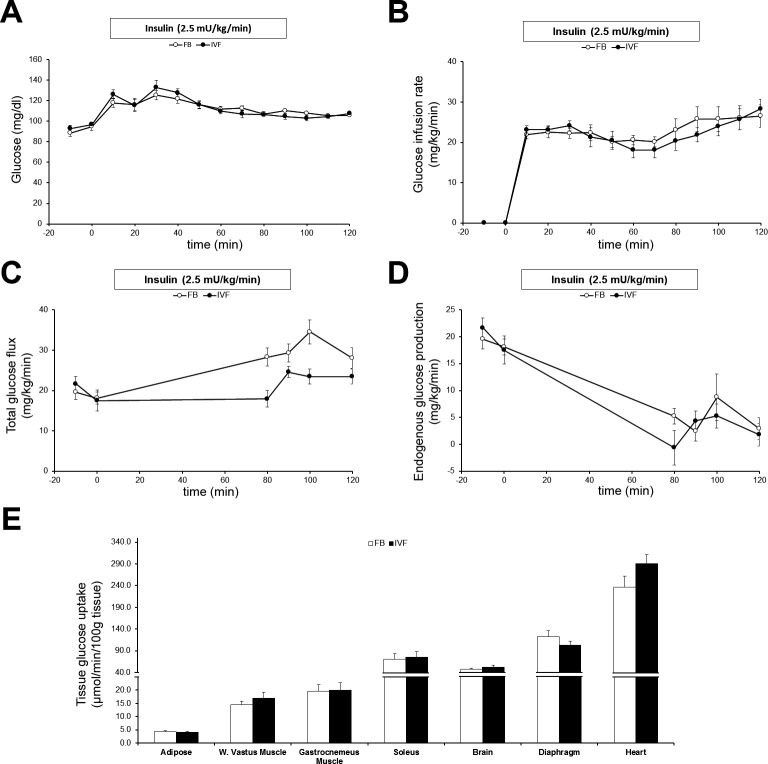
The preimplantation period is a time of reprogramming that may be vulnerable to disruption. This question has wide clinical relevance since the number of children conceived by in vitro fertilization (IVF) is rising. To examine this question, outbred mice (CF1 × B6D2F1) conceived by IVF and cultured using Whitten medium and 20% O2 (IVFWM group, less optimal) or K simplex optimized medium with amino acids and 5% O2 (IVFKAA group, more optimal and similar to conditions used in human IVF) were studied postnatally. We found that flushed blastocysts transferred to recipient mice provided the best control group (FB group), as this accounted for the effects of superovulation, embryo transfer, and litter size. We observed that many physiological parameters were normal. Reassuringly, IVFKAA offspring did not differ significantly from FB offspring. However, male IVFWM mice (but not females) were larger during the first 19 wk of life and exhibited glucose intolerance. Male IVFWM mice also showed enlarged left heart despite normal blood pressure. Expression of candidate imprinted genes (H19, Igf2, and Slc38a4) in multiple adult tissues did not show differences among the groups; only Slc38a4 was down-regulated following IVF (in both culture conditions) in female adipose tissue. These studies demonstrate that adult metabolism is affected by the type of conditions encountered during the preimplantation stage. Further, the postnatal growth trajectory and glucose homeostasis following ex vivo manipulation may be sexual dimorphic. Future work on the long-term effects of IVF offspring should focus on glucose metabolism and the cardiovascular system.
Keywords: ART; DOHaD; embryos.
Figures
References
-
- Painter RC, de Rooij SR, Bossuyt PM, Simmers TA, Osmond C, Barker DJ, Bleker OP, Roseboom TJ. Early onset of coronary artery disease after prenatal exposure to the Dutch famine. Am J Clin Nutr 2006; 84: 322–327. quiz 466–327. - PubMed
-
- de Rooij SR, Painter RC, Roseboom TJ, Phillips DI, Osmond C, Barker DJ, Tanck MW, Michels RP, Bossuyt PM, Bleker OP. Glucose tolerance at age 58 and the decline of glucose tolerance in comparison with age 50 in people prenatally exposed to the Dutch famine. Diabetologia 2006; 49: 637–643. - PubMed
-
- Barker DJ. Mothers, Babies and Health in Later Life. Glasgow: Churchill Livingstone; 1998.
-
- Adamson DG, Zegers-Hochschild F, Ishihara O, Sullivan E, Mansour R, Nygren KG, Banker M, Dyer S, de Mouzon J. ICMART world report: preliminary 2008 data. Hum Reprod 2012; 27(suppl 2): ii38–ii39.
Publication types
MeSH terms
Substances
Grants and funding
LinkOut - more resources
Full Text Sources
Other Literature Sources
Miscellaneous
