


Prevalence of shiga toxin producing Escherichia coli, Salmonella enterica, and Listeria monocytogenes at public access watershed sites in a California Central Coast agricultural region
- PMID: 24624367
- PMCID: PMC3940966
- DOI: 10.3389/fcimb.2014.00030
Prevalence of shiga toxin producing Escherichia coli, Salmonella enterica, and Listeria monocytogenes at public access watershed sites in a California Central Coast agricultural region
Erratum in
- Front Cell Infect Microbiol. 2014;4:58
Abstract
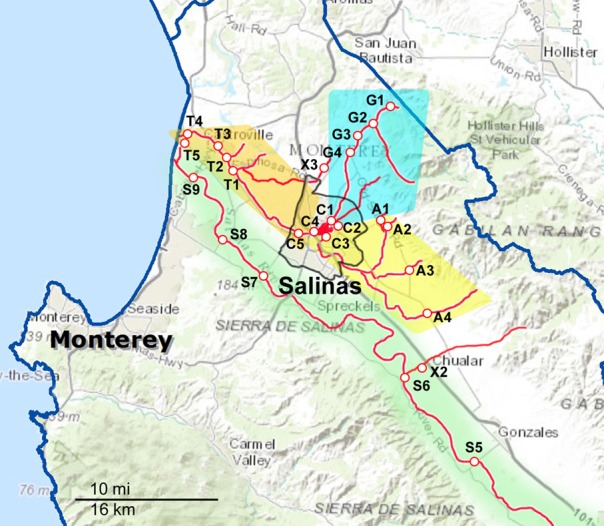
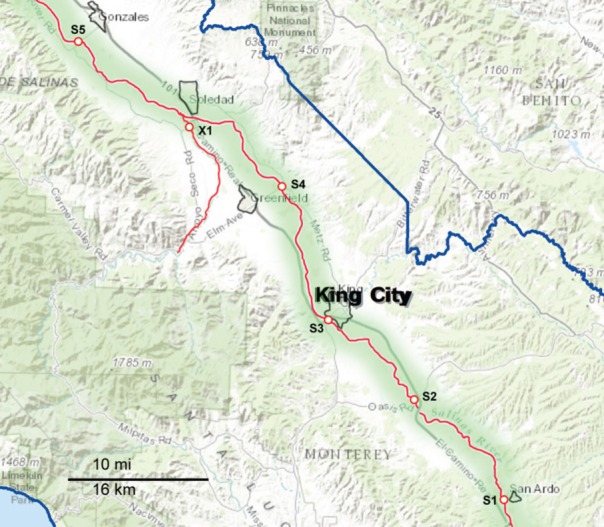
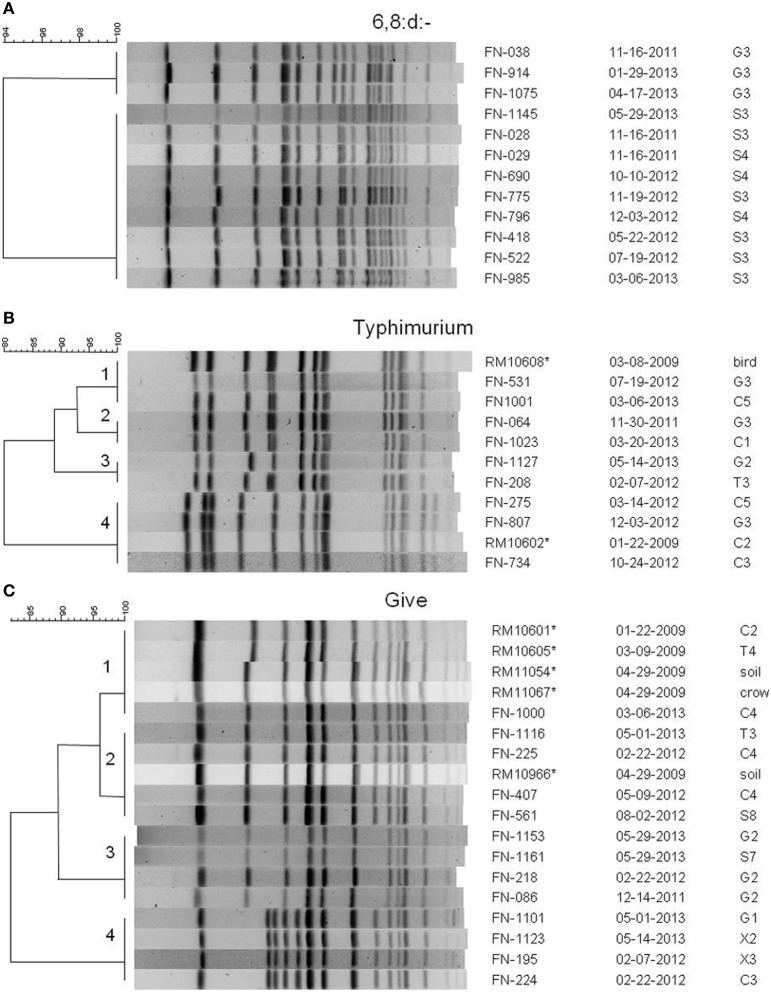
Produce contaminated with enteric pathogens is a major source of foodborne illness in the United States. Lakes, streams, rivers, and ponds were sampled with Moore swabs bi-monthly for over 2 years at 30 locations in the vicinity of a leafy green growing region on the Central California Coast and screened for Shiga toxin producing Escherichia coli (STEC), Salmonella enterica, and Listeria monocytogenes to evaluate the prevalence and persistence of pathogen subtypes. The prevalence of STEC from 1386 samples was 11%; 110 samples (8%) contained E. coli O157:H7 with the highest prevalence occurring close to cattle operations. Non-O157 STEC isolates represented major clinical O-types and 57% contained both shiga toxin types 1 and 2 and intimin. Multiple Locus Variable Number Tandem Repeat Analysis of STEC isolates indicated prevalent strains during the period of study. Notably, Salmonella was present at high levels throughout the sampling region with 65% prevalence in 1405 samples resulting in 996 isolates with slightly lower prevalence in late autumn. There were 2, 8, and 14 sites that were Salmonella-positive over 90, 80, and 70% of the time, respectively. The serotypes identified most often were 6,8:d:-, Typhimurium, and Give. Interestingly, analysis by Pulsed Field Gel Electrophoresis indicated persistence and transport of pulsotypes in the region over several years. In this original study of L. monocytogenes in the region prevalence was 43% of 1405 samples resulting in 635 individual isolates. Over 85% of the isolates belonged to serotype 4b with serotypes 1/2a, 1/2b, 3a, 4d with 4e representing the rest, and there were 12 and 2 sites that were positive over 50 and 80% of the time, respectively. Although surface water is not directly used for irrigation in this region, transport to the produce can occur by other means. This environmental survey assesses initial contamination levels toward an understanding of transport leading to produce recalls or outbreaks.
Keywords: Listeria monocytogenes; STEC O157:57; STEC non-O157; Salmonella; agriculture; leafy-vegetable production; prevalence; watersheds.
Figures
References
-
- Benjamin L., Atwill E. R., Jay-Russell M., Cooley M., Carychao D., Gorski L., et al. (2013). Occurrence of generic E. coli, E. coli O157 and Salmonella spp. in water and sediment from leafy green produce farms and streams on the Central California coast. Int. J. Food Microbiol. 165, 65–76 10.1016/j.ijfoodmicro.2013.04.003 - DOI - PubMed
Publication types
MeSH terms
LinkOut - more resources
Full Text Sources
Other Literature Sources
