


The prevalence of psychosis in epilepsy; a systematic review and meta-analysis
- PMID: 24625201
- PMCID: PMC3995617
- DOI: 10.1186/1471-244X-14-75
The prevalence of psychosis in epilepsy; a systematic review and meta-analysis
Abstract
Background: Epilepsy has long been considered to be a risk factor for psychosis. However there is a lack of consistency in findings across studies on the effect size of this risk which reflects methodological differences in studies and changing diagnostic classifications within neurology and psychiatry. The aim of this study was to assess the prevalence of psychosis in epilepsy and to estimate the risk of psychosis among individuals with epilepsy compared with controls.
Methods: A systematic review and meta-analysis was conducted of all published literature pertaining to prevalence rates of psychosis in epilepsy using electronic databases PUBMED, OVIDMEDLINE, PsychINFO and Embase from their inception until September 2010 with the following search terms: prevalence, incidence, rate, rates, psychosis, schizophrenia, schizophreniform illness, epilepsy, seizures, temporal lobe epilepsy.
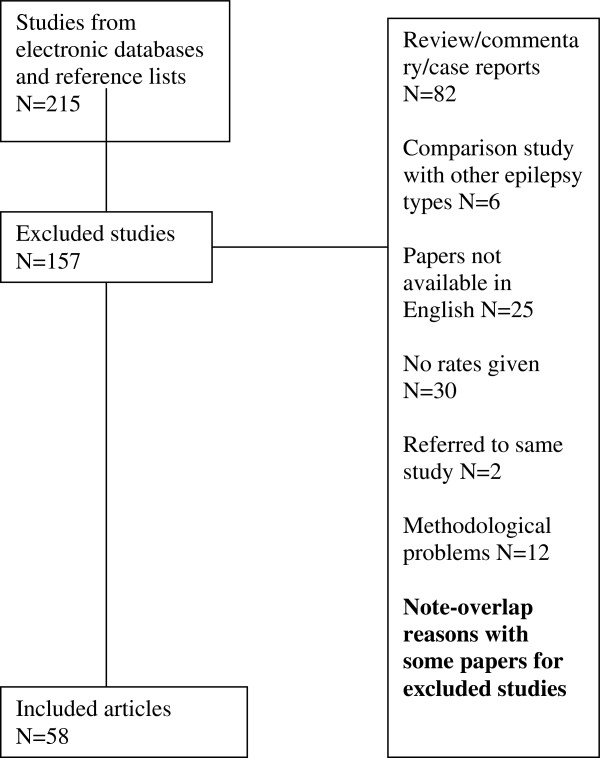
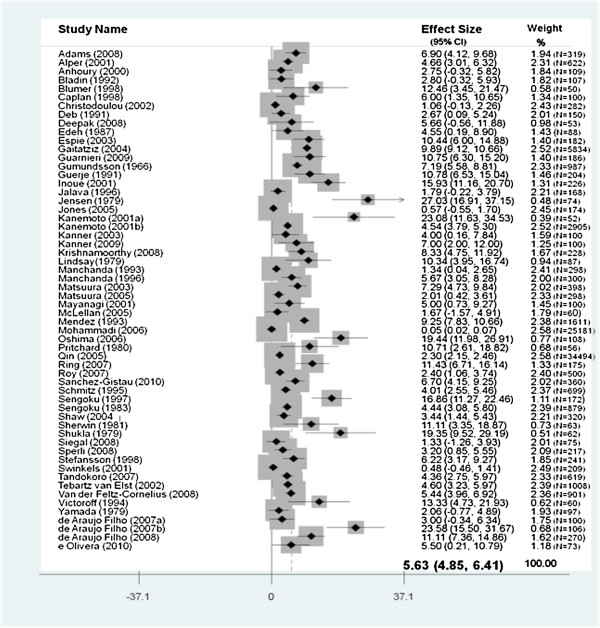
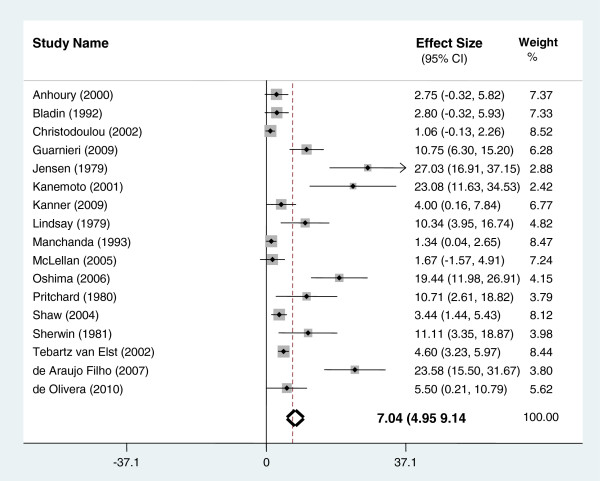
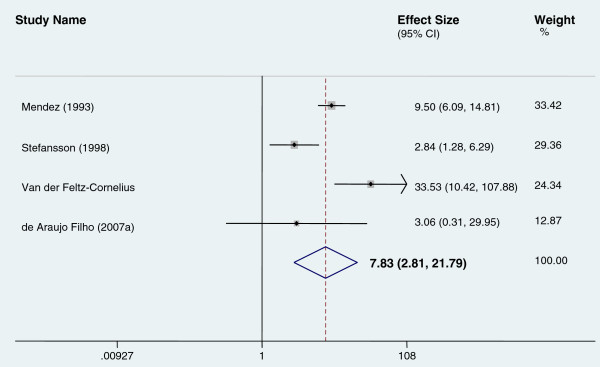
Results: The literature search and search of reference lists yielded 215 papers. Of these, 58 (27%) had data relevant to the review and 157 were excluded following a more detailed assessment. 10% of the included studies were population based studies. The pooled odds ratio for risk of psychosis among people with epilepsy compared with controls was 7.8. The pooled estimate of prevalence of psychosis in epilepsy was found to be 5.6% (95% CI: 4.8-6.4). There was a high level of heterogeneity. The prevalence of psychosis in temporal lobe epilepsy was 7% (95% CI: 4.9-9.1). The prevalence of interictal psychosis in epilepsy was 5.2% (95% CI: 3.3-7.2). The prevalence of postictal psychosis in epilepsy was 2% (95% CI: 1.2-2.8).
Conclusions: Our systematic review found that up to 6% of individuals with epilepsy have a co-morbid psychotic illness and that patients have an almost eight fold increased risk of psychosis. The prevalence rate of psychosis is higher in temporal lobe epilepsy (7%). We suggest that further investigation of this association could give clues to the aetiology of psychosis.
Figures
Comment in
-
The comorbidity of epilepsy and psychosis is an important area for continued research.Evid Based Ment Health. 2014 Aug;17(3):74. doi: 10.1136/eb-2014-101854. Epub 2014 Jul 4. Evid Based Ment Health. 2014. PMID: 24997210 No abstract available.
References
-
- Esquirol E. Des Maladies Mentales Considerees sous les Rapports Medical. J.B Balliere. 1838.
-
- Kraeplin E. Psychiatrie: Ein Lehrbuch fur Studierende und Artze. Leipzig: Barth; 1913.
Publication types
MeSH terms
LinkOut - more resources
Full Text Sources
Other Literature Sources
Medical
