


Functional comparison of human-induced pluripotent stem cell-derived mesenchymal cells and bone marrow-derived mesenchymal stromal cells from the same donor
- PMID: 24625206
- PMCID: PMC4086513
- DOI: 10.1089/scd.2013.0477
Functional comparison of human-induced pluripotent stem cell-derived mesenchymal cells and bone marrow-derived mesenchymal stromal cells from the same donor
Abstract
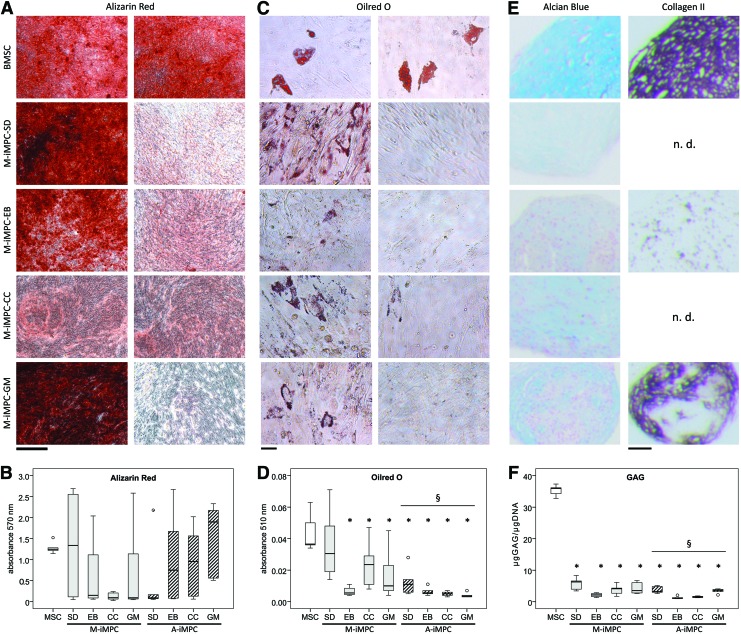
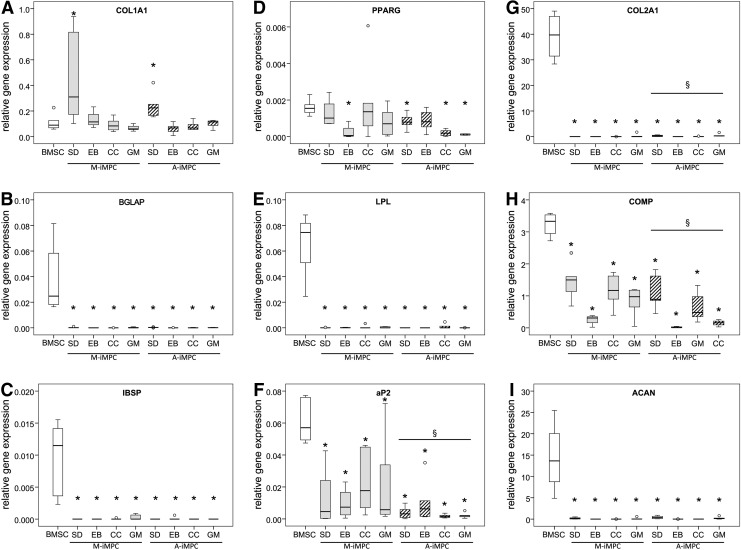
Mesenchymal stem cells (MSCs) have a high potential for therapeutic efficacy in treating diverse musculoskeletal injuries and cardiovascular diseases, and for ameliorating the severity of graft-versus-host and autoimmune diseases. While most of these clinical applications require substantial cell quantities, the number of MSCs that can be obtained initially from a single donor is limited. Reports on the derivation of MSC-like cells from pluripotent stem cells (PSCs) are, thus, of interest, as the infinite proliferative capacity of PSCs opens the possibility to generate large amounts of uniform batches of MSCs. However, characterization of such MSC-like cells is currently inadequate, especially with regard to the question of whether these cells are equivalent or identical to MSCs. In this study, we have derived MSC-like cells [induced PSC-derived MSC-like progenitor cells (iMPCs)] using four different methodologies from a newly established induced PSC line reprogrammed from human bone marrow stromal cells (BMSCs), and compared the iMPCs directly with the originating parental BMSCs. The iMPCs exhibited typical MSC/fibroblastic morphology and MSC-typical surface marker profile, and they were capable of differentiation in vitro along the osteogenic, chondrogenic, and adipogenic lineages. However, compared with the parental BMSCs, iMPCs displayed a unique expression pattern of mesenchymal and pluripotency genes and were less responsive to traditional BMSC differentiation protocols. We, therefore, conclude that iMPCs generated from PSCs via spontaneous differentiation represent a distinct population of cells which exhibit MSC-like characteristics.
Figures
References
-
- Caplan AI. and Dennis JE. (2006). Mesenchymal stem cells as trophic mediators. J Cell Biochem 98:1076–1084 - PubMed
-
- Nauta AJ. and Fibbe WE. (2007). Immunomodulatory properties of mesenchymal stromal cells. Blood 110:3499–3506 - PubMed
-
- Bruder SP, Jaiswal N. and Haynesworth SE. (1997). Growth kinetics, self-renewal, and the osteogenic potential of purified human mesenchymal stem cells during extensive subcultivation and following cryopreservation. J Cell Biochem 64:278–294 - PubMed
-
- Stolzing A, Jones E, McGonagle D. and Scutt A. (2008). Age-related changes in human bone marrow-derived mesenchymal stem cells: consequences for cell therapies. Mech Ageing Dev 129:163–173 - PubMed
Publication types
MeSH terms
Grants and funding
LinkOut - more resources
Full Text Sources
Other Literature Sources
