


Social and behavioral research in genomic sequencing: approaches from the Clinical Sequencing Exploratory Research Consortium Outcomes and Measures Working Group
- PMID: 24625446
- PMCID: PMC4163120
- DOI: 10.1038/gim.2014.26
Social and behavioral research in genomic sequencing: approaches from the Clinical Sequencing Exploratory Research Consortium Outcomes and Measures Working Group
Abstract
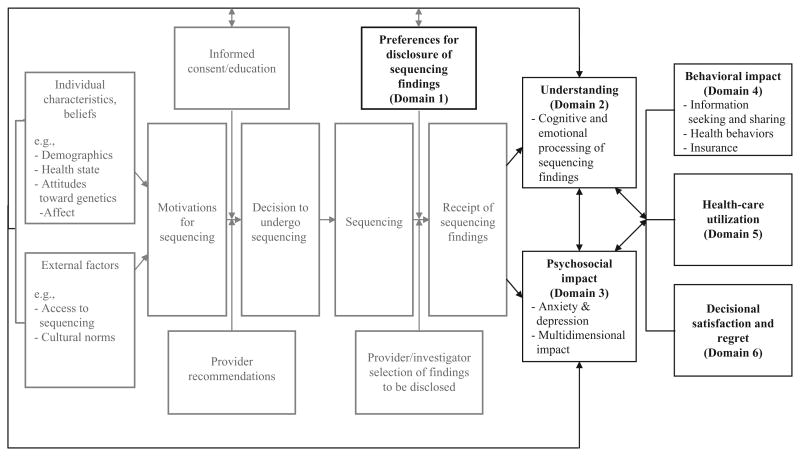
The routine use of genomic sequencing in clinical medicine has the potential to dramatically alter patient care and medical outcomes. To fully understand the psychosocial and behavioral impact of sequencing integration into clinical practice, it is imperative that we identify the factors that influence sequencing-related decision making and patient outcomes. In an effort to develop a collaborative and conceptually grounded approach to studying sequencing adoption, members of the National Human Genome Research Institute's Clinical Sequencing Exploratory Research Consortium formed the Outcomes and Measures Working Group. Here we highlight the priority areas of investigation and psychosocial and behavioral outcomes identified by the Working Group. We also review some of the anticipated challenges to measurement in social and behavioral research related to genomic sequencing; opportunities for instrument development; and the importance of qualitative, quantitative, and mixed-method approaches. This work represents the early, shared efforts of multiple research teams as we strive to understand individuals' experiences with genomic sequencing. The resulting body of knowledge will guide recommendations for the optimal use of sequencing in clinical practice.
Conflict of interest statement
Figures
References
-
- Lerman C, Shields AE. Genetic testing for cancer susceptibility: the promise and the pitfalls. Nat Rev Cancer. 2004;4:235–241. - PubMed
-
- Hagger MS, Chatzisarantis NL. Integrating the theory of planned behaviour and self-determination theory in health behaviour: a meta-analysis. Br J Health Psychol. 2009;14(Pt 2):275–302. - PubMed
Publication types
MeSH terms
Grants and funding
- Z99 HG999999/ImNIH/Intramural NIH HHS/United States
- U01 HG006546/HG/NHGRI NIH HHS/United States
- R01 HG006600/HG/NHGRI NIH HHS/United States
- 1U01HG007303/HG/NHGRI NIH HHS/United States
- 1U01HG006546/HG/NHGRI NIH HHS/United States
- R21 HG006596/HG/NHGRI NIH HHS/United States
- U01 HG006507/HG/NHGRI NIH HHS/United States
- U01 HG006485/HG/NHGRI NIH HHS/United States
- 1U01HG005211/HG/NHGRI NIH HHS/United States
- R01 HG006618/HG/NHGRI NIH HHS/United States
- 1U01HG006487/HG/NHGRI NIH HHS/United States
- R01 CA154517/CA/NCI NIH HHS/United States
- U01 HG006500/HG/NHGRI NIH HHS/United States
- 5R01HG006618/HG/NHGRI NIH HHS/United States
- 1U01HG007307/HG/NHGRI NIH HHS/United States
- 5R21HG006612/HG/NHGRI NIH HHS/United States
- 5R01HG006600/HG/NHGRI NIH HHS/United States
- U01 HG007307/HG/NHGRI NIH HHS/United States
- 5R01HG006615/HG/NHGRI NIH HHS/United States
- R21 HG006612/HG/NHGRI NIH HHS/United States
- R21 HG006613/HG/NHGRI NIH HHS/United States
- 5R21HG006596/HG/NHGRI NIH HHS/United States
- F32 HG006993/HG/NHGRI NIH HHS/United States
- 1U01HG006507/HG/NHGRI NIH HHS/United States
- 1U01HG006500/HG/NHGRI NIH HHS/United States
- U01 HG005211/HG/NHGRI NIH HHS/United States
- R01 HG006615/HG/NHGRI NIH HHS/United States
- 5R21HG006594/HG/NHGRI NIH HHS/United States
- R01 GM109743/GM/NIGMS NIH HHS/United States
- 1U01HG006485/HG/NHGRI NIH HHS/United States
- 1U01HG006492/HG/NHGRI NIH HHS/United States
- 5R21HG006613/HG/NHGRI NIH HHS/United States
- 1F32HG006993/HG/NHGRI NIH HHS/United States
- R21 HG006594/HG/NHGRI NIH HHS/United States
- U01 HG006487/HG/NHGRI NIH HHS/United States
- U01 HG006492/HG/NHGRI NIH HHS/United States
LinkOut - more resources
Full Text Sources
Other Literature Sources
Medical
