


Circulation of a Meaban-like virus in yellow-legged gulls and seabird ticks in the western Mediterranean basin
- PMID: 24625959
- PMCID: PMC3953012
- DOI: 10.1371/journal.pone.0089601
Circulation of a Meaban-like virus in yellow-legged gulls and seabird ticks in the western Mediterranean basin
Abstract
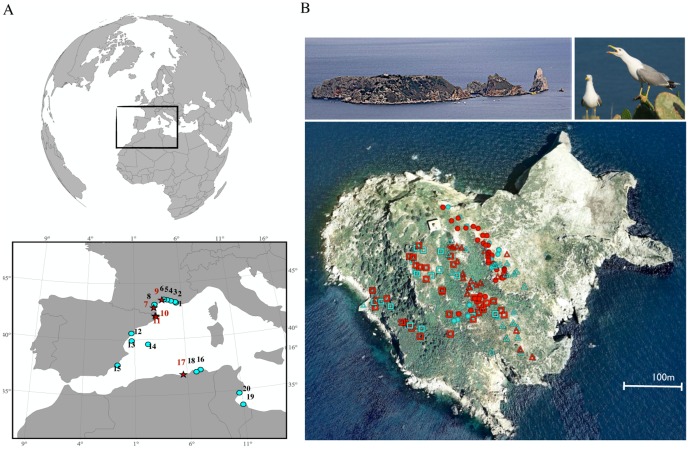
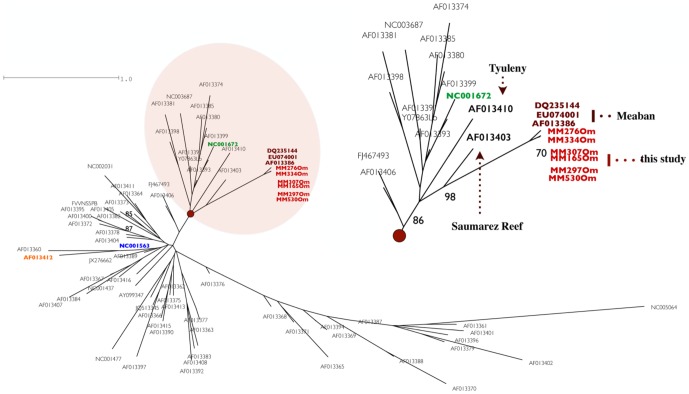
In recent years, a number of zoonotic flaviviruses have emerged worldwide, and wild birds serve as their major reservoirs. Epidemiological surveys of bird populations at various geographical scales can clarify key aspects of the eco-epidemiology of these viruses. In this study, we aimed at exploring the presence of flaviviruses in the western Mediterranean by sampling breeding populations of the yellow-legged gull (Larus michahellis), a widely distributed, anthropophilic, and abundant seabird species. For 3 years, we sampled eggs from 19 breeding colonies in Spain, France, Algeria, and Tunisia. First, ELISAs were used to determine if the eggs contained antibodies against flaviviruses. Second, neutralization assays were used to identify the specific flaviviruses present. Finally, for colonies in which ELISA-positive eggs had been found, chick serum samples and potential vectors, culicid mosquitoes and soft ticks (Ornithodoros maritimus), were collected and analyzed using serology and PCR, respectively. The prevalence of flavivirus-specific antibodies in eggs was highly spatially heterogeneous. In northeastern Spain, on the Medes Islands and in the nearby village of L'Escala, 56% of eggs had antibodies against the flavivirus envelope protein, but were negative for neutralizing antibodies against three common flaviviruses: West Nile, Usutu, and tick-borne encephalitis viruses. Furthermore, little evidence of past flavivirus exposure was obtained for the other colonies. A subset of the Ornithodoros ticks from Medes screened for flaviviral RNA tested positive for a virus whose NS5 gene was 95% similar to that of Meaban virus, a flavivirus previously isolated from ticks of Larus argentatus in western France. All ELISA-positive samples subsequently tested positive for Meaban virus neutralizing antibodies. This study shows that gulls in the western Mediterranean Basin are exposed to a tick-borne Meaban-like virus, which underscores the need of exploring the spatial and temporal distribution of this flavivirus as well as its potential pathogenicity for animals and humans.
Conflict of interest statement
Figures
References
-
- Woolhouse M, Gaunt E (2007) Ecological origins of novel human pathogens. Crit Rev Microbiol 33: 231–242. - PubMed
Publication types
MeSH terms
LinkOut - more resources
Full Text Sources
Other Literature Sources
Molecular Biology Databases
Research Materials
Miscellaneous
