


The association of diet with quality of life, disability, and relapse rate in an international sample of people with multiple sclerosis
- PMID: 24628020
- PMCID: PMC4485697
- DOI: 10.1179/1476830514Y.0000000117
The association of diet with quality of life, disability, and relapse rate in an international sample of people with multiple sclerosis
Abstract
Objectives: To explore the association between dietary factors including fat, fruit and vegetable intake, dairy and meat consumption, and health-related quality of life (HRQOL), disability and relapse rate in a large international sample of people with multiple sclerosis (MS).
Methods: Participants with MS were recruited to the study via Web 2.0 platforms and completed a comprehensive survey measuring demographic and clinical characteristics, HRQOL, disability, relapse rate, and the Diet Habits Questionnaire (DHQ).
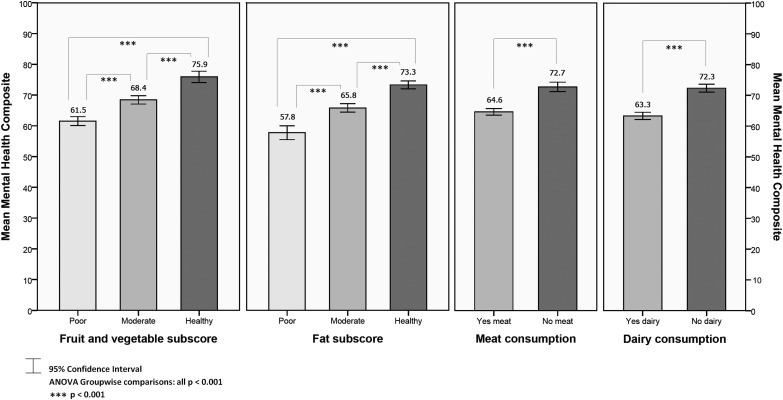
Results: Of 2469 participants with confirmed MS, 2087 (84.5%) provided complete data on their dietary habits (DHQ total score). Multivariate regression models demonstrated that every 10-point increase on the DHQ total score was associated with nearly a six-point and five-point increase in physical and mental HRQOL, respectively, and 30.0% reduced likelihood of a higher level of disability. After controlling for age and gender, and the other dietary covariates, 'healthy' consumption of fruit and vegetables and dietary fat predicted better quality of life and less likelihood of higher disability when compared to respondents with a 'poor' diet. For those with relapsing-remitting MS, the DHQ total significantly predicted a lower relapse rate and reduced odds of increasing disease activity, but the model fit was poor and the predicted change only marginal.
Discussion: This study supports significant associations of healthy dietary habits with better physical and mental HRQOL and a lower level of disability. Further research is urgently required to explore these associations including randomized controlled trials of dietary modification for people with MS.
Keywords: Diet; Disability; Multiple sclerosis; Quality of life; Relapse.
Figures


References
-
- van der Mei IA, Simpson S, Stankovich J, Taylor BV. Individual and joint action of environmental factors and risk of MS. Neurol Clin 2011;29:233–55. - PubMed
-
- Ascherio A, Munger KL. Environmental risk factors for multiple sclerosis. Part II: Noninfectious factors. Ann Neurol 2007;61:504–13. - PubMed
-
- Marrie RA. Demographic, genetic, and environmental factors that modify disease course. Neurol Clin 2011;29:323–41. - PubMed
-
- Multiple Sclerosis International Federation. Atlas of multiple sclerosis database. London: MSIF, 2013 [updated 2013 Oct;cited 2013 Oct 22]. Available from: http://www.atlasofms.org/index.aspx.
Publication types
MeSH terms
LinkOut - more resources
Full Text Sources
Other Literature Sources
Medical
