Case Reports
. 2014 Mar 15:14:13.
doi: 10.1186/1471-2482-14-13.

Novel application of simultaneous multi-image display during complex robotic abdominal procedures

Affiliations
Case Reports

Novel application of simultaneous multi-image display during complex robotic abdominal procedures

Yanghee Woo et al. BMC Surg. .

Abstract

Background: The surgical robot offers the potential to integrate multiple views into the surgical console screen, and for the assistant's monitors to provide real-time views of both fields of operation. This function has the potential to increase patient safety and surgical efficiency during an operation. Herein, we present a novel application of the multi-image display system for simultaneous visualization of endoscopic views during various complex robotic gastrointestinal operations. All operations were performed using the da Vinci Surgical System (Intuitive Surgical, Sunnyvale, CA, USA) with the assistance of Tilepro, multi-input display software, during employment of the intraoperative scopes. Three robotic operations, left hepatectomy with intraoperative common bile duct exploration, low anterior resection, and radical distal subtotal gastrectomy with intracorporeal gastrojejunostomy, were performed by three different surgeons at a tertiary academic medical center.

Results: The three complex robotic abdominal operations were successfully completed without difficulty or intraoperative complications. The use of the Tilepro to simultaneously visualize the images from the colonoscope, gastroscope, and choledochoscope made it possible to perform additional intraoperative endoscopic procedures without extra monitors or interference with the operations.

Conclusion: We present a novel use of the multi-input display program on the da Vinci Surgical System to facilitate the performance of intraoperative endoscopies during complex robotic operations. Our study offers another potentially beneficial application of the robotic surgery platform toward integration and simplification of combining additional procedures with complex minimally invasive operations.


Figures
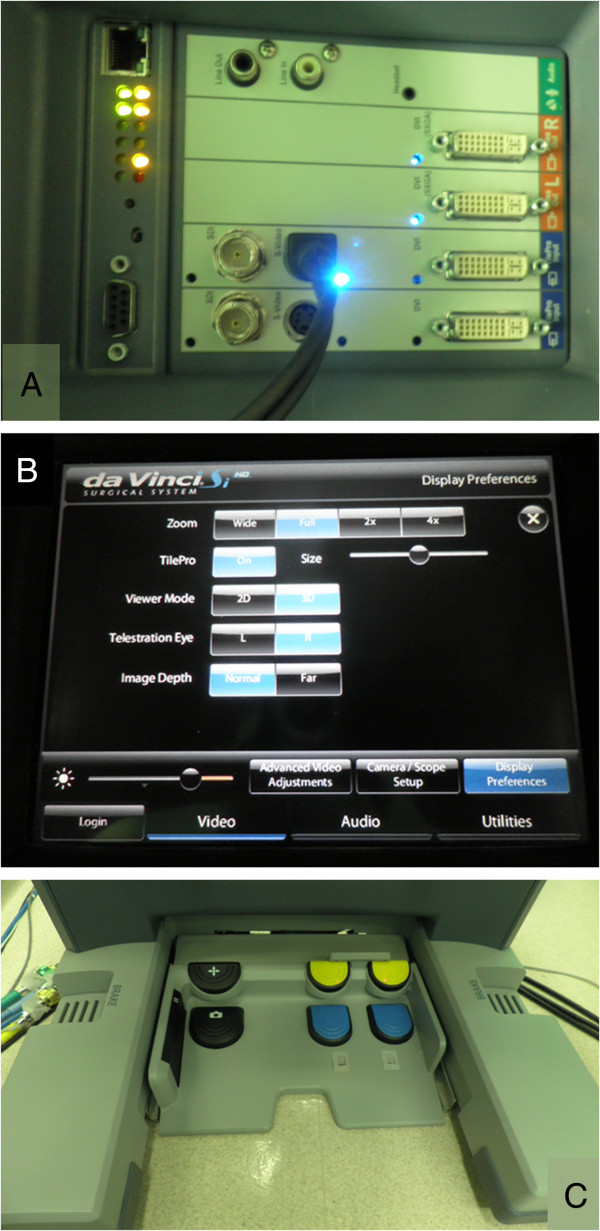
Figure 1
Figure 1
Tilpro™ set up. (A) The posterior view of the da Vinci Surgical System input device for endoscopic video output. The surgeon can control the video input from the endoscopic procedures from the surgeon’s console using the touch screen of the control bar (B) and the camera foot pedal (C).
Figure 2
Figure 2
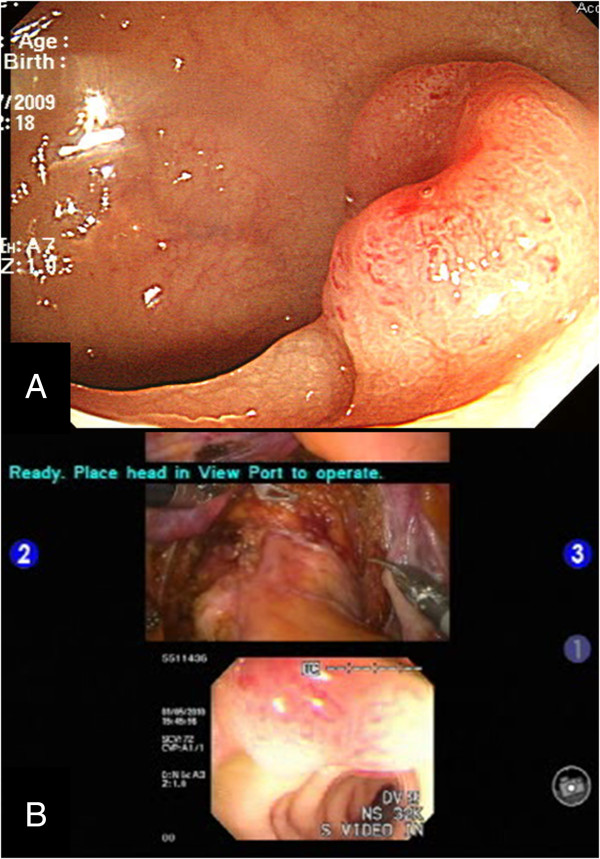
Preoperative colonoscopy and multi-input view of intraoperative colonoscopy. (A) The preoperative colonoscopic image. (B) Images from the intraoperative colonoscopy for tumor localization are visualized simultaneously with the intraabdominal extraluminal view for accurate determination of the distal rectal margin.
Figure 3
Figure 3
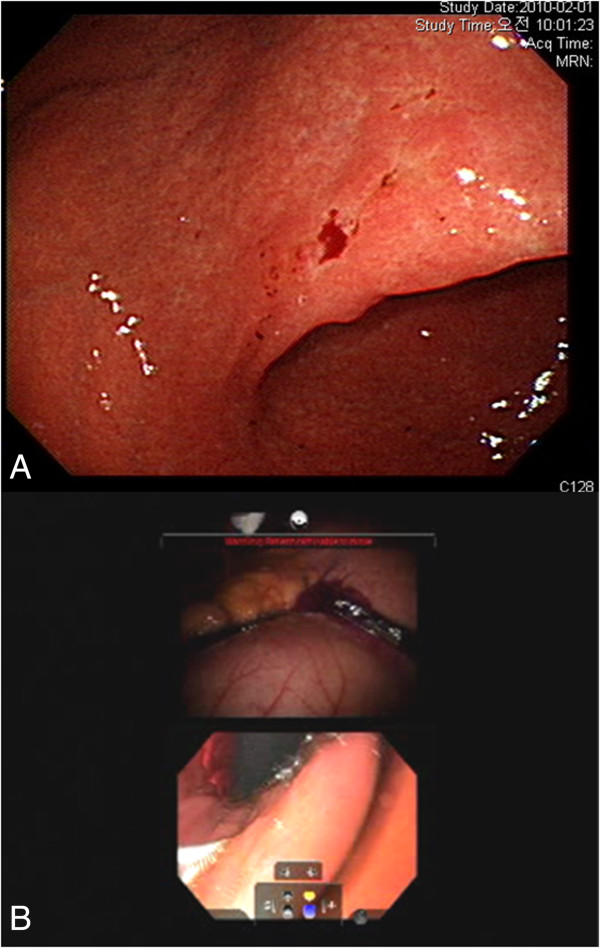
Preoperative upper endoscopy and multi-input view of intraoperative upper endoscopy. Gastric cancer was identified on preoperative upper endoscopy (A). During the operation, the surgeon simultaneously viewed the endoscopic and intraabdominal images to accurately determine the proximal gastric resection margin (B).
Figure 4
Figure 4
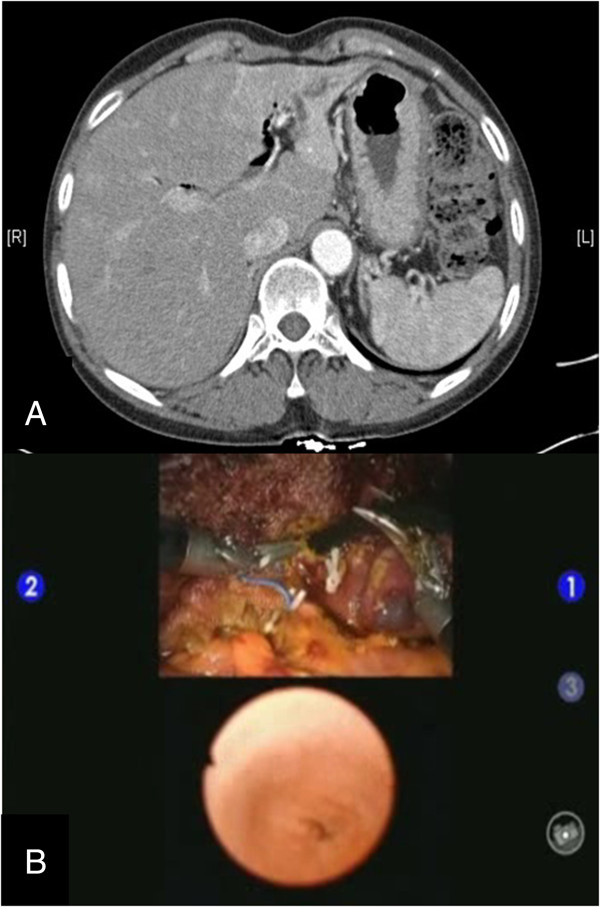
Images from a preoperative abdominal CT scan and multi-input view of intraoperative common bile duct exploration. A preoperative CT scan of the patient with cholangiohepatitis shows intrahepatic ductal dilatation and left lobe atrophy (A). Intraoperative robot-assisted common bile duct exploration was facilitated by simultaneous visualization of the images from the choledochoscopy on the surgeon’s console (B).

References

    1. Singh I. Robotics in urological surgery: review of current status and maneuverability, and comparison of robot-assisted and traditional laparoscopy. Comput Aided Surg. 2011;16(1):38–45. doi: 10.3109/10929088.2010.541620. - DOI - PubMed
    1. Rajasekaran S, Vidyadhara S, Ramesh P, Shetty AP. Randomized clinical study to compare the accuracy of navigated and non-navigated thoracic pedicle screws in deformity correction surgeries. Spine (Phila Pa 1976) 2007;32(2):E56–E64. doi: 10.1097/01.brs.0000252094.64857.ab. - DOI - PubMed
    1. Stulberg SD, Yaffe MA, Koo SS. Computer-assisted surgery versus manual total knee arthroplasty: a case-controlled study. J Bone Joint Surg Am. 2006;88(Suppl 4):47–54. - PubMed
    1. Lekovic GP, Potts EA, Karahalios DG, Hall G. A comparison of two techniques in image-guided thoracic pedicle screw placement: a retrospective study of 37 patients and 277 pedicle screws. J Neurosurg Spine. 2007;7(4):393–398. doi: 10.3171/SPI-07/10/393. - DOI - PubMed
    1. Jacob BP, Gagner M. Robotics and general surgery. Surg Clin North Am. 2003;83(6):1405–1419. doi: 10.1016/S0039-6109(03)00159-2. - DOI - PubMed

Publication types

LinkOut - more resources