Efficacy of a monovalent human-bovine (116E) rotavirus vaccine in Indian infants: a randomised, double-blind, placebo-controlled trial
- PMID: 24629994
- PMCID: PMC4532697
- DOI: 10.1016/S0140-6736(13)62630-6
Efficacy of a monovalent human-bovine (116E) rotavirus vaccine in Indian infants: a randomised, double-blind, placebo-controlled trial
Abstract
Background: Rotavirus is the most common cause of severe dehydrating gastroenteritis in developing countries. Safe, effective, and affordable rotavirus vaccines are needed in these countries. We aimed to assess the efficacy and tolerability of a monovalent human-bovine rotavirus vaccine for severe rotavirus gastroenteritis in low-resource urban and rural settings in India.
Methods: We did a randomised double-blind, placebo-controlled, multicentre trial at three sites in Delhi (urban), Pune (rural), and Vellore (urban and rural) between March 11, 2011, and Nov 5, 2012. Infants aged 6-7 weeks were randomly assigned (2:1), via a central interactive voice or web response system with a block size of 12, to receive either three doses of oral human-bovine natural reassortant vaccine (116E) or placebo at ages 6-7 weeks, 10 weeks, and 14 weeks. Infants' families, study investigators, paediatricians in referral hospitals, laboratory staff, and committee members were all masked to treatment allocation. The primary outcome was incidence of severe rotavirus gastroenteritis (≥11 on the Vesikari scale). Efficacy outcomes and adverse events were ascertained through active surveillance. Analysis was by intention to treat and per protocol. The trial is registered with Clinical Trial Registry-India (CTRI/2010/091/000102) and ClinicalTrials.gov (NCT01305109).
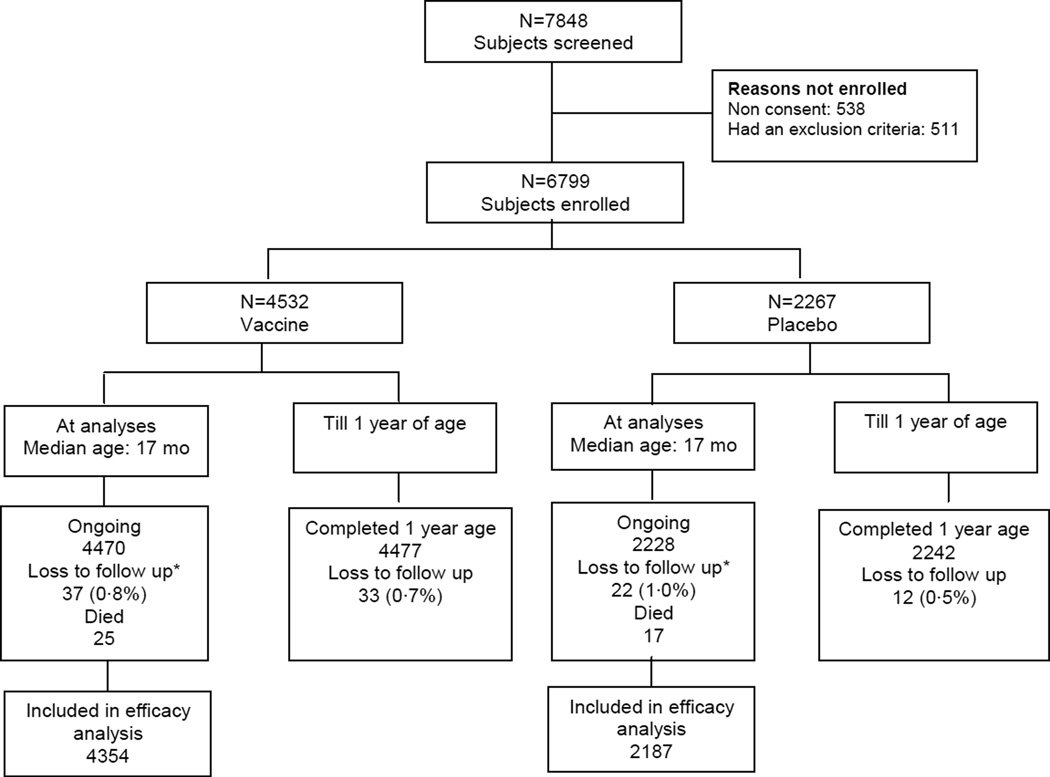
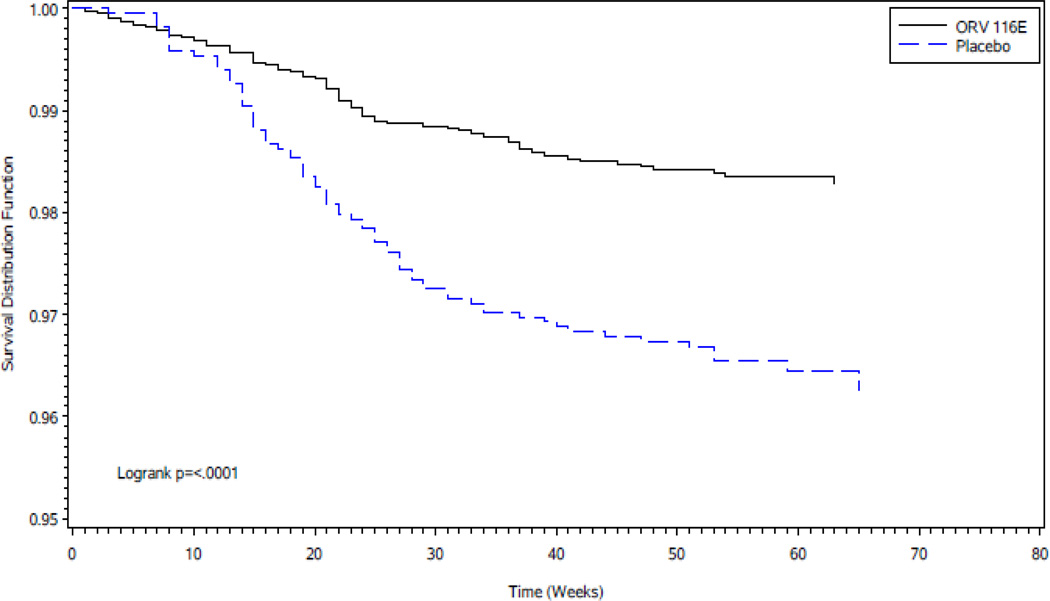
Findings: 4532 infants were assigned to receive the 116E vaccine and 2267 to receive placebo, of whom 4354 (96%) and 2187 (96%) infants, respectively, were included in the primary per-protocol efficacy analysis. 71 events of severe rotavirus gastroenteritis were reported in 4752 person-years in infants in the vaccine group compared with 76 events in 2360 person-years in those in the placebo group; vaccine efficacy against severe rotavirus gastroenteritis was 53·6% (95% CI 35·0-66·9; p=0·0013) and 56·4% (36·6-70·1; p<0·0001) in the first year of life. The number of infants needed to be immunised to prevent one severe rotavirus gastroenteritis episode was 55 (95% CI 37-97). The incidence of severe rotavirus gastroenteritis per 100 person-years was 1·5 in the vaccine group and 3·2 in the placebo group, with an incidence rate ratio of 0·46 (95% CI 0·33-0·65). Prevalence of immediate, solicited, and serious adverse events was similar in both groups. One case of urticaria in the vaccine group and one each of acute gastroenteritis and suspected sepsis in the placebo group were regarded as related to the study product. We recorded six cases of intussusception in the vaccine group and two in the placebo group, all of which happened after the third dose. 25 (<1%) infants in the vaccine group and 17 (<1%) in the placebo group died; no death was regarded as related to the study product.
Interpretation: Monovalent human-bovine (116E) rotavirus vaccine is effective and well tolerated in Indian infants.
Funding: Department of Biotechnology and the Biotechnology Industry Research Assistance Council, Government of India; Bill & Melinda Gates Foundation to PATH, USA; Research Council of Norway; UK Department for International Development; National Institutes of Health, Bethesda, USA; and Bharat Biotech International, Hyderabad, India.
Copyright © 2014 Elsevier Ltd. All rights reserved.
Conflict of interest statement
KM, GVJAH and SP are employees of Bharat Biotech International Limited. Other authors have no conflict of interest.
Figures
Comment in
-
116E rotavirus vaccine development: a successful alliance.Lancet. 2014 Jun 21;383(9935):2106-7. doi: 10.1016/S0140-6736(13)62701-4. Epub 2014 Mar 12. Lancet. 2014. PMID: 24629992 Free PMC article. No abstract available.
-
Why was there no Vaccine-associated Intussusception in Indian Rotavirus Vaccine Trial?Indian Pediatr. 2015 Oct;52(10):906. Indian Pediatr. 2015. PMID: 26499029 No abstract available.
References
-
- Kotloff KL, Nataro JP, Blackwelder WC, et al. Burden and aetiology of diarrhoeal disease in infants and young children in developing countries (the Global Enteric Multicenter Study, GEMS): a prospective, case-control study. Lancet. 2013;382:209–222. - PubMed
-
- World Health Organization. Rotavirus vaccines: WHO Position Paper January 2013. Wkly Epidemiol Rec. 2013;88:49–64. - PubMed
-
- Vesikari T, Matson DO, Dennehy P, et al. Safety and efficacy of a pentavalent human-bovine (WC3) reassortant rotavirus vaccine. N Engl J Med. 2006;354:23–33. - PubMed
-
- Ruiz-Palacios GM, Pérez-Schael I, Velázquez FR, et al. Safety and efficacy of an attenuated vaccine against severe rotavirus gastroenteritis. N Engl J Med. 2006;354:11–22. - PubMed
-
- Vesikari T, Karvonen A, Prymula R, et al. Efficacy of human rotavirus vaccine against rotavirus gastroenteritis during the first 2 years of life in European infants: randomized, double-blind controlled study. Lancet. 2007;370:1757–1763. - PubMed