. 2014 May 7;32(22):2637-44.
doi: 10.1016/j.vaccine.2014.02.087. Epub 2014 Mar 12.

Single-dose live-attenuated Nipah virus vaccines confer complete protection by eliciting antibodies directed against surface glycoproteins

Affiliations

Single-dose live-attenuated Nipah virus vaccines confer complete protection by eliciting antibodies directed against surface glycoproteins

Blair L DeBuysscher et al. Vaccine. .

Abstract

Background: Nipah virus (NiV), a zoonotic pathogen causing severe respiratory illness and encephalitis in humans, emerged in Malaysia in 1998 with subsequent outbreaks on an almost annual basis since 2001 in parts of the Indian subcontinent. The high case fatality rate, human-to-human transmission, wide-ranging reservoir distribution and lack of licensed intervention options are making NiV a serious regional and potential global public health problem. The objective of this study was to develop a fast-acting, single-dose NiV vaccine that could be implemented in a ring vaccination approach during outbreaks.

Methods: In this study we have designed new live-attenuated vaccine vectors based on recombinant vesicular stomatitis viruses (rVSV) expressing NiV glycoproteins (G or F) or nucleoprotein (N) and evaluated their protective efficacy in Syrian hamsters, an established NiV animal disease model. We further characterized the humoral immune response to vaccination in hamsters using ELISA and neutralization assays and performed serum transfer studies.

Results: Vaccination of Syrian hamsters with a single dose of the rVSV vaccine vectors resulted in strong humoral immune responses with neutralizing activities found only in those animals vaccinated with rVSV expressing NiV G or F proteins. Vaccinated animals with neutralizing antibody responses were completely protected from lethal NiV disease, whereas animals vaccinated with rVSV expressing NiV N showed only partial protection. Protection of NiV G or F vaccinated animals was conferred by antibodies, most likely the neutralizing fraction, as demonstrated by serum transfer studies. Protection of N-vaccinated hamsters was not antibody-dependent indicating a role of adaptive cellular responses for protection.

Conclusions: The rVSV vectors expressing Nipah virus G or F are prime candidates for new 'emergency vaccines' to be utilized for NiV outbreak management.

Keywords: Humoral immune responses; Neutralizing antibodies; Nipah virus; Recombinant vesicular stomatitis virus; Serum transfer; Vaccines.


Conflict of interest statement

Conflict of interest

All authors declare no conflict of interest.

Figures
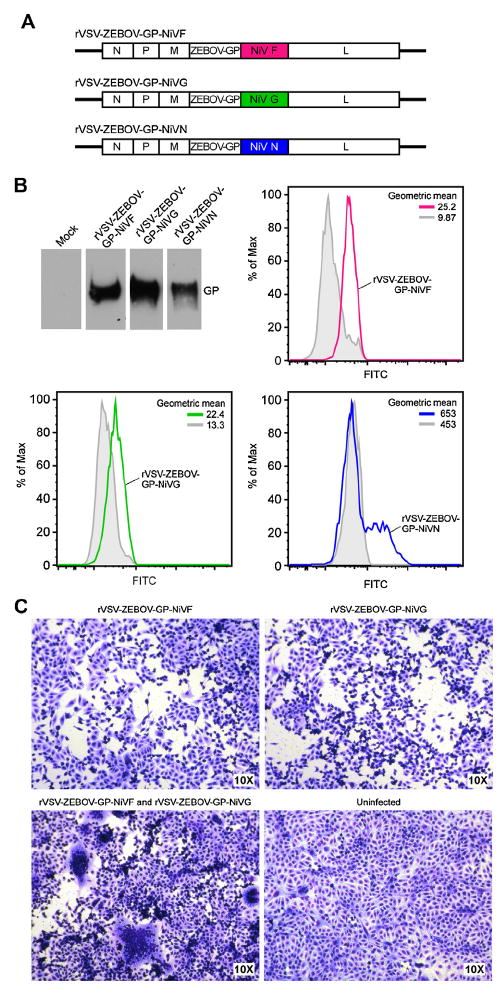
Fig. 1
Fig. 1. Construction and characterization of recombinant VSV (rVSV) vectors expressing NiV glycoprotein (G), fusion protein (F), or nucleoprotein (N)
(A) Schematic representation of the vaccine constructs. rVSV-ZEBOV-GP-NiV constructs were engineered by cloning NiV protein open reading frames into the vector directly downstream of the ZEBOV-GP, which replaced VSV-G. (B) Verification of foreign protein expression. ZEBOV-GP expression was verified by western blot analysis of rVSV vector-infected cell lysates using the anti-ZEBOV-GP antibody 43.3.7. Expression of NiV proteins was verified by flow cytometry. Cells were infected with the different NiV protein-expressing rVSV vaccines (colored lines) or uninfected (gray lines) and surfaced stained with antibodies specific for the respective protein, anti-G 1187 and anti-F 835. In the case of N expression (colored line), cells were fixed in 4%PFA, then per-meabilized using saponin, followed by intracellular N-specific antibody staining. (C) Verification of fusogenic activity of F and G. Vero C1008 cells were infected with rVSV-ZEBOV-GP-NiVF, rVSV-ZEBOV-GP-NiVG, or co-infected with rVSV-ZEBOV-GP-NiVF and rVSV-ZEBOV-GP-NiVG at an MOI of 0.1, incubated for 2 days and stained with the Kwik Diff Kit. Medium (DMEM) alone was used as a negative control. (For interpretation of the references to color in this figure legend, the reader is referred to the web version of this article.)
Fig. 2
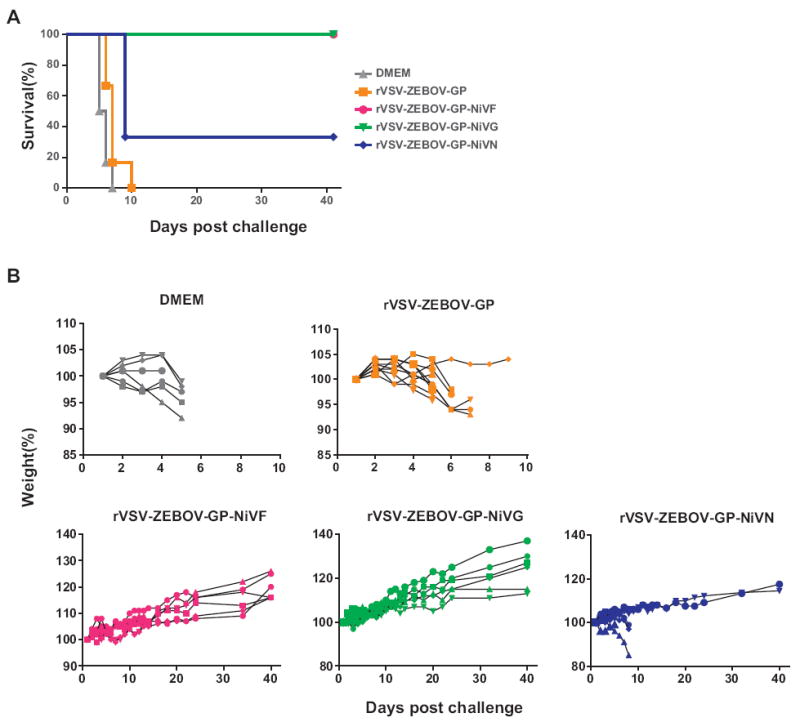
Fig. 2. Survival of vaccinated hamsters following Nipah virus challenge
Groups of six hamsters were vaccinated i.p. with 105 PFU of rVSV-ZEBOV-GP, rVSV-ZEBOV-GP-NiVF, rVSV-ZEBOV-GP-NiVG, rVSV-ZEBOV-GP-NiVN or mock vaccinated (DMEM) 28 days prior to challenge with 1000 LD50 of NiV. (A) The percentage of animals surviving over time. (B) Body weight loss over time. Weights are shown as percentage of starting body weight.
Fig. 3
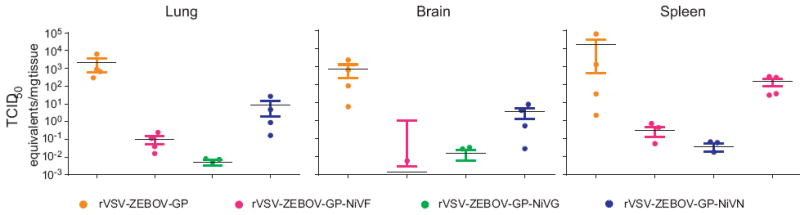
Fig. 3. Vaccination reduces Nipah virus load in tissues
Tissues (brain, spleen, lung) were collected in RLT buffer from four animals per group on day 5 after challenge and homogenized prior to total RNA extraction. Quantitative RT-PCR using an N-specific primer and probe set was used to determine TCID50 equivalents by extrapolating from a standard curve from a NiV seed stock of known titer. Individual animals are represented by dots and horizontal lines represent the mean, error bars indicate standard error of the mean (SEM).
Fig. 4
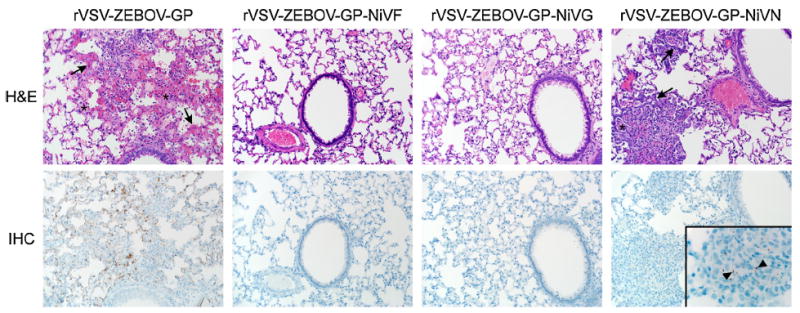
Fig. 4. Vaccination reduces Nipah virus pathology
Four hamsters per group were euthanized 5 days post challenge and lung sections were stained with H&E (top panel) for histopathology evaluation and IHC targeting NiV N protein for virus replication (bottom panel). Infected lungs showed thickening of the alveolar septae (arrows) by congestion, fibrin, edema, and small numbers of inflammatory cells. Alveolar spaces are filled with fibrin, edema, and inflammatory cells (asterisk). Inset in IHC panel demonstrates positive staining of NiV N-antigen (arrow heads). Images were taken at a magnification of 200× and inset at 1000×.
Fig. 5
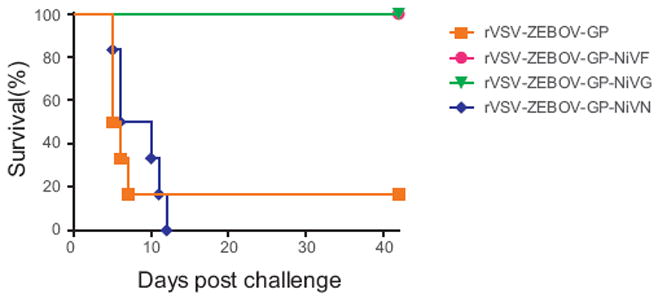
Fig. 5. Passive serum transfer protects naïve hamsters from Nipah virus challenge
Serum was collected from groups of 18 hamsters 28 days after vaccination with 105 PFU of the specific vaccine vectors. One day prior to, and 1 day post challenge with 1000 LD50 of NiV, groups of six naïve hamsters were given 1 mL of sera from immunized animals and monitored for 42 days for signs of disease.

References

    1. Goh KJ, Tan CT, Chew NK, Tan PS, Kamarulzaman A, Sarji SA, et al. Clinical features of Nipah virus encephalitis among pig farmers in Malaysia. N Engl J Med. 2000;342:1229–35. - PubMed
    1. Luby SP, Gurley ES. Epidemiology of henipavirus disease in humans. Curr Top Microbiol Immunol. 2012;359:25–40. - PubMed
    1. Hooper P, Zaki S, Daniels P, Middleton D. Comparative pathology of the diseases caused by Hendra and Nipah viruses. Microb Infect. 2001;3:315–22. - PubMed
    1. Chong HT, Hossain MJ, Tan CT. Differences in epidemiologic and clinical features of Nipah virus encephalitis between the Malaysian and Bangladesh outbreaks. Neurol Asia. 2008;13:23–6.
    1. Yob JM, Field H, Rashdi AM, Morrissy C, van der Heide B, Rota P, et al. Nipah virus infection in bats (order Chiroptera) in peninsular Malaysia. Emerg Infect Dis. 2001;7:439–41. - PMC - PubMed

Publication types

LinkOut - more resources