


New testing options for diagnosing and grading dry eye disease
- PMID: 24631478
- PMCID: PMC4062650
- DOI: 10.1016/j.ajo.2014.03.002
New testing options for diagnosing and grading dry eye disease
Abstract
Purpose: To describe new options for diagnosis and severity grading of dry eye disease.
Design: Perspective on technological advancements to identify tear dysfunction and their value in diagnosing and grading dry eye disease.
Methods: Evidence is presented on new and evolving technologies to measure tear stability, composition, and meniscus height and their role in dry eye diagnosis and therapeutic efficacy grading is assessed.
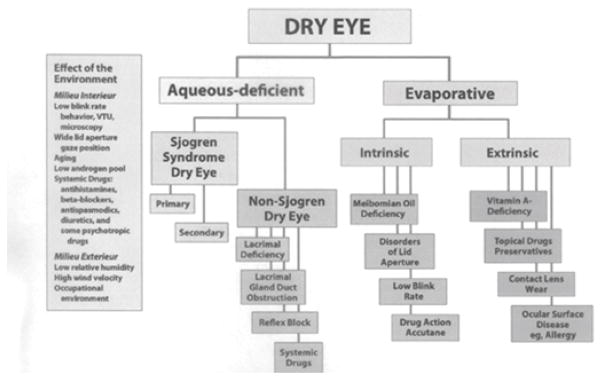
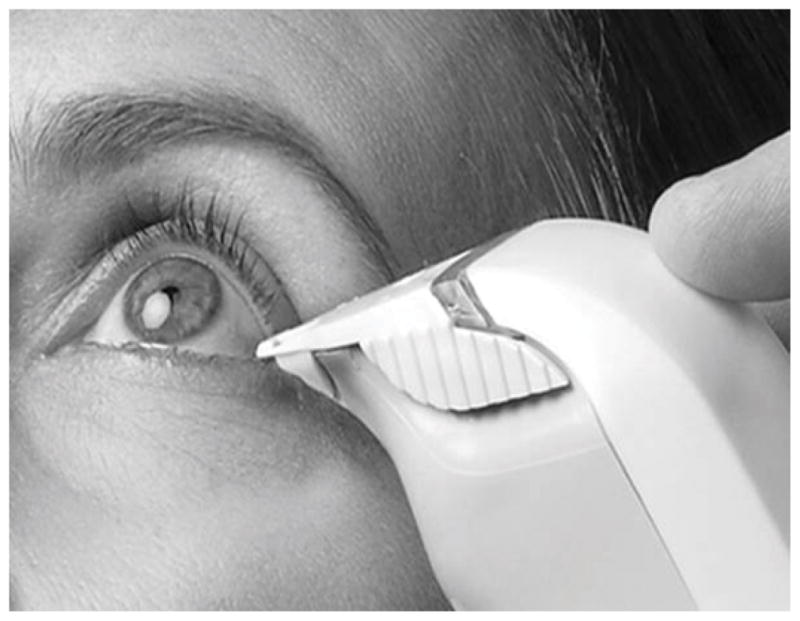
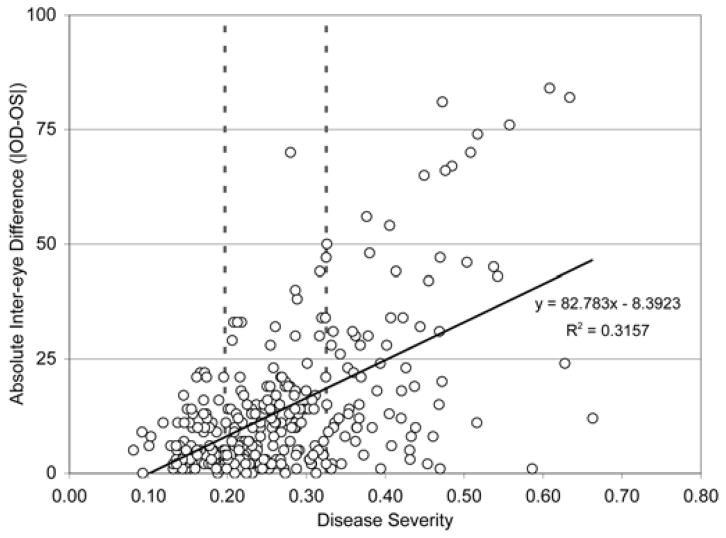
Results: Evolving concepts regarding pathogenesis and new technologies to evaluate the tears and ocular surface have improved the ability to diagnose, classify, and grade the severity of dry eye disease. New technologies include noninvasive imaging of tear stability and tear meniscus height as a measure of tear volume and tear composition (osmolarity, lacrimal factors, inflammatory mediators, growth and differentiation factors). Approved tests, such as tear osmolarity and tear imaging, are being integrated into clinical practice and may eventually supplant certain traditional tests that have greater variability and less sensitivity. Other tests, such as molecular assays of tears and conjunctival cells, are currently being used in studies investigating pathogenesis and therapeutic mechanism of action. They may eventually translate to routine clinical practice.
Conclusions: New technologies have emerged that can noninvasively evaluate the tears and measure disease-associated compositional changes. These tests are being integrated into clinical practice and therapeutic trials for diagnosis, classification, and severity grading of dry eye disease.
Copyright © 2014 Elsevier Inc. All rights reserved.
Figures
References
-
- Sjogren HSC. Zur kenntnis der keratoconjunctivitis sicca (Keratitis filiformis) bei Hypofunktion der Tranendrusen. Acta Ophthalmologica (Kbh) 1933;(Supp 2):1–151.
-
- Behrens A, Doyle JJ, Stern L, Chuck RS, McDonnell PJ, Azar DT, et al. Dysfunctional tear syndrome. A Delphi approach to treatment recommendations. Cornea. 2006;25(8):90–7. - PubMed
-
- The definition and classification of dry eye disease: Report of the Definition and Classification Subcommittee of the International Dry Eye WorkShop (2007) Ocul Surf. 2007;5(2):75–92. - PubMed
-
- Lemp MA, Crews LA, Bron AJ, Foulks GN, Sullivan BD. Distribution of aqueous-deficient and evaporative dry eye in a clinic-based patient cohort: A retrospective study. Cornea. 2012;31(5):472–478. - PubMed
-
- Bron AJ, Yokoi N, Gafney E, Tiffany JM. Predicted phenotypes of dry eye: Proposed consequences of its natural history. Ocul Surf. 2009;7(2):78–92. - PubMed
Publication types
MeSH terms
Substances
Grants and funding
LinkOut - more resources
Full Text Sources
Other Literature Sources
Medical
