Review
. 2014 Aug;1839(8):627-43.
doi: 10.1016/j.bbagrm.2014.03.001. Epub 2014 Mar 12.

Interpreting the language of histone and DNA modifications

Affiliations
Review

Interpreting the language of histone and DNA modifications

Scott B Rothbart et al. Biochim Biophys Acta. 2014 Aug.

Abstract

A major mechanism regulating the accessibility and function of eukaryotic genomes are the covalent modifications to DNA and histone proteins that dependably package our genetic information inside the nucleus of every cell. Formally postulated over a decade ago, it is becoming increasingly clear that post-translational modifications (PTMs) on histones act singly and in combination to form a language or 'code' that is read by specialized proteins to facilitate downstream functions in chromatin. Underappreciated at the time was the level of complexity harbored both within histone PTMs and their combinations, as well as within the proteins that read and interpret the language. In addition to histone PTMs, newly-identified DNA modifications that can recruit specific effector proteins have raised further awareness that histone PTMs operate within a broader language of epigenetic modifications to orchestrate the dynamic functions associated with chromatin. Here, we highlight key recent advances in our understanding of the epigenetic language encompassing histone and DNA modifications and foreshadow challenges that lie ahead as we continue our quest to decipher the fundamental mechanisms of chromatin regulation. This article is part of a Special Issue entitled: Molecular mechanisms of histone modification function.

Keywords: Chromatin; DNA methylation; Epigenetic; Histone; Histone code; Post-translational modification.


Figures

Figure 1
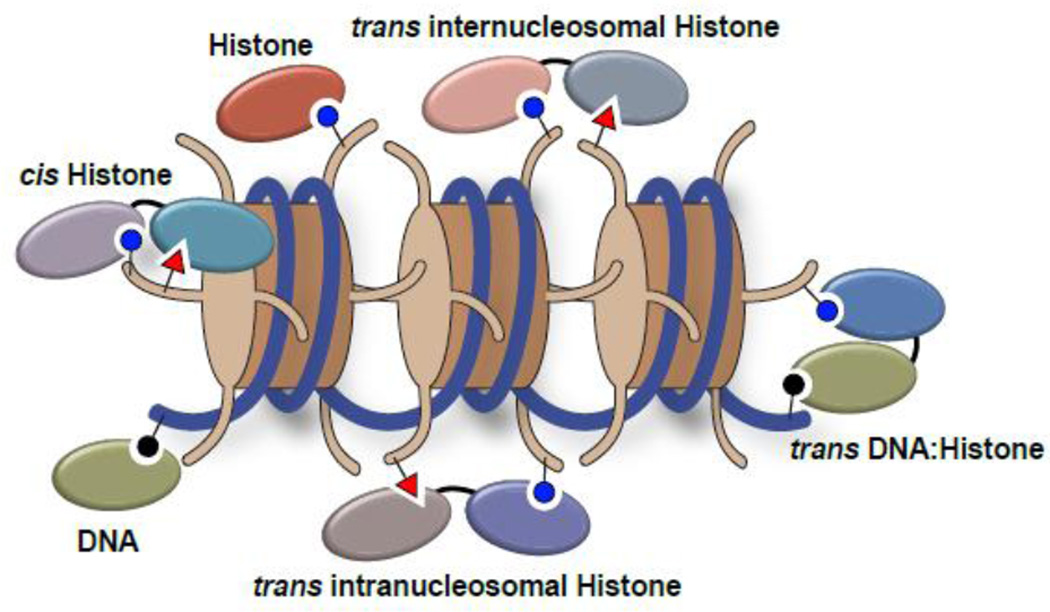
Figure 1. Writing, erasing, and reading the histone and DNA modification landscape
Isolated and linked protein domains coordinate the addition (writing), removal (erasing), and association (reading) of DNA modifications (black circles) and histone PTMs (blue circles and red triangles), creating a dynamic and variable chromatin environment. Cis refers to multivalent events occurring on the same histone. Trans refers to multivalent events occurring on adjacent histones or spanning histones and DNA, either within the same nucleosome or on neighboring nucleosomes. Trans interactionswith distant nucleosomes (which may be in 3-dimensional proximity) are not depicted. Multivalent interactions facilitated by membership in macromolecular complexes are also not depicted.
Figure 2
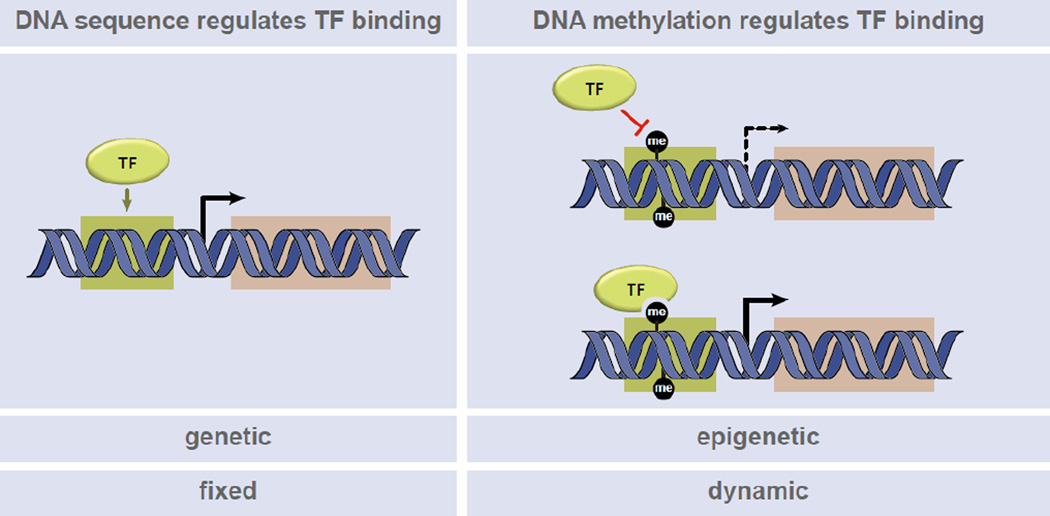
Figure 2. Coordinate genetic and epigenetic mechanisms regulate transcription factor binding
(Left) Transcription factor (TF) binding to cognate DNA sequence motifs (yellow box) regulates transcriptional output (orange box). (Right) TF binding to methylated DNA sequence motifs (black circles) both positively and negatively regulates transcriptional output.
Figure 3
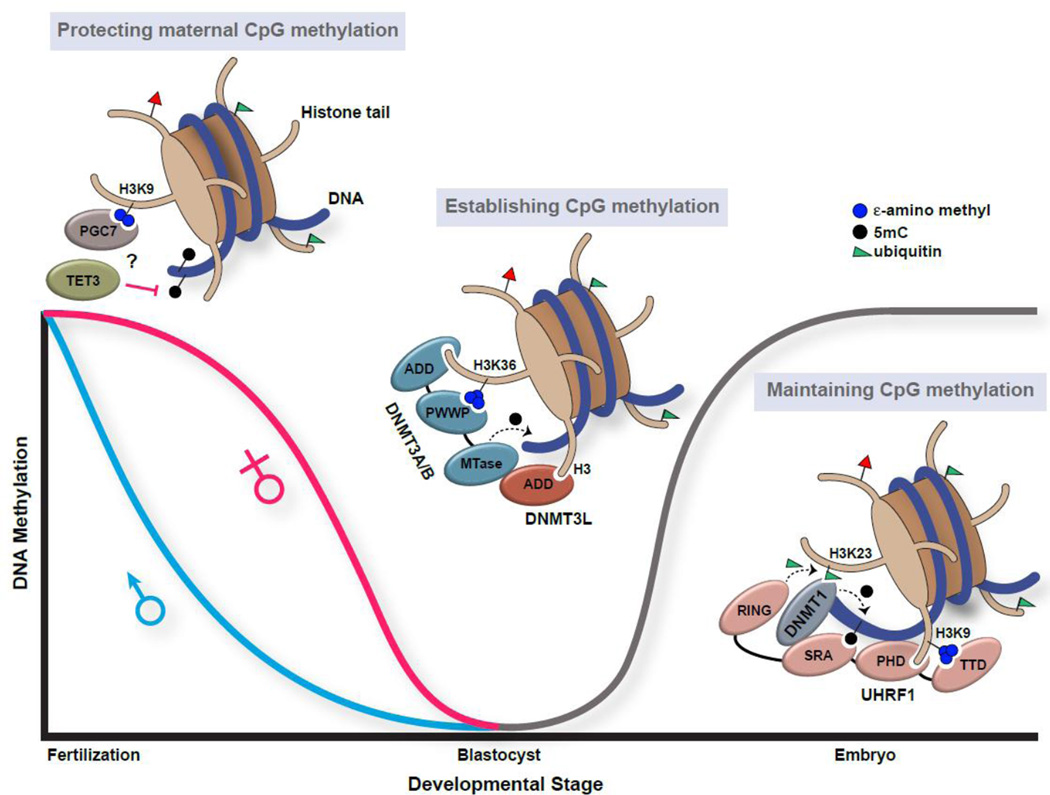
Figure 3. Distinct combinatorial epigenetic modifications play key roles in the erasure, establishment, and maintenance of DNA methylation patterns through organismal development
(Left) PGC7 protects the maternal genome from active DNA demethylation. PGC7 binding to H3K9me2 (blue circles) protects maternal DNA methylation (black circles) from TET3-dependent oxidative demethylation by an unknown mechanism. The paternal genome lacks histones, and TET3 demethylation is therefore active in these cells. (Center) DNMT3A/B and DNMT3L re-establish DNA methylation patterns in early development. DNMT3A/B interacts with the H3 N-terminus through an ADD domain and H3K36me3 (blue circles) through a PWWP domain. DNMT3L also interacts with the H3 N-terminus through an ADD domain and physically associates with the methyltransferase domain of DNMT3A/B to allosterically stimulate de novo DNA methyltransferase activity. (Right) UHRF1 facilitates the DNMT1-mediated maintenance of established DNA methylation patterns through embryonic and somatic cell divisions. UHRF1 physically associates with chromatin in a trivalent manner through its TTD and PHD domains that engage a single histone H3 tail (cis interaction) that is tri-methylated at lysine 9 (H3K9me3; blue circles) and unmodified at the N-terminus, respectively, and through its SRA domain that engages hemi-methylated DNA (black circles), a DNA replication intermediate. The UHRF1 RING domain aids in the catalysis of H3K23 ubiquitination (H3K23ub; green triangle), which serves as a binding platform for DNMT1. DNMT1 also physically interacts with DNA (see text) and with the SRA domain of UHRF1. Cartoon representations of nucleosomal interactions are depicted based on biochemical and structural studies, but may not be accurate in regards to orientation within the nucleosome.

References

    1. Kornberg RD, Lorch Y. Twenty-five years of the nucleosome, fundamental particle of the eukaryote chromosome. Cell. 1999;98:285–294. - PubMed
    1. van Holde KE. Chromatin. New York: Springer-Verlag; 1989.
    1. Li G, Reinberg D. Chromatin higher-order structures and gene regulation. Curr Opin Genet Dev. 2011;21:175–186. - PMC - PubMed
    1. Luger K, Hansen JC. Nucleosome and chromatin fiber dynamics. Curr Opin Struct Biol. 2005;15:188–196. - PubMed
    1. Zhou VW, Goren A, Bernstein BE. Charting histone modifications and the functional organization of mammalian genomes. Nat Rev Genet. 2011;12:7–18. - PubMed

Publication types

LinkOut - more resources