


Anabolic agents: recent strategies for their detection and protection from inadvertent doping
- PMID: 24632537
- PMCID: PMC4033149
- DOI: 10.1136/bjsports-2014-093526
Anabolic agents: recent strategies for their detection and protection from inadvertent doping
Abstract
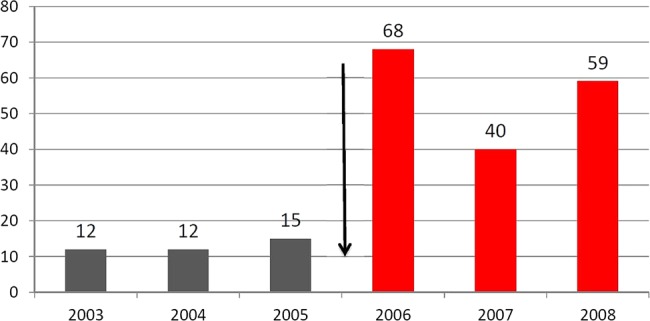
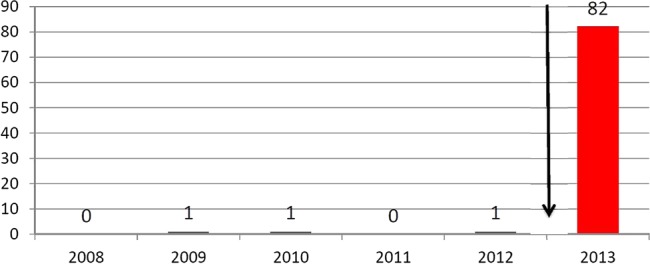
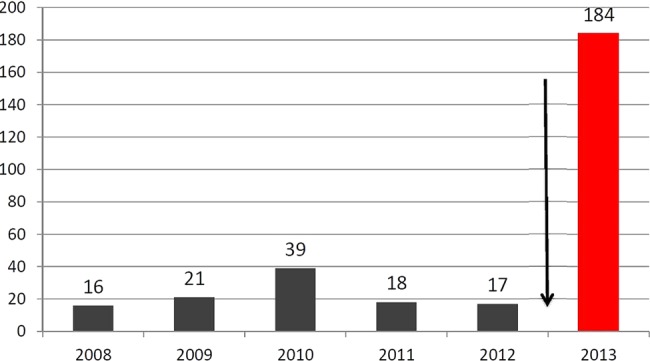
According to the World Anti-Doping Agency (WADA) Prohibited List, anabolic agents consist of exogenous anabolic androgenic steroids (AAS), endogenous AAS and other anabolic agents such as clenbuterol and selective androgen receptor modulators (SARMs). Currently employed strategies for their improved detection include the prolongation of the detection windows for exogenous AAS, non-targeted and indirect analytical approaches for the detection of modified steroids (designer steroids), the athlete's biological passport and isotope ratio mass spectrometry for the detection of the misuse of endogenous AAS, as well as preventive doping research for the detection of SARMs. The recent use of these strategies led to 4-80-fold increases of adverse analytical findings for exogenous AAS, to the detection of the misuse of new designer steroids, to adverse analytical findings of different endogenous AAS and to the first adverse analytical findings of SARMs. The strategies of the antidoping research are not only focused on the development of methods to catch the cheating athlete but also to protect the clean athlete from inadvertent doping. Within the past few years several sources of inadvertent doping with anabolic agents have been identified. Among these are nutritional supplements adulterated with AAS, meat products contaminated with clenbuterol, mycotoxin (zearalenone) contamination leading to zeranol findings, and natural products containing endogenous AAS. The protection strategy consists of further investigations in case of reasonable suspicion of inadvertent doping, publication of the results, education of athletes and development of methods to differentiate between intentional and unintentional doping.
Keywords: Anabolic steroids; Doping; Drug control.
Figures
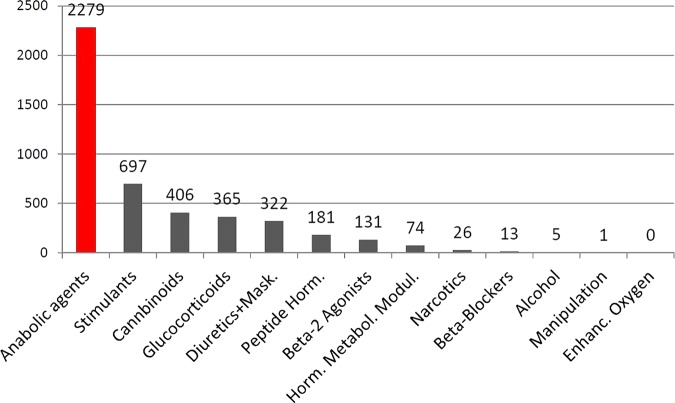

References
-
- WADA. 2012 Anti-Doping Testing Figures Report. World Anti-Doping Agency, 2013
-
- WADA. The 2014 prohibited list. Montreal: World Anti-Doping Agency, 2014
-
- Schänzer W, Delahaut P, Geyer H, et al. Long-term detection and identification of metandienone and stanozolol abuse in athletes by gas chromatography-high-resolution mass spectrometry. J Chromatogr B 1996;687:93–108 - PubMed
-
- Schänzer W, Horning S, Opfermann G, et al. Gas chromatography/mass spectrometry identification of long-term excreted metabolites of the anabolic steroid 4-chloro-1,2-dehydro-17alpha-methyltestosterone in humans. J Steroid Biochem Mol Biol 1996;57:363–76 - PubMed
-
- Fußhöller G, Mareck U, Schmechel A, et al. Long-term detection of metandienone abuse by means of the new metabolite 17ß-hydroxymethyl-17α-methyl-18-norandrost-1,4,13-trien-3-one. In: Schänzer W, Geyer H, Gotzmann A, Mareck U.eds Recent advances in doping analysis. Cologne: Sportverlag Strauss, 2007:15:393–6
Publication types
MeSH terms
Substances
LinkOut - more resources
Full Text Sources
Other Literature Sources
Medical
Miscellaneous
