. 2014 Mar 14;9(3):e91866.
doi: 10.1371/journal.pone.0091866. eCollection 2014.

Growth conditions determine the DNF2 requirement for symbiosis

Affiliations

Growth conditions determine the DNF2 requirement for symbiosis

Fathi Berrabah et al. PLoS One. .

Abstract

Rhizobia and legumes are able to interact in a symbiotic way leading to the development of root nodules. Within nodules, rhizobia fix nitrogen for the benefit of the plant. These interactions are efficient because spectacularly high densities of nitrogen fixing rhizobia are maintained in the plant cells. DNF2, a Medicago truncatula gene has been described as required for nitrogen fixation, bacteroid's persistence and to prevent defense-like reactions in the nodules. This manuscript shows that a Rhizobium mutant unable to differentiate is not sufficient to trigger defense-like reactions in this organ. Furthermore, we show that the requirement of DNF2 for effective symbiosis can be overcome by permissive growth conditions. The dnf2 knockout mutants grown in vitro on agarose or Phytagel as gelling agents are able to produce nodules fixing nitrogen with the same efficiency as the wild-type. However, when agarose medium is supplemented with the plant defense elicitor ulvan, the dnf2 mutant recovers the fix- phenotype. Together, our data show that plant growth conditions impact the gene requirement for symbiotic nitrogen fixation and suggest that they influence the symbiotic suppression of defense reactions in nodules.


Conflict of interest statement

Competing Interests: The authors have declared that no competing interests exist.

Figures

Figure 1
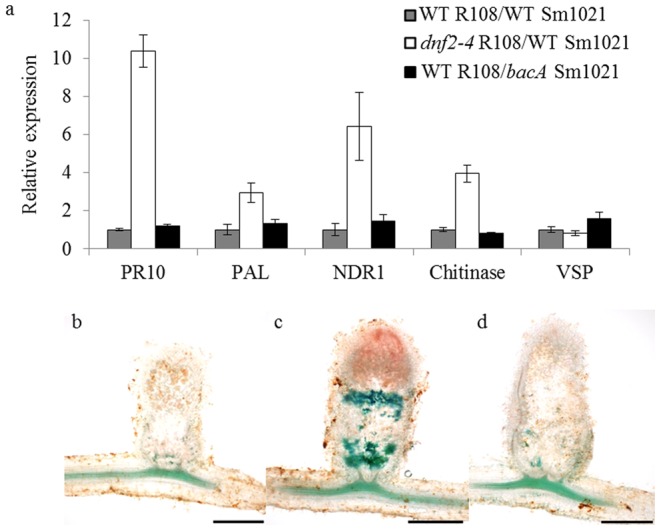
Figure 1. Bacteroid differentiation defect is not sufficient to trigger defense-like reactions in dnf2 nodules.
Panel a: Expression of defense markers was evaluated by RT-qPCR using cDNA prepared from 14 dpi nodules. The y axis represents fold induction/WT. Panel b: 25 dpi nodules of R108 WT induced by Sm1021 WT. Panel c: 25 dpi nodules of dnf2–4 induced by Sm1021 WT. Panel d: 25 dpi nodules of R108 WT induced by a SM1021 bacA derivative. Nodules in b, c and d were stained for phenolics using potassium permanganate toluidine blue (scale bars 500 µm).
Figure 2
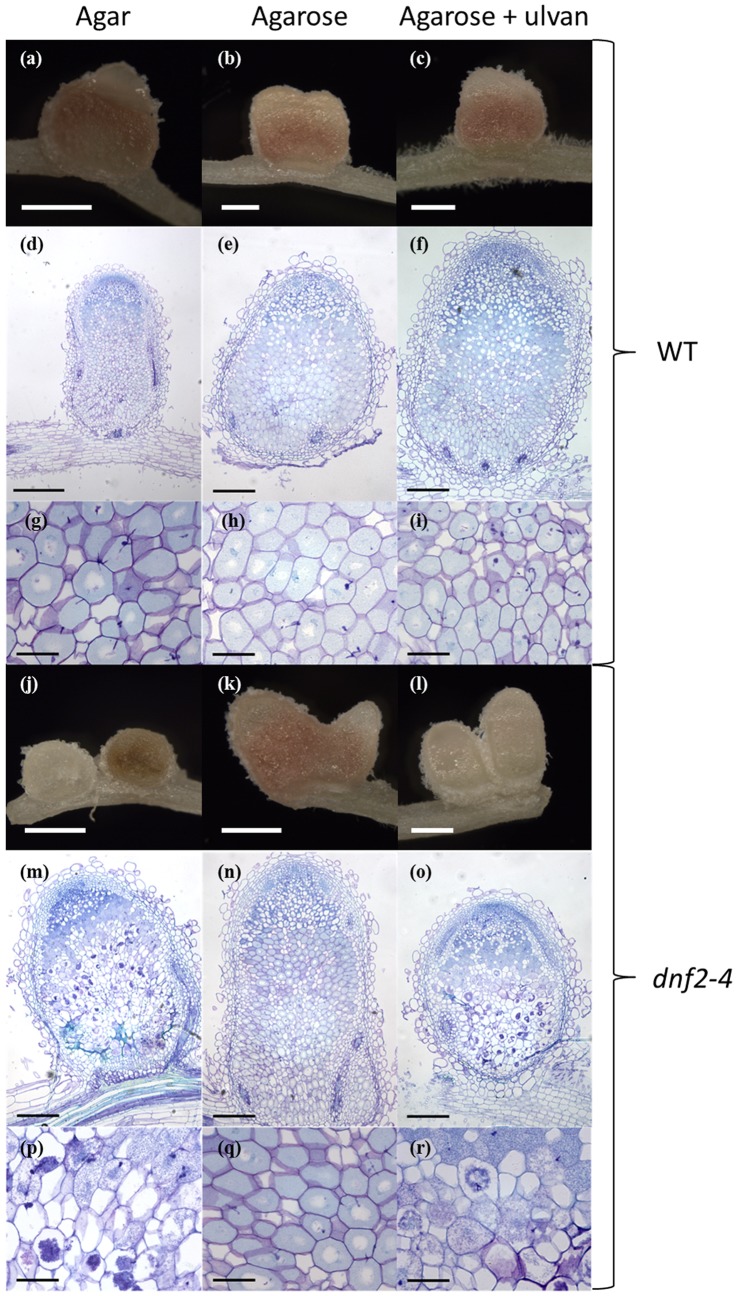
Figure 2. Plant growth conditions impact the dnf2 phenotype.
Nodules were harvested 18 days post inoculation with Rm41. a-i, Wild-type nodules. j-r, dnf2–4 nodules. Left panels, middle panels and right panels represent nodules grown on agar-, agarose- and agarose-based BNM supplemented with 1% ulvan respectively. Panels a, b, c, j, k and l (scale bars 500 µm) illustrate whole nodules, panels d, e, f, m, n and o (scale bars 200 µm except for d 500 µm) are thin sections of whole nodules and panels g, h, i, p, q, r (scale bars 50 µm) are enlargement of the zone III of panels d, e, f, m, n and o, respectively.
Figure 3
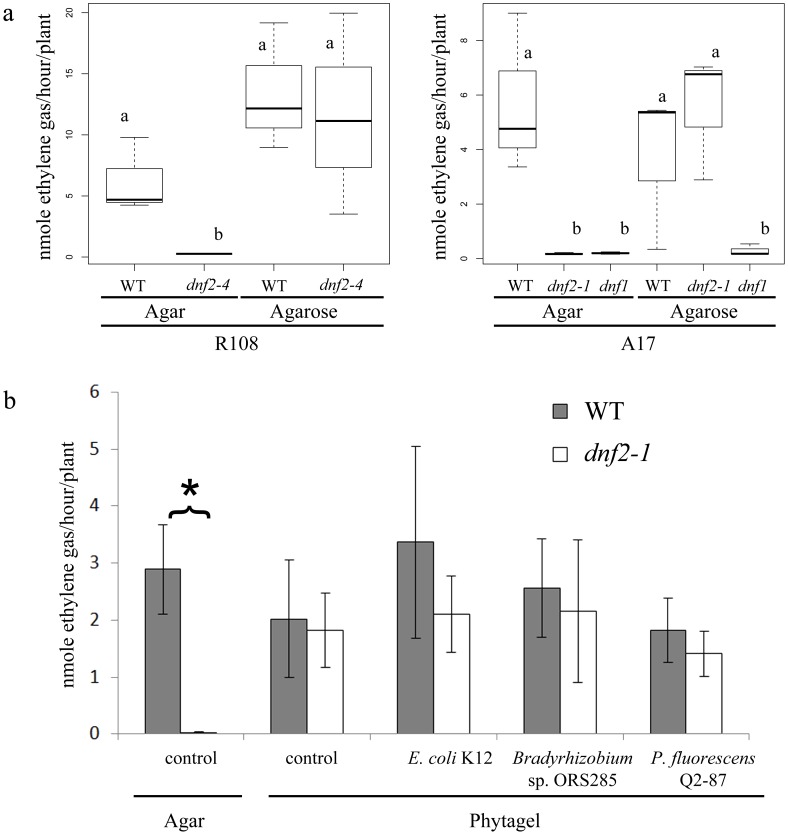
Figure 3. Plant growth conditions determine the DNF2 requirement for symbiosis.
a) Acetylene reduction assays were conducted on M. truncatula WT ecotype R108 and A17 and dnf2–4 (R108 genetic background), and dnf2-1, dnf1 mutants (A17 genetic background) inoculated with S. medicae strain WSM419. A Kruskal-Wallis one-way ANOVA test and a post-hoc Tukey’s test were performed and statistically identical values were attributed identical letters (n = 3). (b) Acetylene reduction assay was conducted on M. truncatula WT ecotype A17 and dnf2-1 mutant inoculated with strain WSM419 alone (control) or in combination with E. coli K12, Bradyrhizobium sp. ORS285 or P. fluorescens Q2–87. Plants were grown under in vitro conditions on BNM supplemented with either agar or agarose and analyzed at 14 dpi (a) or with Agar and Phytagel and analyzed at 25 dpi (b). A Mann-Whitney test was performed between WT and dnf2-1 mutant for each condition. The star indicates a significant difference (p-value <0.05) (n = 4) Error bars represent standard errors.
Figure 4
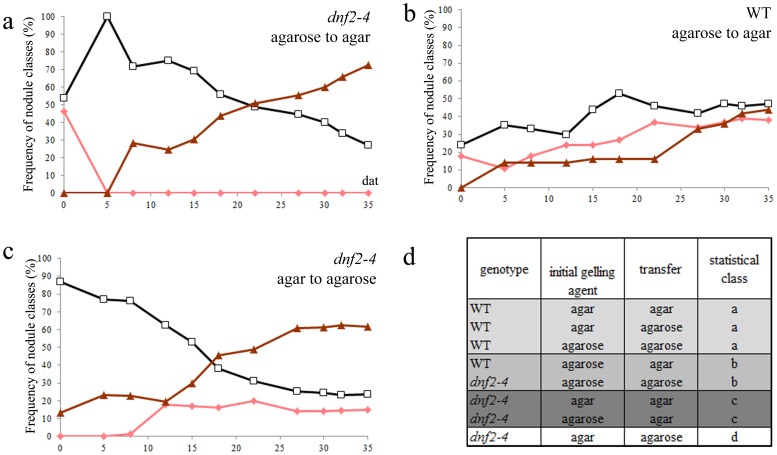
Figure 4. Influence of the plant growth conditions on dnf2 phenotype is transient.
(a–c) Frequencies of nodule classes after transfer to agar or agarose medium. M. truncatula dnf2–4 and WT plants (n = 24 for every conditions) inoculated with S. meliloti Rm41 were cultivated in vitro on BNM using agar or agarose as a gelling agent for 14 days and transfer to new medium with the same or different gelling agent. Pink nodules are represented by diamonds, white nodules by open squares and brownish nodules by triangles. The experiment was repeated three times with similar results. (d) analysis of the distribution of nodule classes at 35 days after transfer. Statistically identical distribution are attributed identical letters (Chi-Square Test of Homogeneity with Bonferroni correction, p-value = 2.2–16).
Figure 5
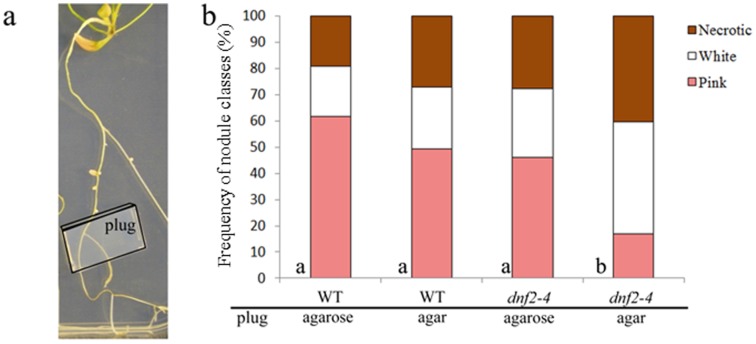
Figure 5. The plant substrate triggers dnf2 fix phenotype at distance.
dnf2–4 and WT plants nodulated by S. meliloti Rm41 were grown on agarose-based BNM. Agar- or agarose-based plugs (1.5×1×0.5 cm) were laid onto root systems at 15 dpi and the color and numbers of nodules produced by 24 plants were monitored. The experimental set up is illustrated in (a). (b) Distribution of nodule classes 35 days after plug addition for WT and dnf2–4 grown on agarose based medium. The experiment was repeated three times with similar results. Statistically identical distribution are attributed identical letters (Chi-Square Test of Homogeneity with Bonferroni correction, p-value = 1.32e-06).
Figure 6
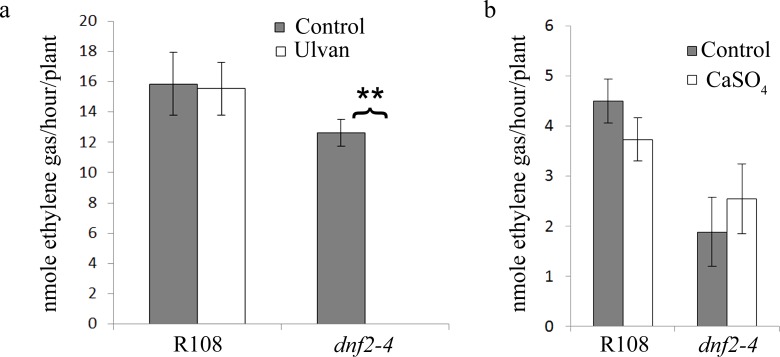
Figure 6. Ulvan abolishes dnf2 nitrogen fixation on permissive condition.
M. truncatula WT R108 and dnf2–4 plants were cultivated on agarose BNM supplemented or not with 1% ulvan. Acetylene reduction assays were conducted on plants 27 dpi with S. medicae WSM419 (n = 8) (a). M. truncatula WT R108 and dnf2–4 plants were cultivated on Phytagel BNM supplemented or not with 10 mM CaSO4. Acetylene reduction assays were conducted on plants 14 dpi with S. medicae WSM419 (n = 5) (b). A Mann-Whitney test was performed between WT and dnf2-1 mutant for each condition. Stars indicate significant differences (** p-value <1e-03) Error bars represent standard errors.

References

    1. Puppo A, Groten K, Bastian F, Carzaniga R, Soussi M, et al. (2005) Legume nodule senescence: roles for redox and hormone signalling in the orchestration of the natural aging process. New Phytol 165: 683–701. - PubMed
    1. Limpens E, Moling S, Hooiveld G, Pereira PA, Bisseling T, et al. (2013) Cell- and tissue-specific transcriptome analyses of Medicago truncatula root nodules. PLoS One 8: e64377. - PMC - PubMed
    1. Charpentier M, Oldroyd G (2010) How close are we to nitrogen-fixing cereals? Curr Opin Plant Biol 13: 556–564. - PubMed
    1. Bourcy M, Berrabah F, Ratet P, Gourion B (2013) Failure of self-control: Defense-like reactions during legume/rhizobia symbiosis. Plant Signal Behav 8. - PMC - PubMed
    1. Bourcy M, Brocard L, Pislariu CI, Cosson V, Mergaert P, et al. (2013) Medicago truncatula DNF2 is a PI-PLC-XD-containing protein required for bacteroid persistence and prevention of nodule early senescence and defense-like reactions. New Phytol 197: 1250–1261. - PubMed

Publication types

MeSH terms

LinkOut - more resources