


Prevention of cardiovascular disease: highlights for the clinician of the 2013 American College of Cardiology/American Heart Association guidelines
- PMID: 24633723
- PMCID: PMC6649601
- DOI: 10.1002/clc.22264
Prevention of cardiovascular disease: highlights for the clinician of the 2013 American College of Cardiology/American Heart Association guidelines
Abstract
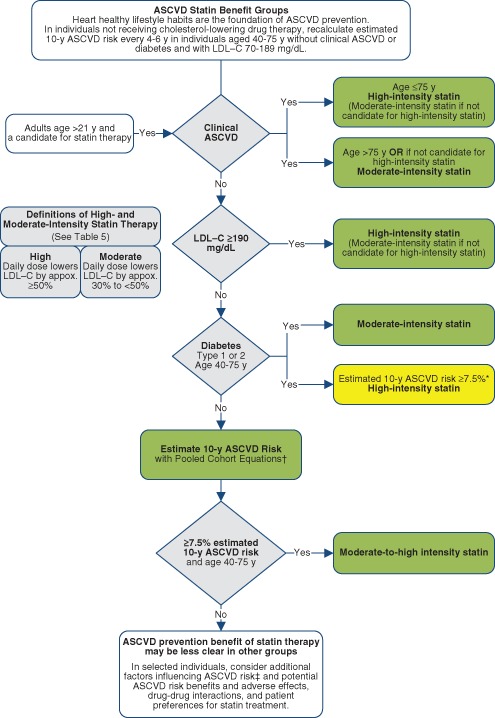
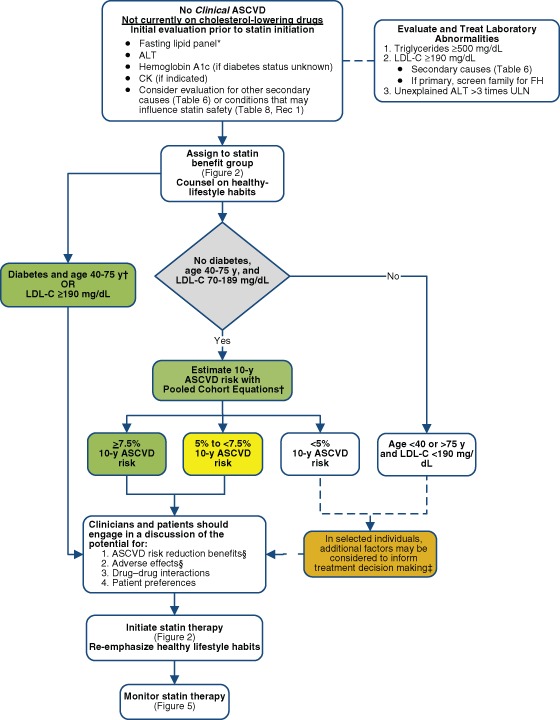
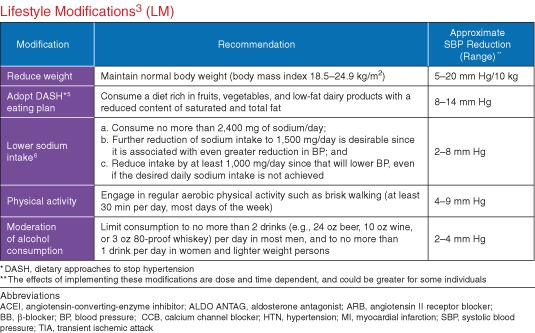
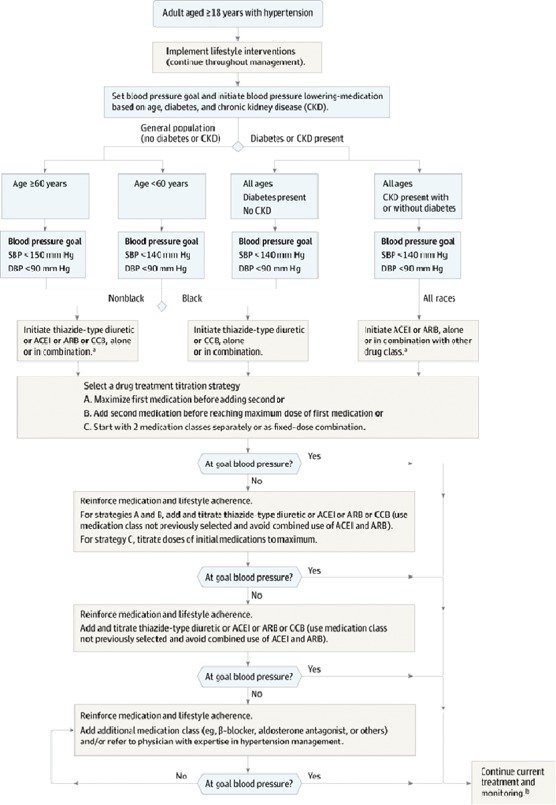
Prevention of cardiovascular disease, undoubtedly an emphasis of clinical care in 2014, will provide both opportunities and challenges to patients and their healthcare providers. The recently-released ACC/AHA guidelines on assessment of cardiovascular risk, lifestyle management to reduce cardiovascular risk, management of overweight and obesity, and treatment of blood cholesterol to reduce atherosclerotic cardiovascular risk, have introduced new concepts and revised prior conventional strategies. New to risk assessment are the Pooled Cohort Equations, targeting the expanded concept of atherosclerotic cardiovascular disease (ASCVD) and focusing not solely on mortality but as well on major nonfatal events. The lifestyle management focuses on diet and physical activity for lipid and blood pressure control. The cholesterol guideline identifies four high-risk groups with the greatest benefits from statin therapy: preexisting ASCVD, primary LDL-C elevations ≥ 190 mm/dl, those 45-75 years with diabetes and LDL-C 70-189 mm/dl without clinical ASCVD, and those 40-75 years without clinical ASCVD with an LDL-C 70-189 mg/dl with a 7.5% or greater 10-year ASCVD risk. Eliminated are arbitrary LDL-C treatment targets, with individual patient risk status guiding who should take statins and the appropriate intensity of statin drugs. Patient-physician discussions of individual benefits and risks are paramount. Management of high blood pressure remains controversial, with two different expert panels offering varying treatment targets; there is general agreement on a <140/90 mmHg goal, but substantial disagreement on blood pressure targets for older adults. Clinicians and their patients deserve a well-researched concensus document.
© 2014 Wiley Periodicals, Inc.
Figures
References
-
- Affordable Care Act . http://www.hhs.gov/healthcare/rights/law/index.html.
-
- Goff DC Jr, Lloyd‐Jones DM, Bennett G, et al. 2013 ACC/AHA guideline on the assessment of cardiovascular risk: a report of the American College of Cardiology/American Heart Association Task Force on Practice Guidelines [published online ahead of print November 12, 2013]. Circulation. doi: 10.1161/01.cir.0000437741.48606.98. http://circ.ahajournals.org/content/early/2013/11/11/01.cir.0000437741.4.... Accessed November 13, 2013.
-
- Eckel RH, Jakicic JM, Ard JD, et al. 2013 AHA/ACC guideline on lifestyle management to reduce cardiovascular risk: a report of the American College of Cardiology/American Heart Association Task Force on Practice Guidelines [published online ahead of print November 12, 2013]. Circulation. doi: 10.1161/01.cir.0000437740.48606.d1. http://circ.ahajournals.org/content/early/2013/11/11/01.cir.0000437740.4.... Accessed November 13, 2013.
-
- Jensen MD, Ryan DH, Apovian CM, et al. 2013 AHA/ACC/TOS guideline for the management of overweight and obesity in adults: a report of the American College of Cardiology/American Heart Association Task Force on Practice Guidelines, and The Obesity Society [published online ahead of print November 12, 2013]. Circulation. doi: 10.1161/01.cir.0000437739.71477.ee. http://circ.ahajournals.org/content/early/2013/11/11/01.cir.0000437739.7.... Accessed November 13, 2013.
-
- Stone NJ, Robinson J, Lichtenstein AH, et al. 2013 ACC/AHA guideline on the treatment of blood cholesterol to reduce atherosclerotic cardiovascular risk in adults: a report of the American College of Cardiology/American Heart Association Task Force on Practice Guidelines [published online ahead of print November 12, 2013]. Circulation. doi: 10.1161/01.cir.0000437738.63853.7a. http://circ.ahajournals.org/content/early/2013/11/11/01.cir.0000437738.6.... Accessed November 13, 2013.
Publication types
MeSH terms
LinkOut - more resources
Full Text Sources
Other Literature Sources
