Postoperative sleep disturbances after zolpidem treatment in fast-track hip and knee replacement
- PMID: 24634631
- PMCID: PMC3927439
- DOI: 10.5664/jcsm.3540
Postoperative sleep disturbances after zolpidem treatment in fast-track hip and knee replacement
Abstract
Study objectives: Previous studies have demonstrated pronounced reduction of REM sleep on the first nights following major surgery which may influence pain, analgesic use, and recovery. This placebo-controlled, randomized, double-blind study set out to evaluate the effect of zolpidem on sleep architecture in an elderly population undergoing fast-track total hip and knee arthroplasty (THA/TKA) with length of stay < 3 days.
Methods: Twenty patients (≥ 60 years) undergoing THA or TKA in a standardized setup with spinal anesthesia and multimodal opioid-sparing postoperative analgesia were included. Polysomnography measures were performed for 2 nights, 1 night at home prior to surgery and on the first night after surgery, when the patient received placebo or zolpidem 10 mg. Analgesic use, pain levels, and subjective measures of fatigue and sleep quality were recorded. Analysis of sleep data was performed according to the American Academy of Sleep Medicine manual.
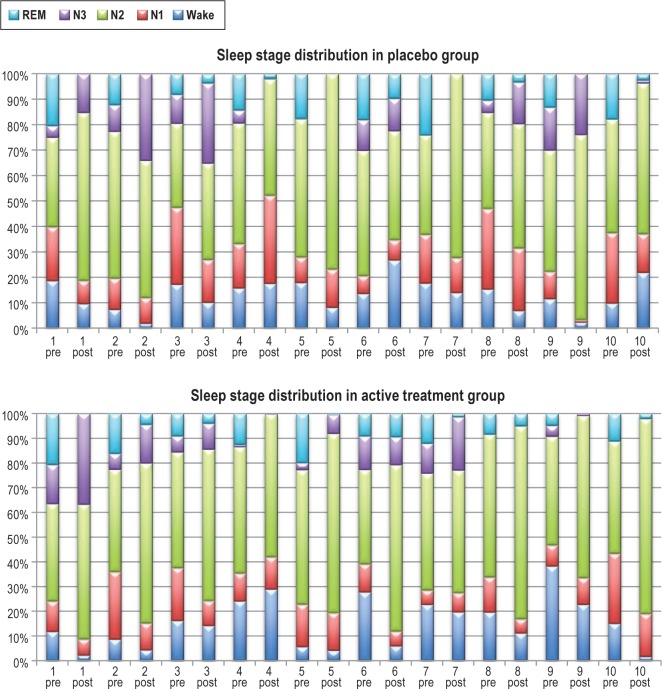
Results: Objective sleep data did not show a significant difference between groups in any of the sleep stages. However, subjective data on sleep quality and fatigue showed significantly less fatigue and better sleep quality in the zolpidem group (p < 0.05), and reduced objectively recorded number of arousals (p = 0.004). Levels of pain and opioid use were similar in the 2 groups.
Conclusions: Our objective data did not support the primary hypothesis that one night's treatment with zolpidem would significantly improve sleep architecture following major surgery, although there was improved feeling of sleep quality and fatigue associated with fewer postoperative arousals.
Citation: Krenk L; Jennum P; Kehlet H. Postoperative sleep disturbances after zolpidem treatment in fast-track hip and knee replacement.
Trial registration: ClinicalTrials.gov NCT01551485.
Keywords: Postoperative sleep; cognition; recovery; sleep deprivation; zolpidem.
Figures
References
-
- Rosenberg-Adamsen S, Kehlet H, Dodds C, Rosenberg J. Postoperative sleep disturbances: mechanisms and clinical implications. Br J Anaesth. 1996;76:552–9. - PubMed
-
- Gogenur I, Wildschiotz G, Rosenberg J. Circadian distribution of sleep phases after major abdominal surgery. Br J Anaesth. 2008;100:45–9. - PubMed
-
- Krenk L, Jennum P, Kehlet H. Sleep disturbances after fast-track hip and knee arthroplasty. Br J Anaesth. 2012;109:769–75. - PubMed
-
- Rosenberg J. Sleep disturbances after non-cardiac surgery. Sleep Med Rev. 2001;5:129–37. - PubMed
-
- Lavigne GJ, McMillan D, Zucconi M. Pain and sleep. In: Kryger MH, Roth T, Dement WC, editors. Principles and Practice of Sleep Medicine. Philadelphia: Elsevier Saunders; 2005. pp. 1246–55.
Publication types
MeSH terms
Substances
Associated data
LinkOut - more resources
Full Text Sources
Other Literature Sources
Medical