


Tea consumption and the risk of five major cancers: a dose-response meta-analysis of prospective studies
- PMID: 24636229
- PMCID: PMC4004325
- DOI: 10.1186/1471-2407-14-197
Tea consumption and the risk of five major cancers: a dose-response meta-analysis of prospective studies
Abstract
Background: We conducted a dose-response meta-analysis of prospective studies to summarize evidence of the association between tea consumption and the risk of breast, colorectal, liver, prostate, and stomach cancer.
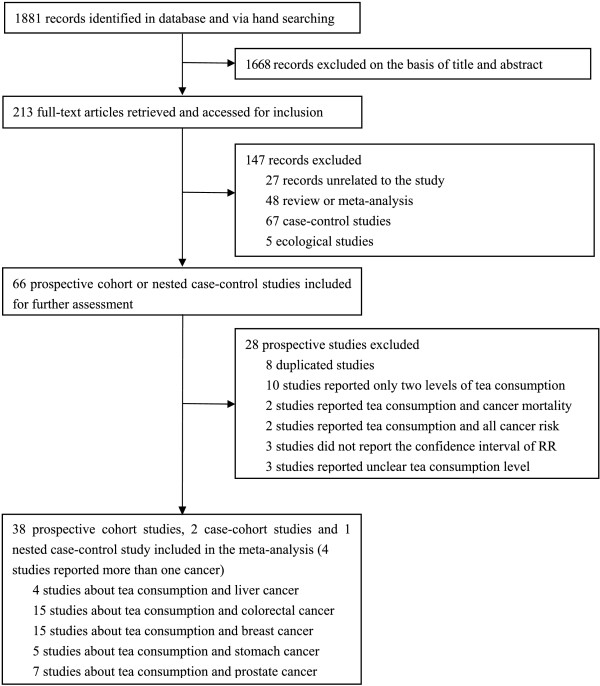
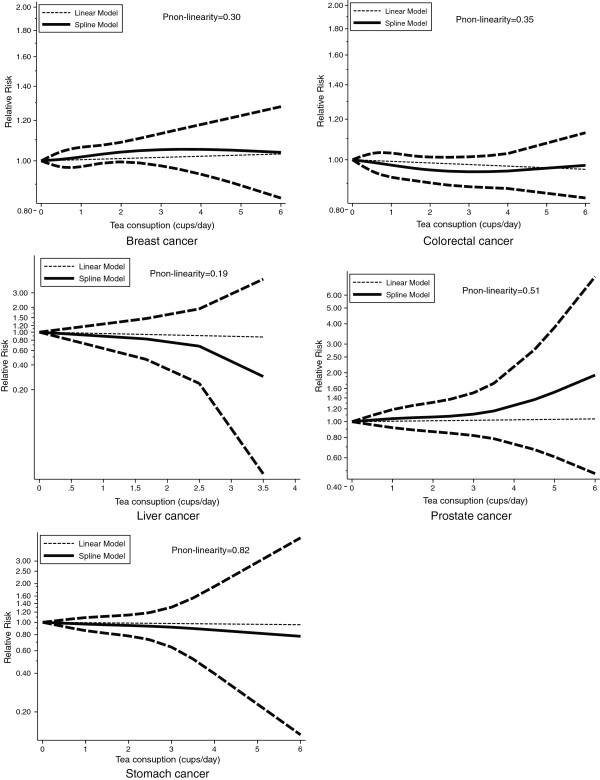
Methods: We searched PubMed and two other databases. Prospective studies that reported risk ratios (RRs) with 95% confidence intervals (CIs) of cancer risk for ≥3 categories of tea consumption were included. We estimated an overall RR with 95% CI for an increase of three cups/day of tea consumption, and, usingrestricted cubic splines, we examined a nonlinear association between tea consumption and cancer risk.
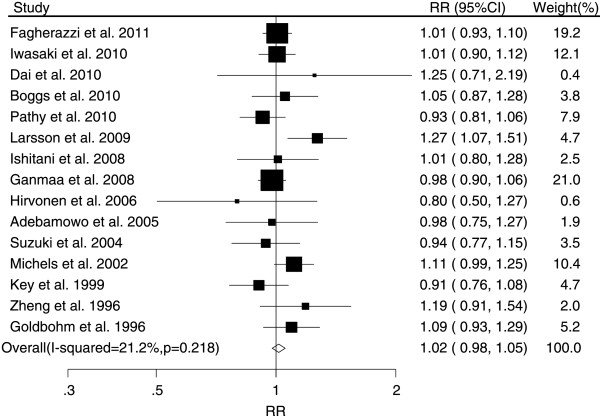
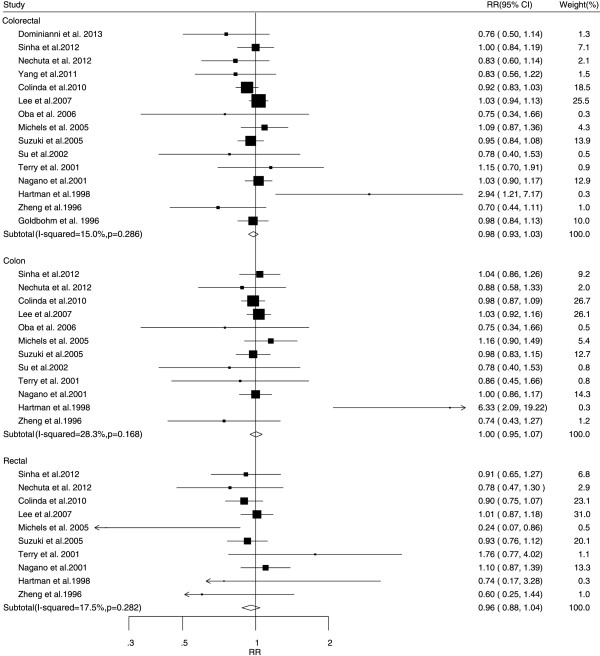
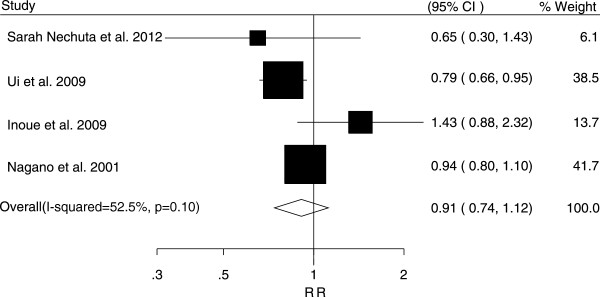
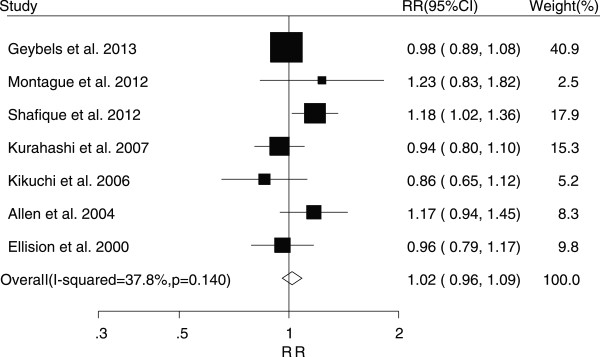
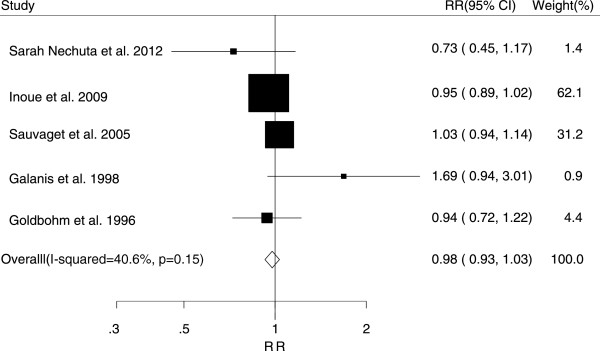
Results: Forty-one prospective studies, with a total of 3,027,702 participants and 49,103 cancer cases, were included. From the pooled overall RRs, no inverse association between tea consumption and risk of five major cancers was observed. However, subgroup analysis showed that increase in consumption of three cups of black tea per day was a significant risk factor for breast cancer (RR, 1.18; 95% CI, 1.05-1.32).
Conclusion: Ourresults did not show a protective role of tea in five major cancers. Additional large prospective cohort studies are needed to make a convincing case for associations.
Figures
References
-
- Food and Agriculture Organization of the United Nations. Food balance sheets, 1994–1996. Available from: http://faostat3.fao.org/home/index.html#DOWNLOAD_STANDARD.
-
- Ahmad N, Mukhtar H. Green tea polyphenols and cancer: biologic mechanisms and practical implications. Nutr Rev. 1999;57(3):78–83. - PubMed
Publication types
MeSH terms
Substances
LinkOut - more resources
Full Text Sources
Other Literature Sources
