


Food allergy: Insights into etiology, prevention, and treatment provided by murine models
- PMID: 24636470
- PMCID: PMC3959655
- DOI: 10.1016/j.jaci.2013.12.1045
Food allergy: Insights into etiology, prevention, and treatment provided by murine models
Abstract
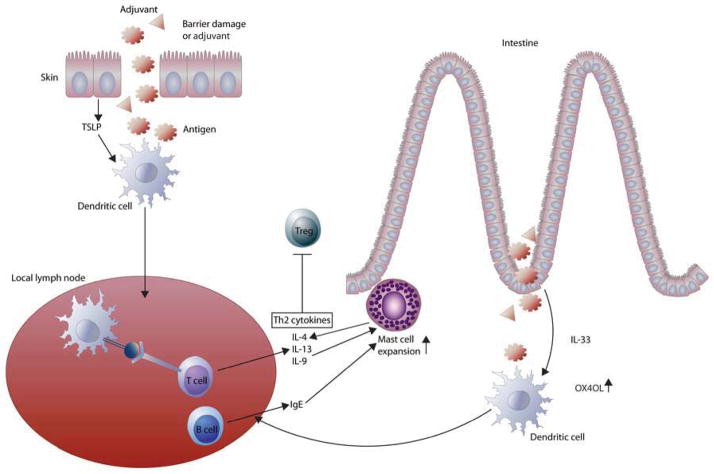
Food allergy is a rapidly growing public health concern because of its increasing prevalence and life-threatening potential. Animal models of food allergy have emerged as a tool for identifying mechanisms involved in the development of sensitization to normally harmless food allergens, as well as delineating the critical immune components of the effector phase of allergic reactions to food. However, the role animal models might play in understanding human diseases remains contentious. This review summarizes how animal models have provided insights into the etiology of human food allergy, experimental corroboration for epidemiologic findings that might facilitate prevention strategies, and validation for the utility of new therapies for food allergy. Improved understanding of food allergy from the study of animal models together with human studies is likely to contribute to the development of novel strategies to prevent and treat food allergy.
Keywords: AD; Atopic dermatitis; CM; CT; Cholera toxin; Cow's milk; DC; Dendritic cell; FAHF-2; Food Allergy Herbal Formula-2; Food allergy; Forkhead box protein 3; Foxp3; GF; Germ free; LP; Lamina propria; MLN; Mesenteric lymph node; OIT; Oral immunotherapy; PAF; Platelet-activating factor; Regulatory T; SEB; Staphylococcal enterotoxin B; Treg; anaphylaxis; microbiota; murine model; regulatory T cells.
Copyright © 2014 American Academy of Allergy, Asthma & Immunology. Published by Mosby, Inc. All rights reserved.
Figures
References
Publication types
MeSH terms
Grants and funding
LinkOut - more resources
Full Text Sources
Other Literature Sources
Medical
