


Urinary bisphenol a levels in girls with idiopathic central precocious puberty
- PMID: 24637305
- PMCID: PMC3986734
- DOI: 10.4274/Jcrpe.1220
Urinary bisphenol a levels in girls with idiopathic central precocious puberty
Abstract
Objective: Bisphenol A (BPA) is an industrial chemical, particularly used to harden plastics. BPA is thought to have negative health effects on both laboratory animals and humans. Consider ing the decline in age of onset of puberty noted in recent years, particularly among girls, the importance of BPA as an estrogenic endocrine disruptor has increased. In this study, we aimed to determine urinary BPA levels in girls with idiopathic central precocious puberty (ICPP).
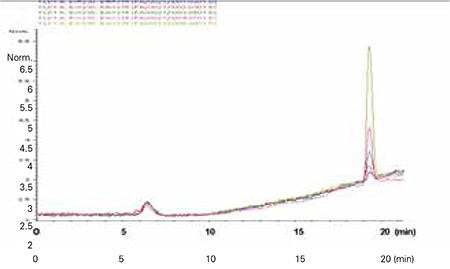
Methods: Non-obese girls newly diagnosed with ICPP (n=28, age 4-8 years) constituted the study group. The control group consisted of 25 healthy age-matched girls with no history of ICPP or any other endocrine disorder. Urinary BPA levels were measured by using high-performance liquid chromatography.
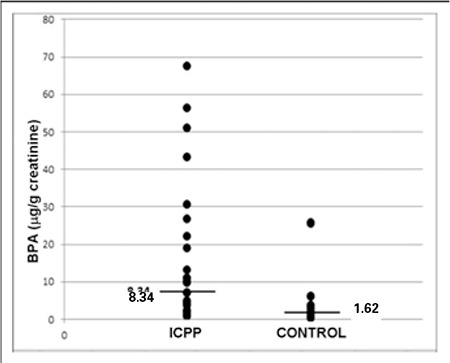
Results: In the ICPP group, urinary BPA levels were significantly higher compared to the control group [median 8.34 (0.84-67.35) μg/g creatinine and 1.62 (0.3-25.79) μg/g creatinine, respectively (OR=8.68, 95% CI:2.03-32.72, p=0.001)]. There was no marked correlation between urinary BPA levels and body mass index in either group. In the ICPP group, no significant correlations were found between urinary BPA levels and serum luteinizing hormone, follicle-stimulating hormone and estradiol levels.
Conclusions: To our knowledge, this is the first study evaluating the urinary BPA levels in Turkish girls with ICPP. Our results indicate that the estrogenic effects of BPA may be an etiologic factor in ICPP.
Figures
References
-
- Lebrethon MC, Bourguignon JP. Management of central isosexual precocity: diagnosis, treatment, outcome. Curr Opin Pediatr. 2000;12:394–399. - PubMed
-
- Main KM, Skakkebaek NE, Juul A. Hypothesis: exposure to endocrine disrupting chemicals may interfere with timing of puberty. Int J Androl. 2010;33:346–359. - PubMed
-
- Euling SY, Herman-Giddens ME, Lee PA, Selevan SG, Juul A, Sørensen TI, Dunkel L, Himes JH, Teilmann G, Swan SH. Examination of US puberty-timing data from 1940 to 1994 for secular trends: panel findings. Pediatrics. 2008;121(Suppl 3):172–191. - PubMed
Publication types
MeSH terms
Substances
LinkOut - more resources
Full Text Sources
Other Literature Sources
