


Cognitive and physical function in chronic kidney disease
- PMID: 24638060
- PMCID: PMC4052721
- DOI: 10.1097/01.mnh.0000444821.87873.7b
Cognitive and physical function in chronic kidney disease
Abstract
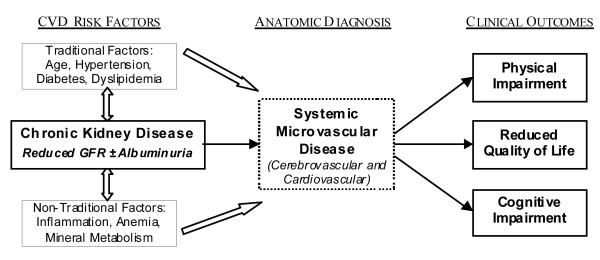
Purpose of review: Both cognitive and physical function are commonly impaired in individuals with chronic kidney disease (CKD), resulting in important impacts on their quality of life and overall health. This review summarizes the burden of cognitive and physical impairment in CKD, focusing on recent research that highlights a possible unifying microvascular cause among these shared comorbid conditions.
Recent findings: Multiple small studies have been published recently evaluating cognitive and physical functioning in people with CKD. These studies overall demonstrate a high burden of comorbid conditions in people with CKD, including microvascular disease, that may result in cognitive impairment. Additionally, studies demonstrate that physical function is substantially worse than expected in individuals with CKD, that decreased physical activity is associated with worse outcomes, that frailty is very common and associated with an increased risk of death, and that structured exercise programs have small but tangible short-term effects on markers of physical performance.
Summary: Impaired cognitive function and physical performance are important factors impacting the lives of people with CKD. Further research is necessary to better treat these important comorbid conditions in people with CKD.
Figures
References
Publication types
MeSH terms
Grants and funding
LinkOut - more resources
Full Text Sources
Other Literature Sources
Medical
