


Levonorgestrel-releasing intrauterine system vs. usual medical treatment for menorrhagia: an economic evaluation alongside a randomised controlled trial
- PMID: 24638071
- PMCID: PMC3956766
- DOI: 10.1371/journal.pone.0091891
Levonorgestrel-releasing intrauterine system vs. usual medical treatment for menorrhagia: an economic evaluation alongside a randomised controlled trial
Abstract
Objective: To undertake an economic evaluation alongside the largest randomised controlled trial comparing Levonorgestrel-releasing intrauterine device ('LNG-IUS') and usual medical treatment for women with menorrhagia in primary care; and compare the cost-effectiveness findings using two alternative measures of quality of life.
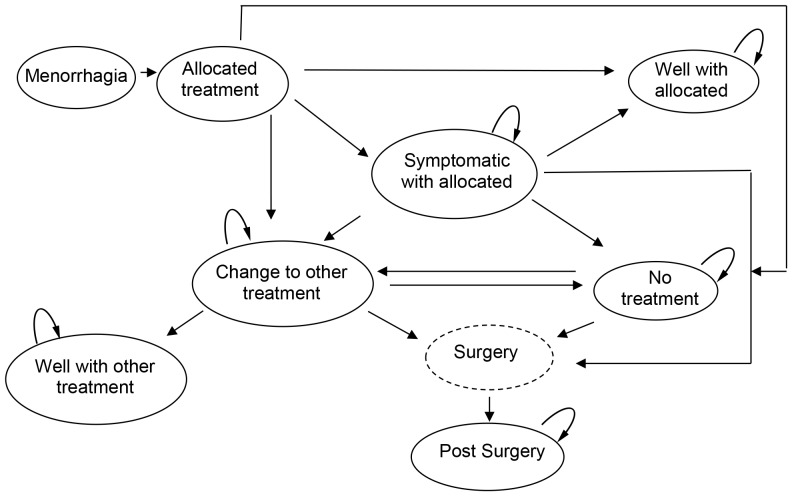
Methods: 571 women with menorrhagia from 63 UK centres were randomised between February 2005 and July 2009. Women were randomised to having a LNG-IUS fitted, or usual medical treatment, after discussing with their general practitioner their contraceptive needs or desire to avoid hormonal treatment. The treatment was specified prior to randomisation. For the economic evaluation we developed a state transition (Markov) model with a 24 month follow-up. The model structure was informed by the trial women's pathway and clinical experts. The economic evaluation adopted a UK National Health Service perspective and was based on an outcome of incremental cost per Quality Adjusted Life Year (QALY) estimated using both EQ-5D and SF-6D.
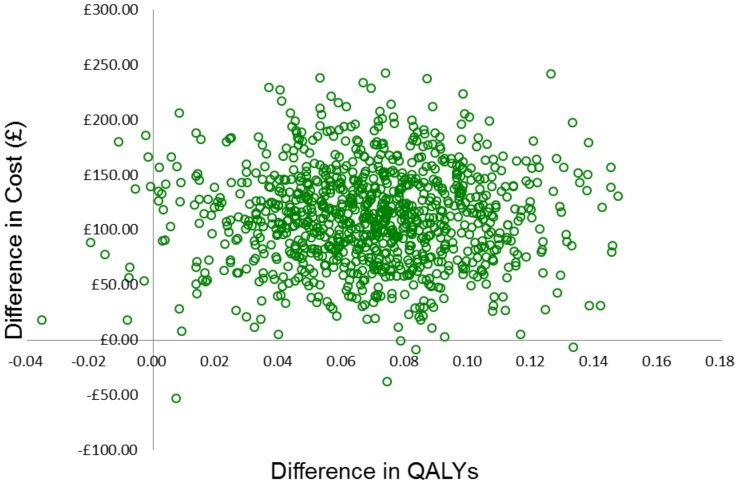
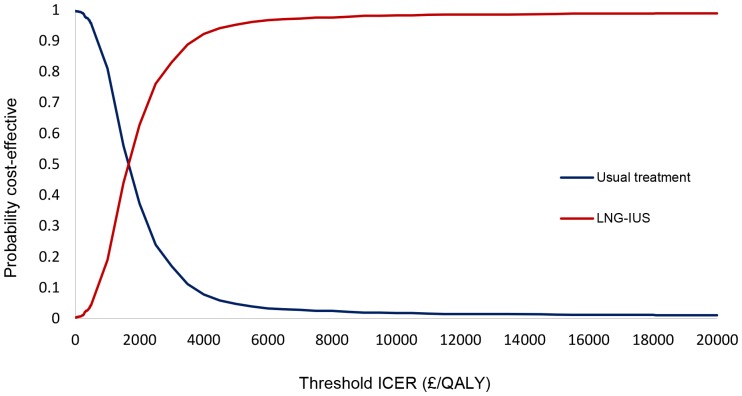
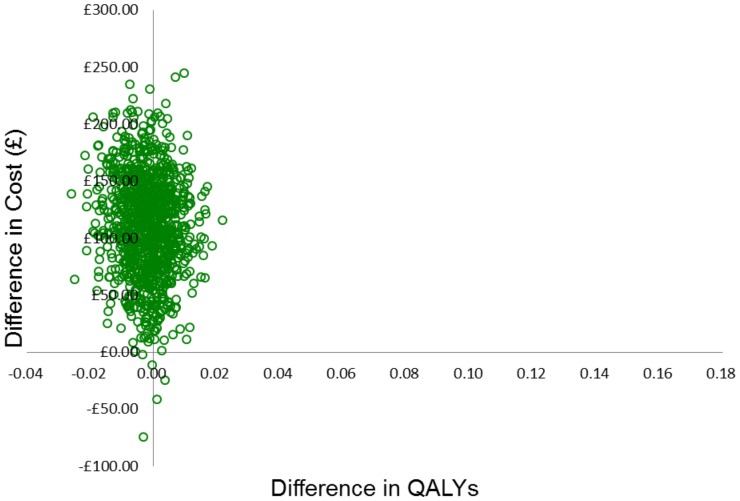
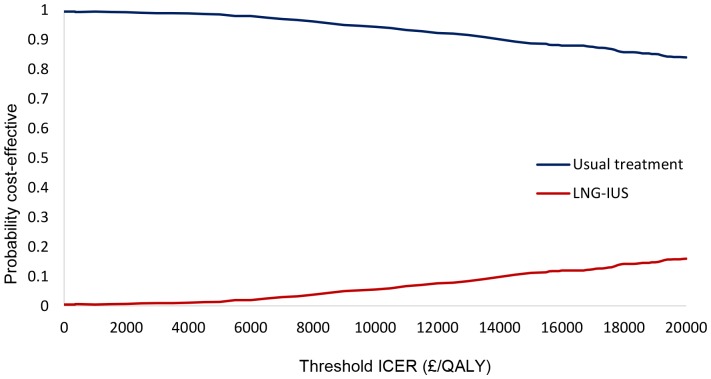
Results: Using EQ-5D, LNG-IUS was the most cost-effective treatment for menorrhagia. LNG-IUS costs £100 more than usual medical treatment but generated 0.07 more QALYs. The incremental cost-effectiveness ratio for LNG-IUS compared to usual medical treatment was £1600 per additional QALY. Using SF-6D, usual medical treatment was the most cost-effective treatment. Usual medical treatment was both less costly (£100) and generated 0.002 more QALYs.
Conclusion: Impact on quality of life is the primary indicator of treatment success in menorrhagia. However, the most cost-effective treatment differs depending on the quality of life measure used to estimate the QALY. Under UK guidelines LNG-IUS would be the recommended treatment for menorrhagia. This study demonstrates that the appropriate valuation of outcomes in menorrhagia is crucial.
Conflict of interest statement
Figures
References
-
- Office of Population Census and Surveys (1995) Morbidity Statistics from General Practice: fourth national morbidity study: 1991–1992. London: Her Majesty's Stationery Office.
-
- National Collaborating Centre for Women's and Children's Health (2007) Heavy Menstrual Bleeding. London, Royal College of Obstetricians and Gynaecologists.
-
- Stewart A, Cummins C, Gold L, Jordan R, Phillips W (2001) The effectiveness of the levonorgestrel-releasing intrauterine system in menorrhagia: a systematic review. Br J Obstet Gynaecol 108: 74–86. - PubMed
Publication types
MeSH terms
Substances
Grants and funding
LinkOut - more resources
Full Text Sources
Other Literature Sources
