


The emerging role of nutrition in Parkinson's disease
- PMID: 24639650
- PMCID: PMC3945400
- DOI: 10.3389/fnagi.2014.00036
The emerging role of nutrition in Parkinson's disease
Abstract
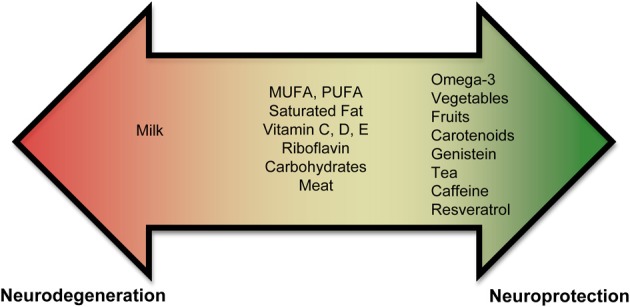
Parkinson's disease (PD) is the second most prevalent neurodegenerative disease in ageing individuals. It is now clear that genetic susceptibility and environmental factors play a role in disease etiology and progression. Because environmental factors are involved with the majority of the cases of PD, it is important to understand the role nutrition plays in both neuroprotection and neurodegeneration. Recent epidemiological studies have revealed the promise of some nutrients in reducing the risk of PD. In contrast, other nutrients may be involved with the etiology of neurodegeneration or exacerbate disease progression. This review summarizes the studies that have addressed these issues and describes in detail the nutrients and their putative mechanisms of action in PD.
Keywords: Parkinson's disease; antioxidants; neurodegeneration; neuroprotection; nutrition.
Figures
References
-
- Abbott R. D., Ross G. W., White L. R., Sanderson W. T., Burchfiel C. M., Kashon M., et al. (2003). Environmental, life-style, and physical precursors of clinical Parkinson's disease: recent findings from the Honolulu-Asia Aging Study. J. Neurol. 250Suppl. 3, III30–III39 10.1007/s00415-003-1306-7 - DOI - PubMed
Publication types
LinkOut - more resources
Full Text Sources
Other Literature Sources
