


Huperzine a in the treatment of Alzheimer's disease and vascular dementia: a meta-analysis
- PMID: 24639880
- PMCID: PMC3930088
- DOI: 10.1155/2014/363985
Huperzine a in the treatment of Alzheimer's disease and vascular dementia: a meta-analysis
Abstract
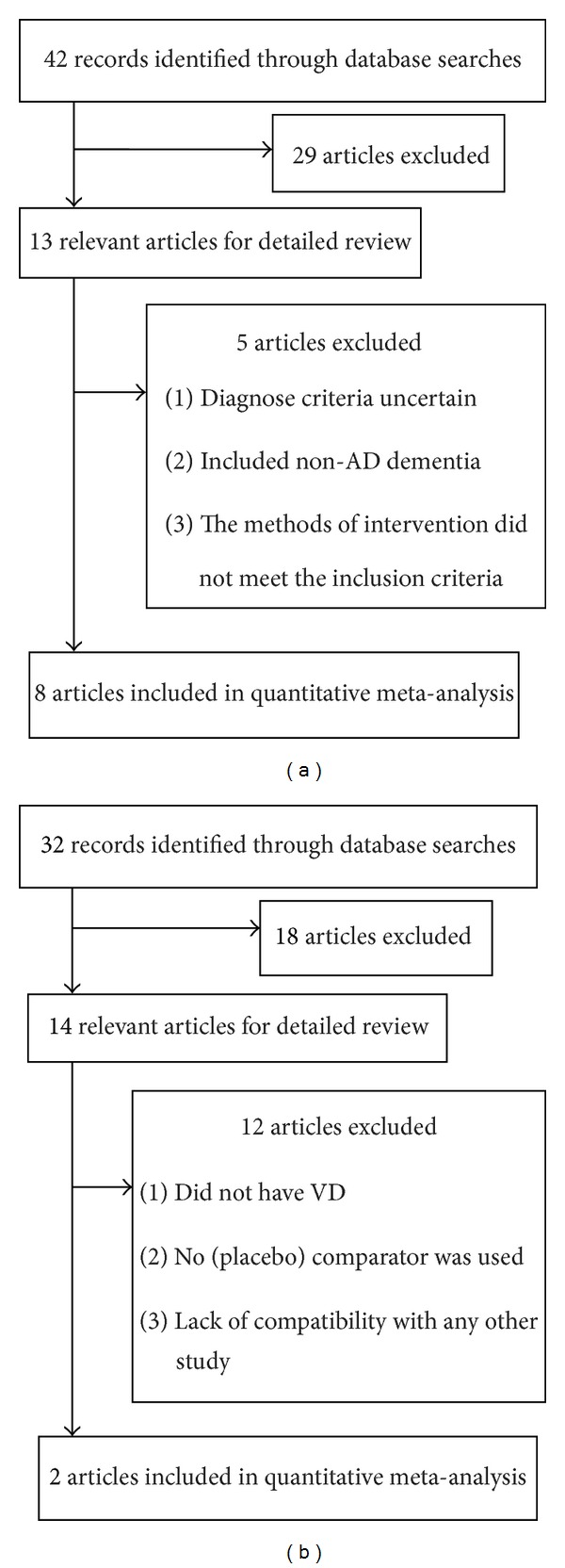
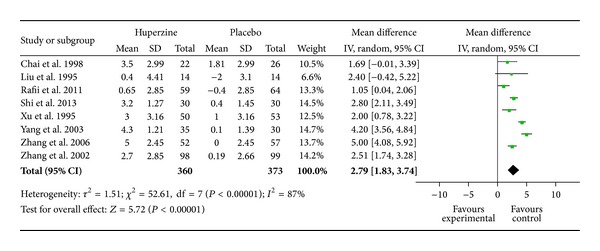
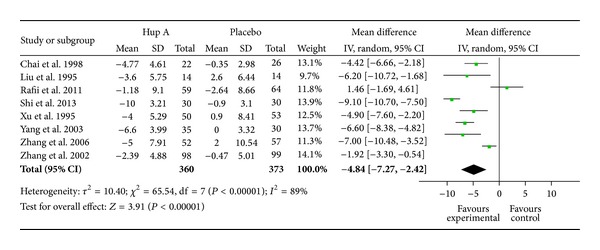
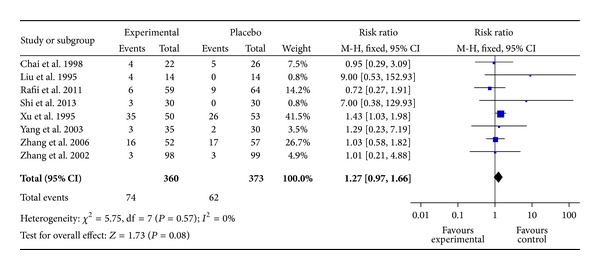
The objective of our study was to perform an updated meta-analysis of placebo-controlled RCTs of Huperzine A (Hup A) on patients with Alzheimer's disease (AD) and vascular dementia (VD), in order to provide the basis and reference for clinical rational drug use. The primary outcome measures assessed were minimental state examination (MMSE) and activities of daily living scale (ADL). Eight AD trials with 733 participants and two VD trials with 92 participants that met our inclusion criteria were identified. The results showed that Hup A could significantly improve the MMSE and ADL score of AD and VD patients, and longer durations would result in better efficacy for the patients with AD. It seemed that there was significant improvement of cognitive function measured by memory quotient (MQ) in patients with AD. Most adverse effects in AD were generally of mild to moderate severity and transient. Compared to the patients with AD, Hup A may offer fewer side effects for participants with VD in this study. Therefore, Hup A is a well-tolerated drug that could significantly improve cognitive performance in patients with AD or VD, but we need to use it with caution in the clinical treatment.
Figures
References
-
- Wang BS, Wang H, Wei ZH, Song YY, Zhang L, Chen HZ. Efficacy and safety of natural acetylcholinesterase inhibitor huperzine A in the treatment of Alzheimer’s disease: an updated meta-analysis. Journal of Neural Transmission. 2009;116(4):457–465. - PubMed
-
- Giacobini E. Invited review. Cholinesterase inhibitors for Alzheimer’s disease therapy: from tacrine to future applications. Neurochemistry International. 1998;32(5-6):413–419. - PubMed
-
- Hansen RA, Gartlehner G, Lohr KN, Kaufer DI. Functional outcomes of drug treatment in Alzheimer’s disease: a systematic review and meta-analysis. Drugs and Aging. 2007;24(2):155–167. - PubMed
-
- Xu ZQ, Liang XM, Juan-Wu JW, Zhang YF, Zhu CX, Jiang XJ. Treatment with huperzine A improves cognition in vascular dementia patients. Cell Biochemistry and Biophysics. 2012;62(1):55–58. - PubMed
Publication types
LinkOut - more resources
Full Text Sources
Other Literature Sources
Miscellaneous
