. 2014:2014:719740.
doi: 10.1155/2014/719740. Epub 2014 Feb 3.

The pink rim sign: location of pink as an indicator of melanoma in dermoscopic images

Affiliations

The pink rim sign: location of pink as an indicator of melanoma in dermoscopic images

Ryan K Rader et al. J Skin Cancer. 2014.

Abstract

Background. In dermoscopic images, multiple shades of pink have been described in melanoma without specifying location of these areas within the lesion. Objective. The purpose of this study was to determine the statistics for the presence of centrally and peripherally located pink melanoma and benign melanocytic lesions. Methods. Three observers, untrained in dermoscopy, each retrospectively analyzed 1290 dermoscopic images (296 melanomas (170 in situ and 126 invasive), 994 benign melanocytic nevi) and assessed the presence of any shade of pink in the center and periphery of the lesion. Results. Pink was located in the peripheral region in 14.5% of melanomas and 6.3% of benign melanocytic lesions, yielding an odds ratio of 2.51 (95% CI: 1.7-3.8, P < 0.0001). Central pink was located in 12.8% of melanomas and 21.8% of benign lesions, yielding an odds ratio of 0.462 (95% CI: 0.67, P = 0.204). Pink in melanoma in situ tended to be present throughout the lesion (68% of pink lesions). Pink in invasive melanoma was present in 17% of cases, often presenting as a pink rim. Conclusions. The presence of pink in the periphery or rim of a dermoscopic melanocytic lesion image provides an indication of malignancy. We offer the "pink rim sign" as a clue to the dermoscopic diagnosis of invasive melanoma.


Figures
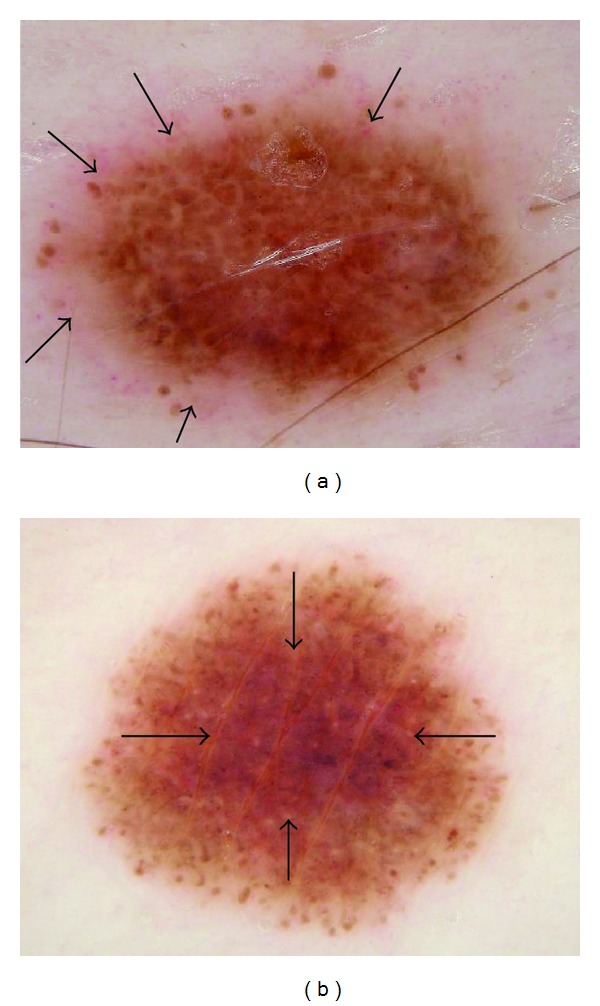
Figure 1
Figure 1
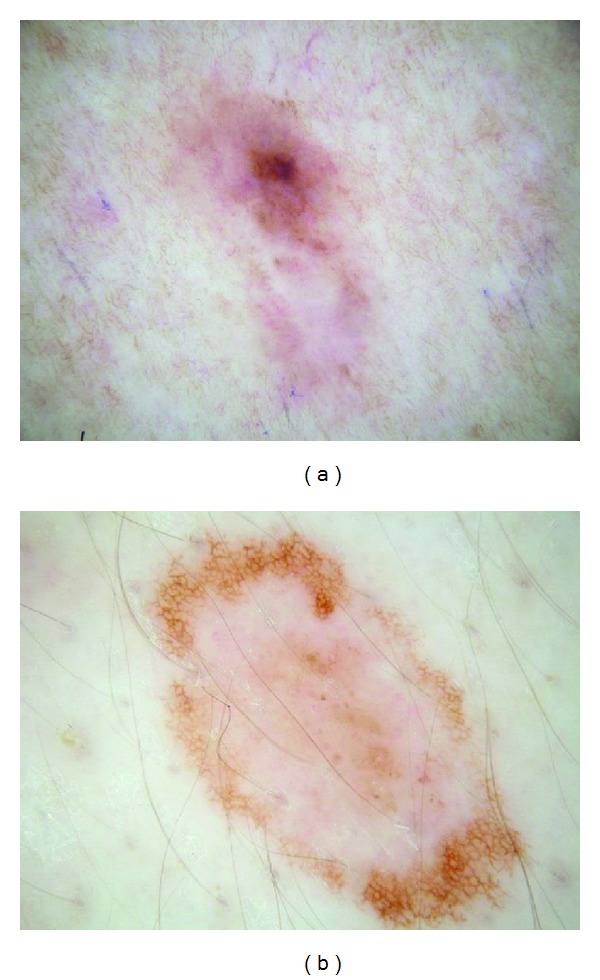
(a) In situ melanoma arising within a congenital lesion, 4 mm, abdomen, 34-year-old male. Peripheral pink with some eccentric pink centrally: in situ melanoma, 4 mm wide, right abdomen, arising within a superficial compound congenital nevus; pink rim sign is present (arrows) just external to irregular network lacking pink. Note negative network and peripheral globules that are fairly uniform and symmetric. (b) Pink throughout lesion: benign nevus, not biopsied, 5 mm nevus on upper arm in 35-year-old female; pink is present at rim but is most prominent centrally (arrows). Pink rim sign is absent. Note similar architecture and symmetrically arranged globules in both lesions.
Figure 2
Figure 2
(a) Noncircumferential peripheral and central pink: completely amelanotic invasive melanoma, on right upper arm, 42-year-old female, depth 0.55 mm, 5 mm wide; patient had not noticed the lesion. Pink is present; pink rim sign is absent. (b) Histopathology for melanoma.
Figure 3
Figure 3
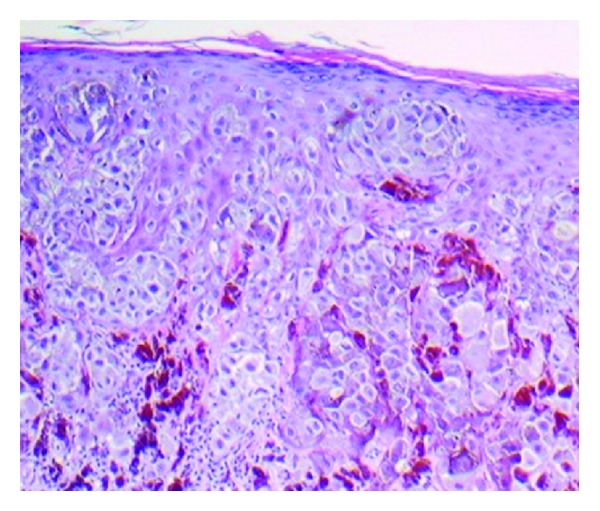
(a) Invasive melanoma, 8 mm wide, back, 62-year-old female, depth 0.55 mm. Nearly circumferential peripheral and central pink. (b) Clark compound nevus, 9 mm wide, 17-year-old male, biopsy confirmed. Central-only pink. Pink rim sign is absent in both (a) and (b).
Figure 4
Figure 4
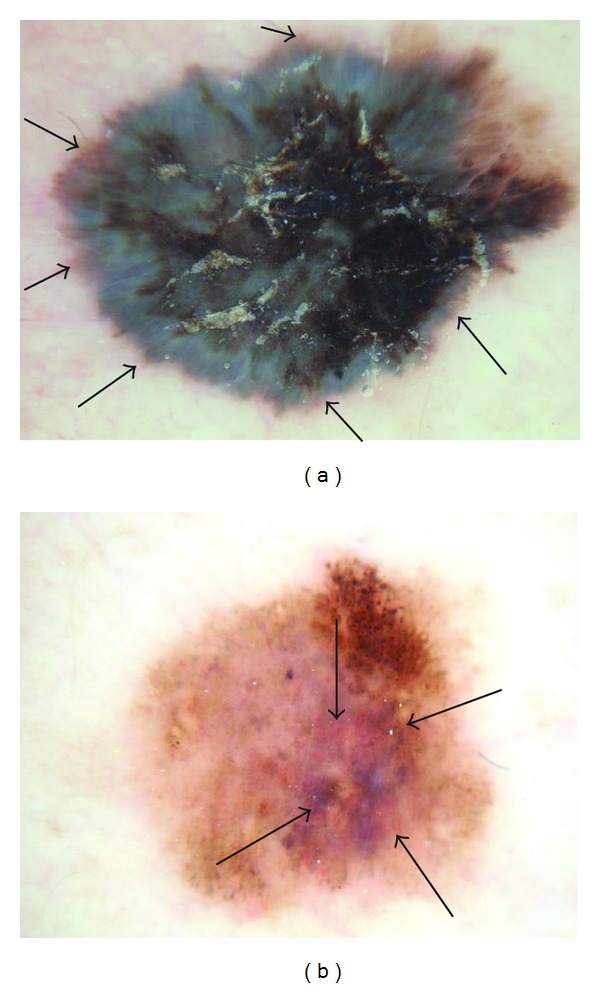
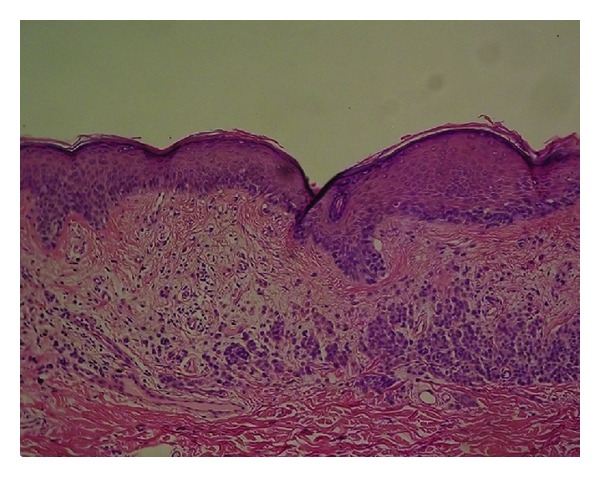
(a) Invasive melanoma, 10 mm wide, chest, 50-year-old male, 0.80 mm thick, peripheral-only pink, with circumferential pink rim sign (most prominent at arrows). (b) Clark compound nevus with moderate atypia, 5.5 mm wide, on shoulder, 25-year-old female. Note architectural disorder, irregularly distributed globules, atypical pigment net, and pink and blue color. Pink is most prominent at center (arrows), negative pink rim sign.
Figure 5
Figure 5
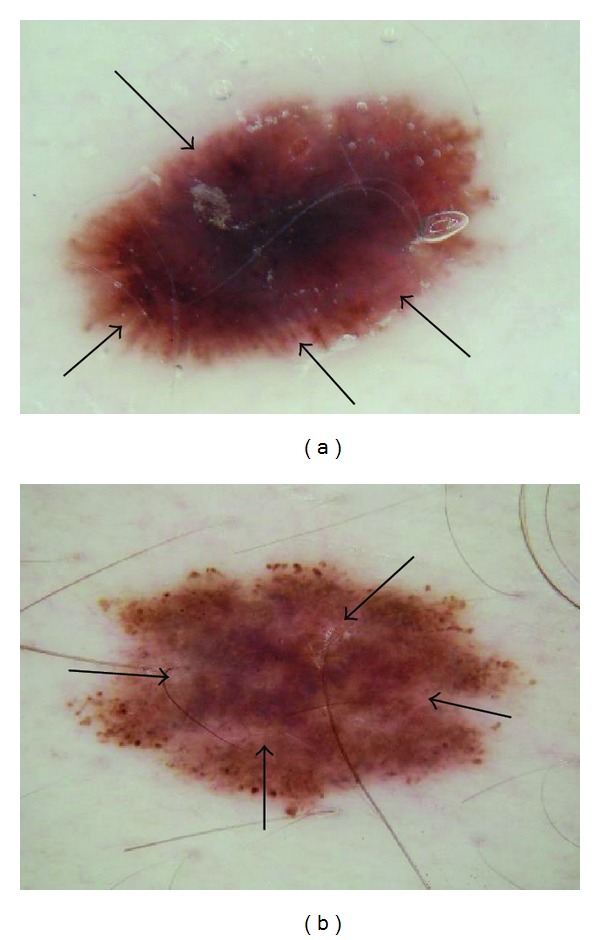
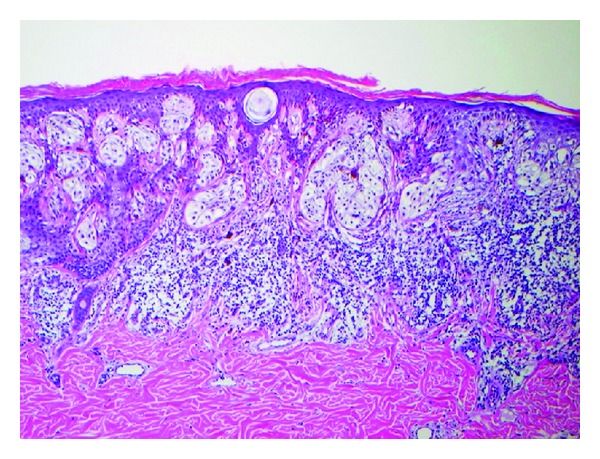
(a) Invasive melanoma, 5 mm wide, lateral abdomen, 32-year-old male, 0.44 mm thick, peripheral pink, with pink rim sign (arrows). (b) Enlarging melanocytic lesion with congenital features, 8 mm wide, abdomen, 21-year-old male. Pink is more prominent centrally than peripherally, negative pink rim sign.
Figure 6
Figure 6
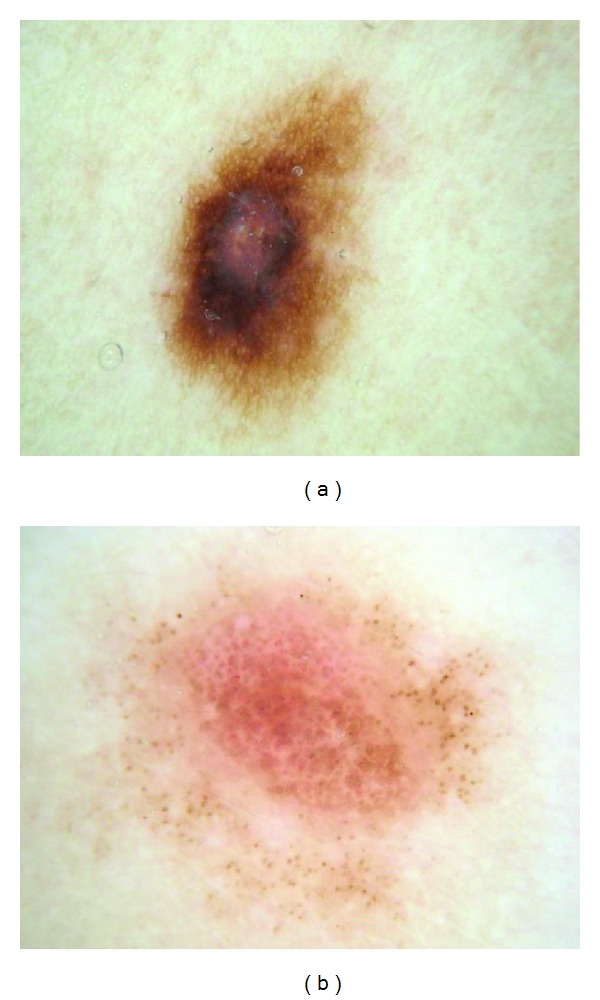
(a) Benign nevus. Central pink only. (b) Congenital nevus, no biopsy, central-only pink. In this nevus, pink extends nearly to the periphery but diminished at the far rim. Neither lesion was biopsied.
Figure 7
Figure 7
Histopathology for Figure 3(a), melanoma 0.55 mm depth.
Figure 8
Figure 8
Histopathology for Figure 4(a), invasive melanoma 0.80 mm depth.
Figure 9
Figure 9
Histopathology for Figure 5(a), invasive melanoma 0.44 mm thick.

References

    1. Friedman RJ, Rigel DS, Kopf AW. Early detection of malignant melanoma: the role of physician examination and self-examination of the skin. Ca-A Cancer Journal for Clinicians. 1985;35(3):130–151. - PubMed
    1. Johr RH. Pink lesions. Clinics in Dermatology. 2002;20(3):289–296. - PubMed
    1. Argenziano G, Zalaudek I, Corona R, et al. Vascular structures in skin tumors: a dermoscopy study. Archives of Dermatology. 2004;140(12):1485–1489. - PubMed
    1. Pizzichetta MA, Talamini R, Stanganelli I, et al. Amelanotic/hypomelanotic melanoma: clinical and dermoscopic features. British Journal of Dermatology. 2004;150(6):1117–1124. - PubMed
    1. Menzies SW, Kreusch J, Byth K, et al. Dermoscopic evaluation of amelanotic and hypomelanotic melanoma. Archives of Dermatology. 2008;144(9):1120–1127. - PubMed

LinkOut - more resources