


Higher plasma vitamin D is associated with reduced risk of Clostridium difficile infection in patients with inflammatory bowel diseases
- PMID: 24641590
- PMCID: PMC4187206
- DOI: 10.1111/apt.12706
Higher plasma vitamin D is associated with reduced risk of Clostridium difficile infection in patients with inflammatory bowel diseases
Abstract
Background: Patients with inflammatory bowel diseases (IBD) have an increased risk of clostridium difficile infection (CDI). Cathelicidins are anti-microbial peptides that attenuate colitis and inhibit the effect of clostridial toxins. Plasma calcifediol [25(OH)D] stimulates production of cathelicidins.
Aim: To examine the association between plasma 25(OH)D and CDI in patients with IBD.
Methods: From a multi-institutional IBD cohort, we identified patients with at least one measured plasma 25(OH)D. Our primary outcome was development of CDI. Multivariate logistic regression models adjusting for potential confounders were used to identify independent effect of plasma 25(OH)D on risk of CDI.
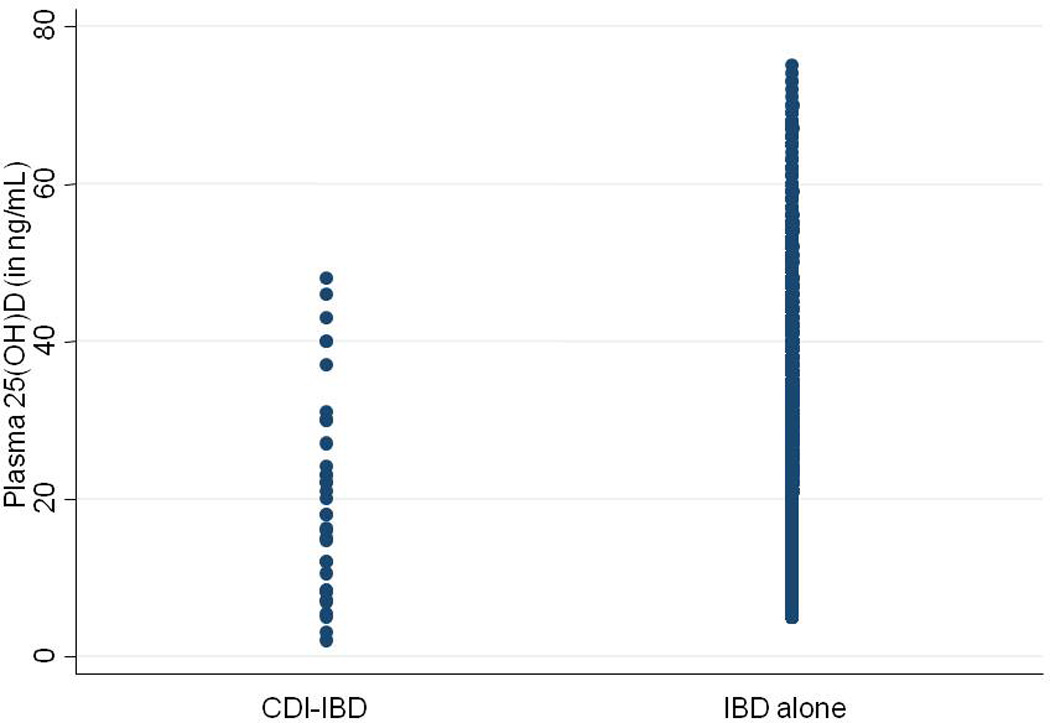
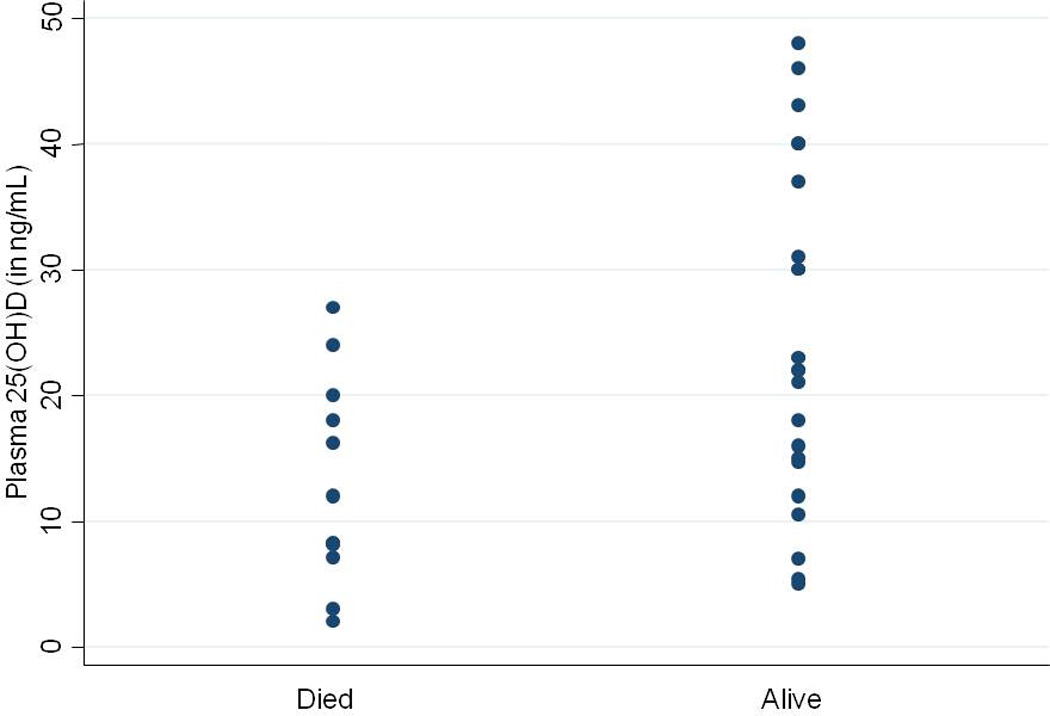
Results: We studied 3188 IBD patients of whom 35 patients developed CDI. Patients with CDI-IBD were older and had greater co-morbidity. The mean plasma 25(OH)D level was significantly lower in patients who developed CDI (20.4 ng/mL) compared to non-CDI-IBD patients (27.1 ng/mL) (P = 0.002). On multivariate analysis, each 1 ng/mL increase in plasma 25(OH)D was associated with a 4% reduction in risk of CDI (OR 0.96, 95% CI 0.93-0.99, P = 0.046). Compared to individuals with vitamin D >20 ng/mL, patients with levels <20 ng/mL were more likely to develop CDI (OR 2.27, 95% CI 1.16-4.44). The mean plasma 25(OH)D in patients with CDI who subsequently died was significantly lower (12.8 ± 8.1 ng/mL) compared to those who were alive at the end of follow-up (24.3 ± 13.2 ng/mL) (P = 0.01).
Conclusions: Higher plasma calcifediol [25(OH)D] is associated with reduced risk of C. difficile infection in patients with IBD. Further studies of therapeutic supplementation of vitamin D in patients with inflammatory bowel disease and C. difficile infection may be warranted.
© 2014 John Wiley & Sons Ltd.
Conflict of interest statement
Figures
References
-
- Issa M, Vijayapal A, Graham MB, et al. Impact of Clostridium difficile on inflammatory bowel disease. Clin Gastroenterol Hepatol. 2007;5:345–351. - PubMed
-
- Jen MH, Saxena S, Bottle A, et al. Increased health burden associated with Clostridium difficile diarrhoea in patients with inflammatory bowel disease. Aliment Pharmacol Ther. 2011;33:1322–1331. - PubMed
-
- Murthy SK, Steinhart AH, Tinmouth J, et al. Impact of Clostridium difficile colitis on 5-year health outcomes in patients with ulcerative colitis. Aliment Pharmacol Ther. 2012;36:1032–1039. - PubMed
-
- Ananthakrishnan AN, Issa M, Binion DG. Clostridium difficile and inflammatory bowel disease. Gastroenterol Clin North Am. 2009;38:711–728. - PubMed
-
- Ananthakrishnan AN, McGinley EL, Binion DG. Excess hospitalisation burden associated with Clostridium difficile in patients with inflammatory bowel disease. Gut. 2008;57:205–210. - PubMed
Publication types
MeSH terms
Substances
Grants and funding
LinkOut - more resources
Full Text Sources
Other Literature Sources
Medical