


Genetic analysis and molecular characterization of Chinese sesame (Sesamum indicum L.) cultivars using insertion-deletion (InDel) and simple sequence repeat (SSR) markers
- PMID: 24641723
- PMCID: PMC4234512
- DOI: 10.1186/1471-2156-15-35
Genetic analysis and molecular characterization of Chinese sesame (Sesamum indicum L.) cultivars using insertion-deletion (InDel) and simple sequence repeat (SSR) markers
Abstract
Background: Sesame is an important and ancient oil crop in tropical and subtropical areas. China is one of the most important sesame producing countries with many germplasm accessions and excellent cultivars. Domestication and modern plant breeding have presumably narrowed the genetic basis of cultivated sesame. Several modern sesame cultivars were bred with a limited number of landrace cultivars in their pedigree. The genetic variation was subsequently reduced by genetic drift and selection. Characterization of genetic diversity of these cultivars by molecular markers is of great value to assist parental line selection and breeding strategy design.
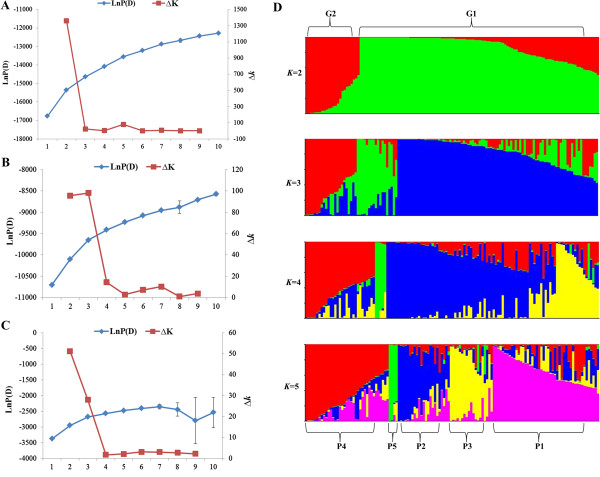
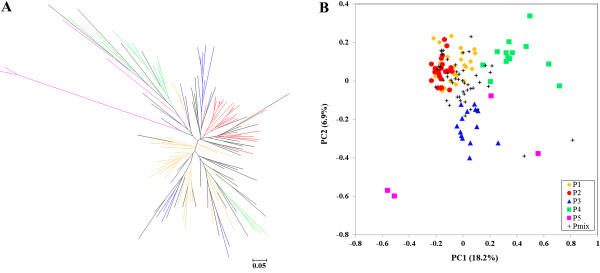
Results: Three hundred and forty nine simple sequence repeat (SSR) and 79 insertion-deletion (InDel) markers were developed from cDNA library and reduced-representation sequencing of a sesame cultivar Zhongzhi 14, respectively. Combined with previously published SSR markers, 88 polymorphic markers were used to assess the genetic diversity, phylogenetic relationships, population structure, and allele distribution among 130 Chinese sesame accessions including 82 cultivars, 44 landraces and 4 wild germplasm accessions. A total of 325 alleles were detected, with the average gene diversity of 0.432. Model-based structure analysis revealed the presence of five subgroups belonging to two main groups, which were consistent with the results from principal coordinate analysis (PCA), phylogenetic clustering and analysis of molecular variance (AMOVA). Several missing or unique alleles were identified from particular types, subgroups or families, even though they share one or both parental/progenitor lines.
Conclusions: This report presented a by far most comprehensive characterization of the molecular and genetic diversity of sesame cultivars in China. InDels are more polymorphic than SSRs, but their ability for deciphering genetic diversity compared to the later. Improved sesame cultivars have narrower genetic basis than landraces, reflecting the effect of genetic drift or selection during breeding processes. Comparative analysis of allele distribution revealed genetic divergence between improved cultivars and landraces, as well as between cultivars released in different years. These results will be useful for assessing cultivars and for marker-assisted breeding in sesame.
Figures
References
-
- Bedigian D. Evolution of sesame revisited: domestication, diversity and prospects. Genet Resour Crop Ev. 2003;50(7):779–787. doi: 10.1023/A:1025029903549. - DOI
-
- Anilakumar KR, Pal A, Khanum F, Bawa AS. Nutritional, medicinal and industrial uses of sesame (Sesamum indicum L.) seeds-an overview. Agric conspec sci. 2010;75(4):159–168.
-
- Namiki M. The Chemistry and Physiological Functions of Sesame. Food Rev Int. 1995;11(2):281–329. doi: 10.1080/87559129509541043. - DOI
-
- Moazzami AA, Kamal-Eldin A. Sesame seed is a rich source of dietary lignans. J Am Oil Chem Soc. 2006;83(8):719–723. doi: 10.1007/s11746-006-5029-7. - DOI
Publication types
MeSH terms
Substances
LinkOut - more resources
Full Text Sources
Other Literature Sources
