


A systematic review and meta-analysis of the effect and safety of ginger in the treatment of pregnancy-associated nausea and vomiting
- PMID: 24642205
- PMCID: PMC3995184
- DOI: 10.1186/1475-2891-13-20
A systematic review and meta-analysis of the effect and safety of ginger in the treatment of pregnancy-associated nausea and vomiting
Abstract
Background and objectives: Nausea and vomiting during pregnancy (NVP) occur commonly. Possible harmful side-effects of conventional medicine to the fetus create the need for alternative options to relieve NVP. This systematic review (SR) investigated current evidence regarding orally administered ginger for the treatment of NVP. The primary objective was to assess the effectiveness of ginger in treating NVP. The secondary objective was to assess the safety of ginger during pregnancy.
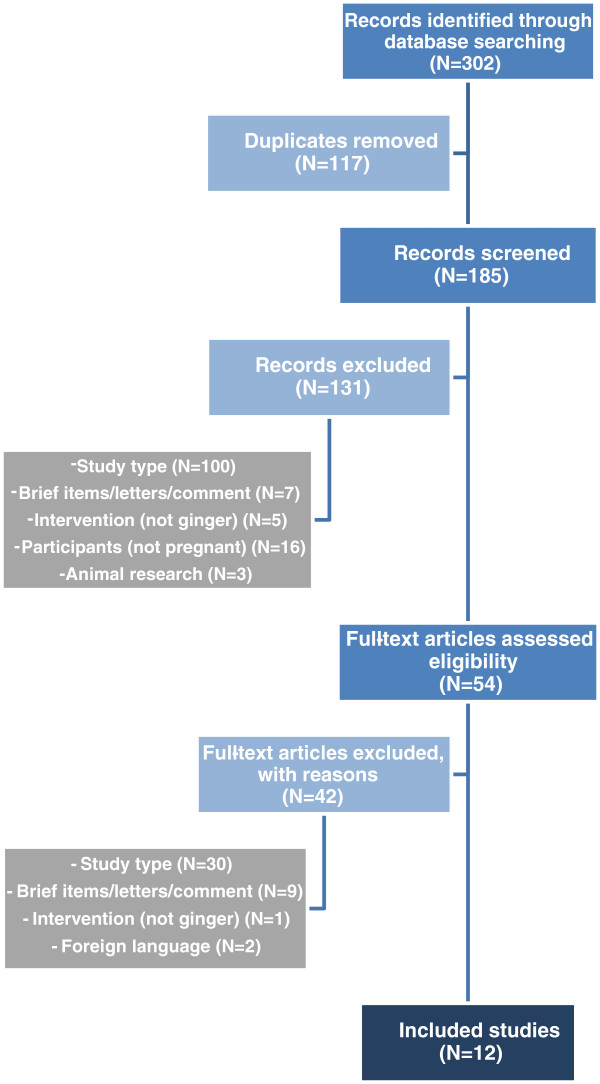
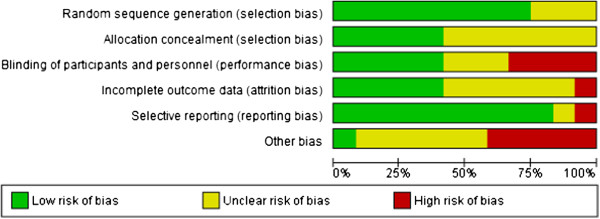
Methods: A comprehensive electronic bibliographic database search was carried out. Randomized controlled trials (RCTs) of the efficacy of orally administered ginger, as treatment for NVP in pregnant women at any stage of pregnancy, published in English, were included. Two researchers independently extracted data and assessed trial quality. RevMan5 software (Cochrane Collaboration) was used for data analysis. p < 0.05 was considered statistically significant.
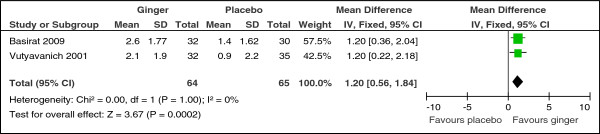
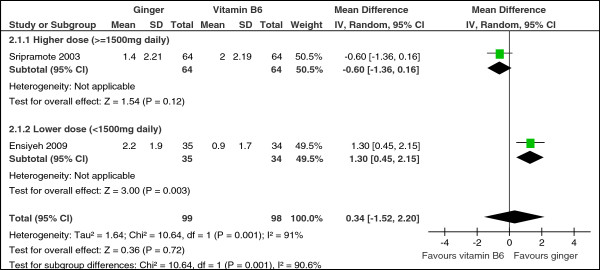
Results: Twelve RCTs involving 1278 pregnant women were included. Ginger significantly improved the symptoms of nausea when compared to placebo (MD 1.20, 95% CI 0.56-1.84, p = 0.0002, I² = 0%). Ginger did not significantly reduce the number of vomiting episodes during NVP, when compared to placebo, although there was a trend towards improvement (MD 0.72, 95% CI -0.03-1.46, p = 0.06, I² = 71%). Subgroup analyses seemed to favor the lower daily dosage of <1500 mg ginger for nausea relief. Ginger did not pose a significant risk for spontaneous abortion compared to placebo (RR 3.14, 95% CI 0.65-15.11, p = 0.15; I² = 0%), or to vitamin B₆ (RR 0.49, 95% CI 0.17-1.42, p = 0.19, I² = 40%). Similarly, ginger did not pose a significant risk for the side-effects of heartburn or drowsiness.
Conclusions: This review suggests potential benefits of ginger in reducing nausea symptoms in pregnancy (bearing in mind the limited number of studies, variable outcome reporting and low quality of evidence). Ginger did not significantly affect vomiting episodes, nor pose a risk for side-effects or adverse events during pregnancy. Based on evidence from this SR, ginger could be considered a harmless and possibly effective alternative option for women suffering from NVP. International Prospective Register of Systematic Reviews (PROSPERO) registration number: CRD42011001237.
Figures
References
-
- Martin EA. The Oxford concise medical dictionary. 6. Oxford: Oxford University Press; 2002.
-
- Fagen C. In: Nutrition and Diagnosis-Related Care. 5. Escott-Stump S, editor. Philadelphia: Lippincott Williams & Wilkins; 2002. Pregnancy and Lactation; pp. 4–11.
-
- Mathai K. In: Krause’s Food, Nutrition and Diet Therapy. 10. Mahan KL, Escott-Stump S, editor. Philadelphia: W.B. Saunders Company; 2000. Integrative Medicine and Herbal Therapy; pp. 415–425.
Publication types
MeSH terms
Substances
LinkOut - more resources
Full Text Sources
Other Literature Sources
Medical
Research Materials
