


cAMP signaling prevents podocyte apoptosis via activation of protein kinase A and mitochondrial fusion
- PMID: 24642777
- PMCID: PMC3958405
- DOI: 10.1371/journal.pone.0092003
cAMP signaling prevents podocyte apoptosis via activation of protein kinase A and mitochondrial fusion
Abstract
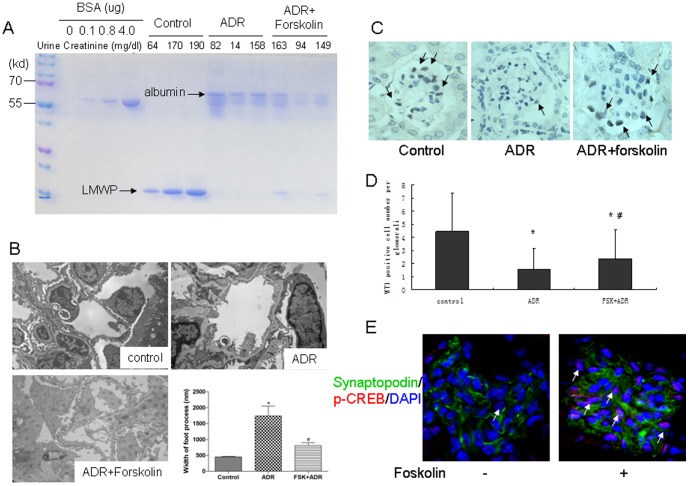
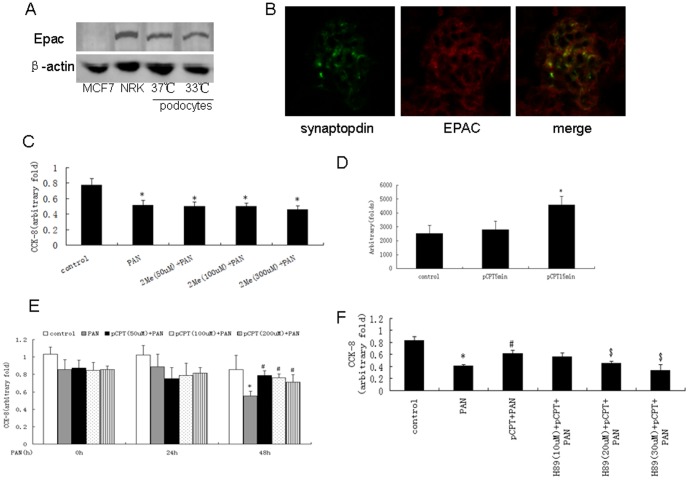
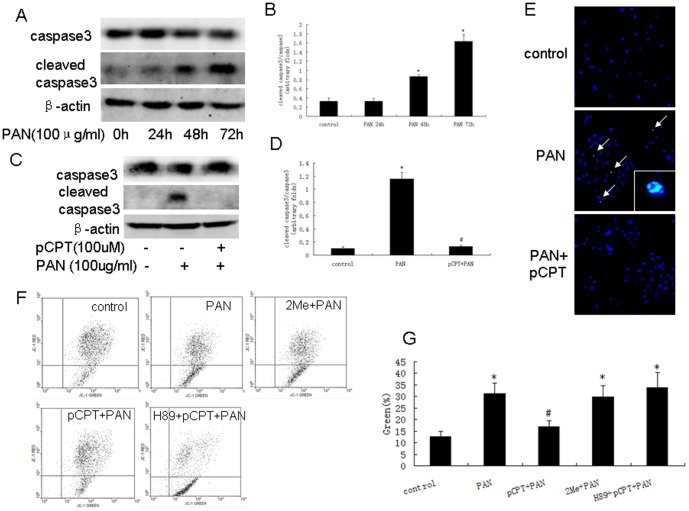
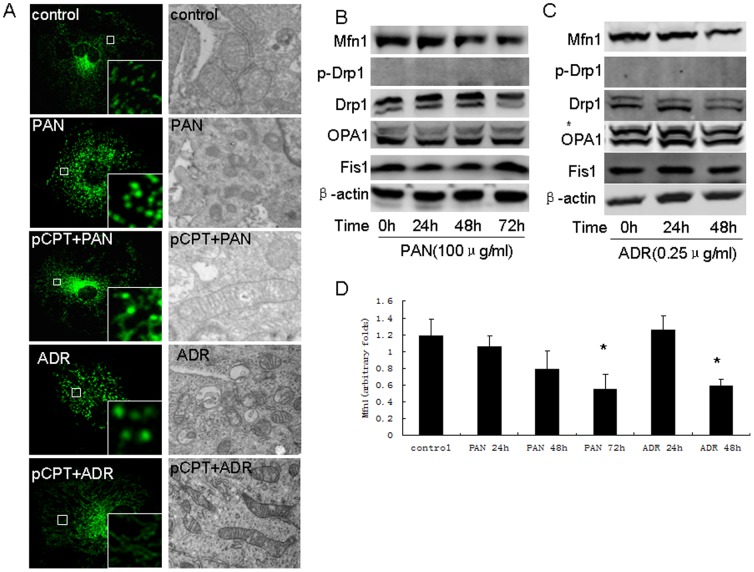
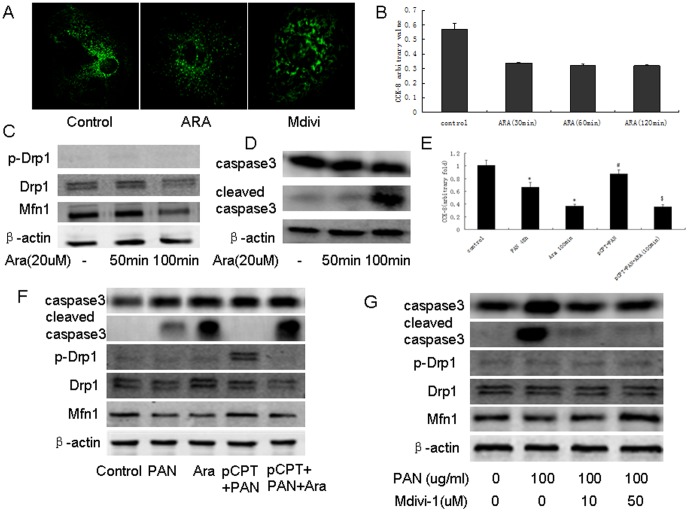
Our previous in vitro studies suggested that cyclic AMP (cAMP) signaling prevents adriamycin (ADR) and puromycin aminonucleoside (PAN)-induced apoptosis in podocytes. As cAMP is an important second messenger and plays a key role in cell proliferation, differentiation and cytoskeleton formation via protein kinase A (PKA) or exchange protein directly activated by cAMP (Epac) pathways, we sought to determine the role of PKA or Epac signaling in cAMP-mediated protection of podocytes. In the ADR nephrosis model, we found that forskolin, a selective activator of adenylate cyclase, attenuated albuminuria and improved the expression of podocyte marker WT-1. When podocytes were treated with pCPT-cAMP (a selective cAMP/PKA activator), PKA activation was increased in a time-dependent manner and prevented PAN-induced podocyte loss and caspase 3 activation, as well as a reduction in mitochondrial membrane potential. We found that PAN and ADR resulted in a decrease in Mfn1 expression and mitochondrial fission in podocytes. pCPT-cAMP restored Mfn1 expression in puromycin or ADR-treated podocytes and induced Drp1 phosphorylation, as well as mitochondrial fusion. Treating podocytes with arachidonic acid resulted in mitochondrial fission, podocyte loss and cleaved caspase 3 production. Arachidonic acid abolished the protective effects of pCPT-cAMP on PAN-treated podocytes. Mdivi, a mitochondrial division inhibitor, prevented PAN-induced cleaved caspase 3 production in podocytes. We conclude that activation of cAMP alleviated murine podocyte caused by ADR. PKA signaling resulted in mitochondrial fusion in podocytes, which at least partially mediated the effects of cAMP.
Conflict of interest statement
Figures

References
-
- Johnstone DB, Holzman LB (2006) Clinical impact of research on the podocyte slit diaphragm. Nat Clin Pract Nephrol 2: 271–282. - PubMed
-
- Pavenstadt H, Kriz W, Kretzler M (2003) Cell biology of the glomerular podocyte. Physiol Rev 83: 253–307. - PubMed
-
- Kriz W, Gretz N, Lemley KV (1998) Progression of glomerular diseases: is the podocyte the culprit? Kidney Int 54: 687–697. - PubMed
-
- Kriz W, Hosser H, Hahnel B, Gretz N, Provoost AP (1998) From segmental glomerulosclerosis to total nephron degeneration and interstitial fibrosis: a histopathological study in rat models and human glomerulopathies. Nephrol Dial Transplant 13: 2781–2798. - PubMed
-
- Shankland SJ (2006) The podocyte's response to injury: Role in proteinuria and glomerulosclerosis. Kidney Int 69: 2131–2147. - PubMed
Publication types
MeSH terms
Substances
Grants and funding
LinkOut - more resources
Full Text Sources
Other Literature Sources
Research Materials
Miscellaneous
