


A cross-sectional, multicentric clinico-epidemiological study of melasma in India
- PMID: 24643868
- PMCID: PMC4065278
- DOI: 10.1007/s13555-014-0046-1
A cross-sectional, multicentric clinico-epidemiological study of melasma in India
Abstract
Background: Melasma is one of the most common pigment disorders seen by a dermatologist and often occurs among women with darker complexion (skin type IV-VI).
Aims: The present study aimed to investigate the epidemiology of melasma in the Indian population and to focus on the regional variability in the demographics, clinical manifestations and factors that precipitate this condition.
Methods: The present multicentric study conducted across four regions in India enrolled patients (>18 years) diagnosed with melasma on Wood's light examination. Patients were examined to identify the distribution of melasma. Various precipitating and etiological factors for melasma were documented.
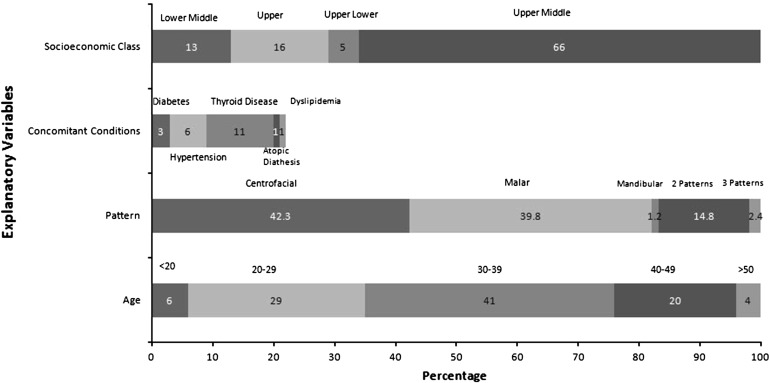
Results: The mean age of the 331 enrolled patients with melasma was 37.2 ± 9.3 years. The prevalence of melasma was higher in females with a female to male ratio of approximately 4:1. The overall population with family history was 31%, highest in the northern region (38.5%) and lowest in the eastern region (18.2%). The two prominent patterns of distribution were centrofacial (42%) and malar (39%). Only 35% of the patients were using sunscreens. Of these, 10% of the patients used sunscreen with SPF >50. The usage of sunscreens was observed to be highest in the north (69%). About 51% of women with multiple pregnancies had a history of melasma when compared with single women (25%) or with no pregnancy (24%).
Conclusions: In conclusion, the result of the study showed that there was a regional variability in the demographics, clinical manifestations and factors that precipitate melasma among patients in India. There was a strong correlation between the family history and prevalence of melasma. Sun exposure is a major precipitating factor in melasma, but only 10% of the patients used sunscreen with SPF >50. Other factors such as concomitant medication, chronicity of disease, multiple pregnancies and use of oral contraceptives might precipitate melasma.
Figures
References
-
- Estrada CR, Torres BB, Alarcon HH. Epidemiologia cutanea en dos sectores de atencion medica en Guerrero, Mexico. Dermatologia Rev Mex. 1992;36:29–34.
LinkOut - more resources
Full Text Sources
Other Literature Sources
