


Henoch-Schönlein purpura in northern Spain: clinical spectrum of the disease in 417 patients from a single center
- PMID: 24646467
- PMCID: PMC4616305
- DOI: 10.1097/MD.0000000000000019
Henoch-Schönlein purpura in northern Spain: clinical spectrum of the disease in 417 patients from a single center
Abstract
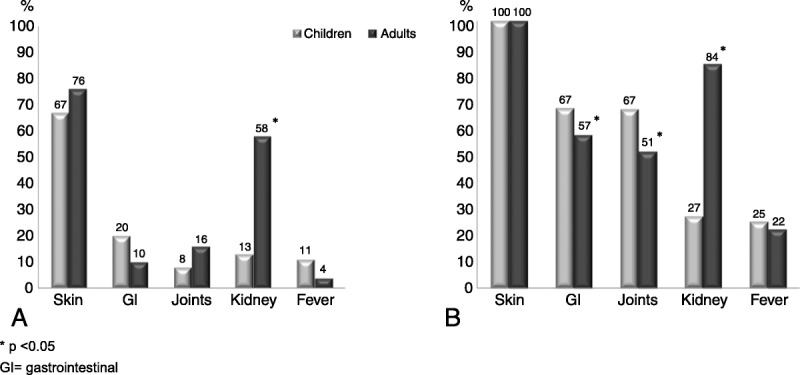
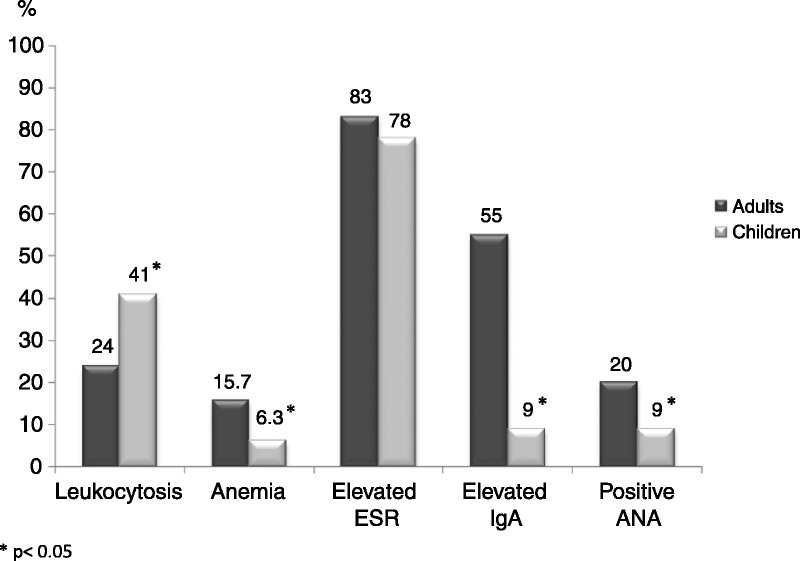
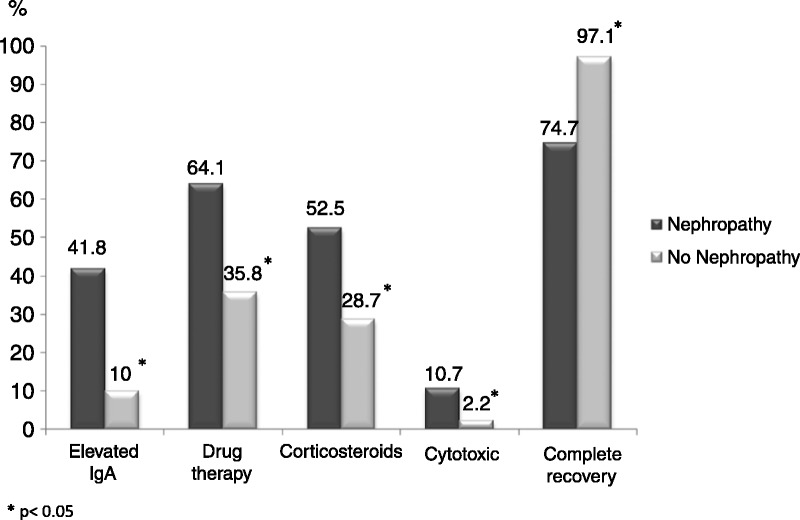
The severity of clinical features and the outcomes in previous series of patients reported with Henoch-Schönlein purpura (HSP) vary greatly, probably due to selection bias. To establish the actual clinical spectrum of HSP in all age groups using an unselected and wide series of patients diagnosed at a single center, we performed a retrospective review of 417 patients classified as having HSP according to the criteria proposed by Michel et al. Of 417 patients, 240 were male and 177 female, with a median age at the time of disease diagnosis of 7.5 years (interquartile range [IQR], 5.3-20.1 yr). Three-quarters of the patients were children or young people aged 20 years or younger (n = 315), and one-quarter were adults (n = 102). The most frequent precipitating events were a previous infection (38%), usually an upper respiratory tract infection, and/or drug intake (18.5%) shortly before the onset of the vasculitis. At disease onset the most common manifestations were skin lesions (55.9%), nephropathy (24%), gastrointestinal involvement (13.7%), joint symptoms (9.1%), and fever (6.2%). Cutaneous involvement occurring in all patients, mainly purpuric skin lesion, was the most common manifestation when the vasculitis was fully established, followed by gastrointestinal (64.5%), joint (63.1%), and renal involvement (41.2%). The main laboratory findings were leukocytosis (36.7%), anemia (8.9%), and increased serum IgA levels (31.7%). The most frequent therapies used were corticosteroids (35%), nonsteroidal antiinflammatory drugs (14%), and cytotoxic agents (5%). After a median follow-up of 12 months (IQR, 2-38 mo), complete recovery was observed in most cases (n = 346; 83.2%), while persistent, usually mild, nephropathy was observed in only 32 (7.7%) cases. Relapses were observed in almost a third of patients (n = 133; 31.9%).In conclusion, although HSP is a typical vasculitis affecting children and young people, it is not uncommon in adults. The prognosis is favorable in most cases, depending largely on renal involvement.
Conflict of interest statement
*Drs. González-Gay and Blanco share senior authorship.
Financial support and conflicts of interest: This study was supported by a grant from “Fondo de Investigaciones Sanitarias” PI12/00193 (Spain). This work was also partially supported by RETICS Programs, RD08/0075 (RIER) and RD12/0009/0013 from “Instituto de Salud Carlos III” (ISCIII) (Spain). The authors have no conflicts of interest to disclose.
Figures

References
-
- Ballard HS, Eisinger RP, Gallo G. Renal manifestations of the Henoch–Schonlein syndrome in adults. Am J Med. 1970;79:328–335. - PubMed
-
- Baltag MA, Brumariu O, Munteanu M, Mihaila D. Henoch-Schonlein nephritis: diagnosis and prognosis problems in childhood. Rev Med Chir Soc Med Nat Iasi. 2010;114:1042–1047. - PubMed
-
- Blanco R, Martinez-Taboada VM, Rodriguez-Valverde V, Garcia-Fuentes M, Gonzalez-Gay MA. Henoch-Schonlein purpura in adulthood and in childhood: two different expressions of the same syndrome. Arthritis Rheum. 1997;40:859–864. - PubMed
-
- Blanco R, Martinez-Taboada VM, Rodriguez-Valverde V, Garcia-Fuentes M. Cutaneous vasculitis in children and adults: associated diseases and etiologic factors in 303 patients. Medicine (Baltimore). 1998;77:403–418. - PubMed
-
- Calvino MC, Llorca J, Garcia-Porrua C, Fernandez-Iglesias JL, Rodriguez-Ledo P, Gonzalez-Gay MA. Henoch-Schonlein purpura in children from northwestern Spain: a 20-year epidemiologic and clinical study. Medicine (Baltimore). 2001;80:279–290. - PubMed
Publication types
MeSH terms
Substances
LinkOut - more resources
Full Text Sources
Other Literature Sources
Miscellaneous
