Review
. 2014 Mar 17;25(3):282-303.
doi: 10.1016/j.ccr.2014.02.025.

ERBB receptors: from oncogene discovery to basic science to mechanism-based cancer therapeutics

Affiliations
Review

ERBB receptors: from oncogene discovery to basic science to mechanism-based cancer therapeutics

Carlos L Arteaga et al. Cancer Cell. .

Abstract

ERBB receptors were linked to human cancer pathogenesis approximately three decades ago. Biomedical investigators have since developed substantial understanding of the biology underlying the dependence of cancers on aberrant ERBB receptor signaling. An array of cancer-associated genetic alterations in ERBB receptors has also been identified. These findings have led to the discovery and development of mechanism-based therapies targeting ERBB receptors that have improved outcome for many cancer patients. In this Perspective, we discuss current paradigms of targeting ERBB receptors with cancer therapeutics and our understanding of mechanisms of action and resistance to these drugs. As current strategies still have limitations, we also discuss challenges and opportunities that lie ahead as basic scientists and clinical investigators work toward more breakthroughs.


Figures

Figure 1
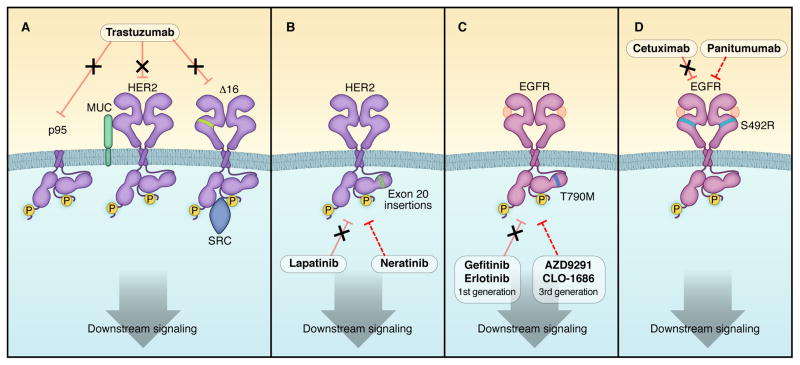
Figure 1. Schema depicting intragenic alterations leading to resistance to HER2 and EGFR inhibitors
A) HER2 truncations (p95) and splice variants (Δ16) are not inhibited by trastuzumab. In addition, expression of specific mucin isoforms can prevent trastuzumab from binding HER2 (Price-Schiavi et al., 2002). Not shown in the figure, pertuzumab and T-DM1 cannot recognize p95 either. B) HER2 harboring exon 20 insertions are not inhibited by lapatinib, but may be sensitive to irreversible HER2 inhibitors afatinib and neratinib. They are also resistant to trastuzumab. C) The EGFR T790M gatekeeper mutation leads to acquired resistance to first generation EGFR inhibitors, but is effectively inhibited by third generation EGFR inhibitors. D) An EGFR mutation in the extracellular domain is associated with acquired resistance to cetuximab, but may still be sensitive to another anti-EGFR antibody, panitumumab. Dashed lines indicate inhibition via alternative antibodies and inhibitors.
Figure 2
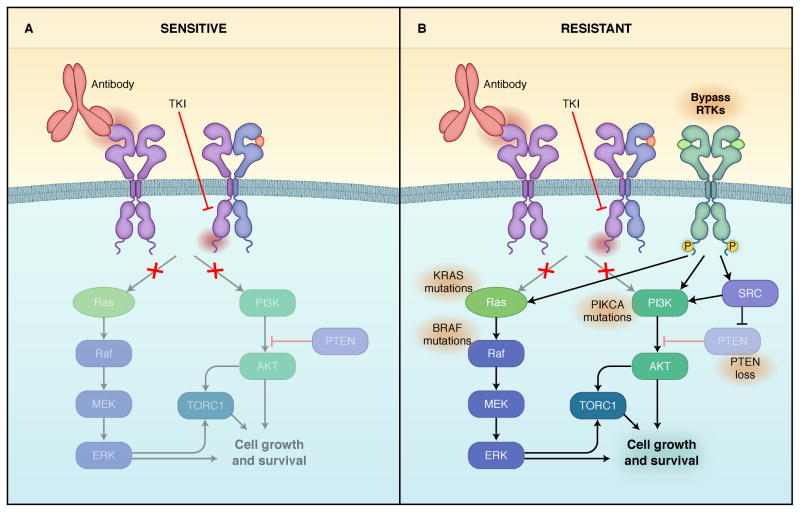
Figure 2. Schematic depicting resistance to EGFR and HER2 inhibitors due to activation of bypass track signaling
Left) Model of a sensitive EGFR or HER2-addicted cancer treated with an ERBB small molecule inhibitor or antibody resulting in suppression of downstream signaling. EGFR or HER2 homodimers and heterodimers are shown. Right) Model of a EGFR mutant or HER2-amplified cancer with resistance due to maintenance of downstream signaling in the presence of the EGFR or HER2 inhibitors. Activation of signaling can be caused by activation of other RTKs or mutational activation of downstream signaling.
Figure 3
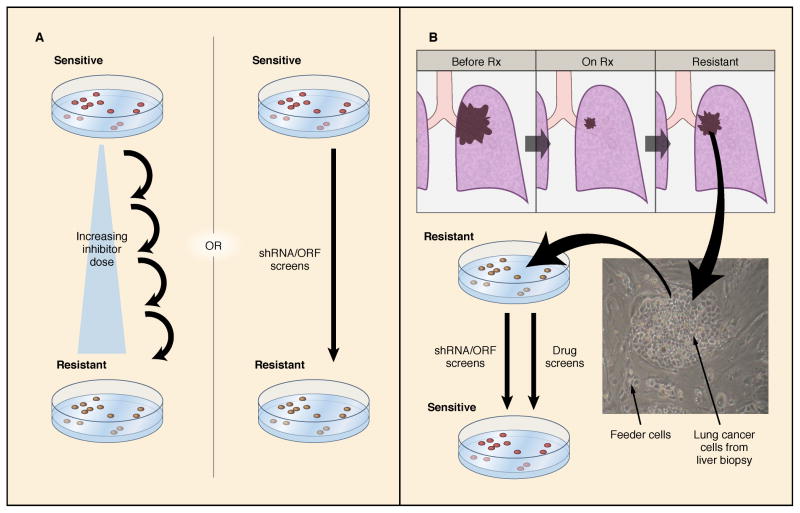
Figure 3. Developing laboratory models to discover mechanisms of resistance
A) Resistance mechanisms can be discovered by culturing sensitive cell lines in the presence of a specific HER2 or EGFR inhibitor until resistance develops, or by introducing shRNA or ORF libraries to determine genes whose overexpression or suppression will lead to resistance. B) Alternatively, when resistance develops in the clinic, a cell line can be generated from a biopsy of the resistant lesion, and the resulting resistant line can be screened with drugs and/or shRNA libraries to determine strategies to re-sensitize them.
Figure 4
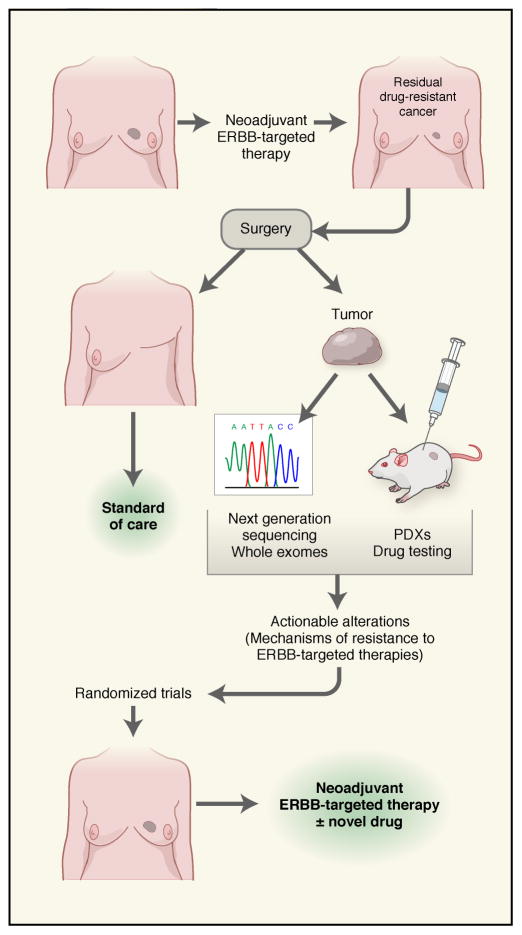
Figure 4. Targetable alterations in (residual) breast cancers after neoadjuvant anti-HER2 therapy may identify actionable mechanisms of drug resistance
Systemic neoadjuvant anti-HER2 therapy reduces or eliminates the primary HER2+ tumor as well as micrometastases (top row). We propose that ‘drug-resistant’ residual cancers in the breast following neoadjuvant therapy harbor targetable genomic alterations causally associated with resistance to HER2 inhibitors. Molecular profiling of these residual tumors should identify these genomic alterations. Further, patient-derived xenografts (PDXs) generated with these residual cancers can be used to test novel combinations with activity against these drug-resistant cancers that can be later applied to patients on an individual basis. Drugs that target novel mechanisms of resistance identified in the residual tumors can be examined in subsequent neoadjuvant trials (bottom row).

References

    1. Agus DB, Akita RW, Fox WD, Lewis GD, Higgins B, Pisacane PI, Lofgren JA, Tindell C, Evans DP, Maiese K, et al. Targeting ligand-activated ErbB2 signaling inhibits breast and prostate tumor growth. Cancer cell. 2002;2:127–137. - PubMed
    1. Andrechek ER, Hardy WR, Siegel PM, Rudnicki MA, Cardiff RD, Muller WJ. Amplification of the neu/erbB-2 oncogene in a mouse model of mammary tumorigenesis. Proceedings of the National Academy of Sciences of the United States of America. 2000;97:3444–3449. - PMC - PubMed
    1. Anido J, Scaltriti M, Bech Serra JJ, Santiago Josefat B, Todo FR, Baselga J, Arribas J. Biosynthesis of tumorigenic HER2 C-terminal fragments by alternative initiation of translation. Embo J. 2006;25:3234–3244. - PMC - PubMed
    1. Avraham R, Yarden Y. Feedback regulation of EGFR signalling: decision making by early and delayed loops. Nature reviews Molecular cell biology. 2011;12:104–117. - PubMed
    1. Balko JM, Cook RS, Vaught DB, Kuba MG, Miller TW, Bhola NE, Sanders ME, Granja-Ingram NM, Smith JJ, Meszoely IM, et al. Profiling of residual breast cancers after neoadjuvant chemotherapy identifies DUSP4 deficiency as a mechanism of drug resistance. Nat Med. 2012;18:1052–1059. - PMC - PubMed

Publication types