


Evaluation of royal jelly as an alternative to fetal bovine serum in cell culture using cell proliferation assays and live cell imaging
- PMID: 24653569
- PMCID: PMC3957257
Evaluation of royal jelly as an alternative to fetal bovine serum in cell culture using cell proliferation assays and live cell imaging
Abstract
Background: Royal jelly is a nutritious substance produced by the young nurse bees and contains significant amounts of proteins which are important for cell growth and proliferation. The aim of this study was to evaluate the effect of royal jelly as an alternative to fetal bovine serum (FBS) in cell culture using cell proliferation assays and live cell imaging.
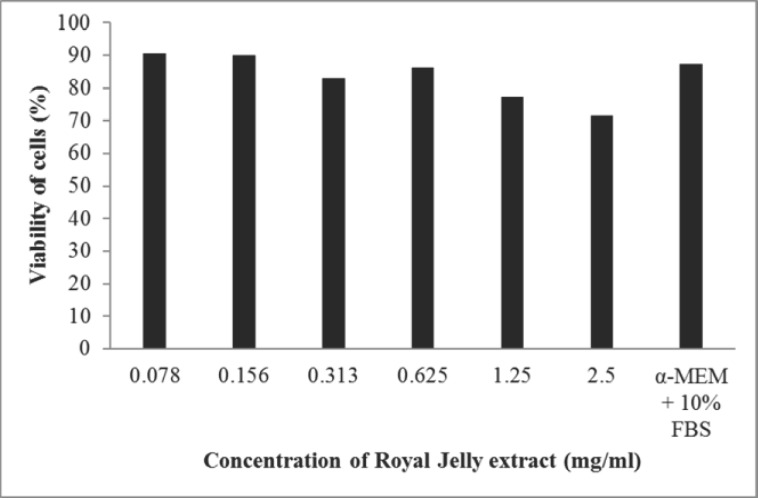
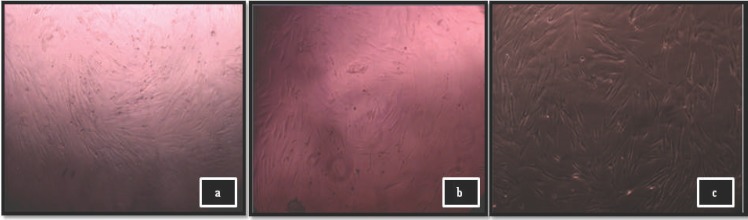
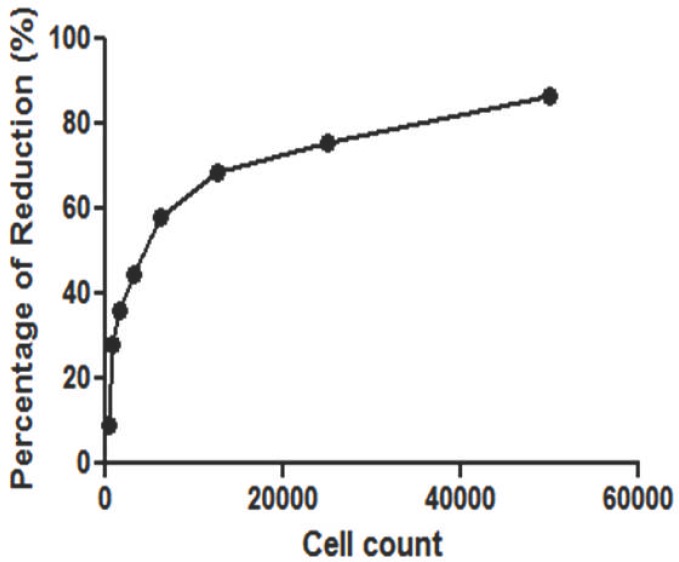
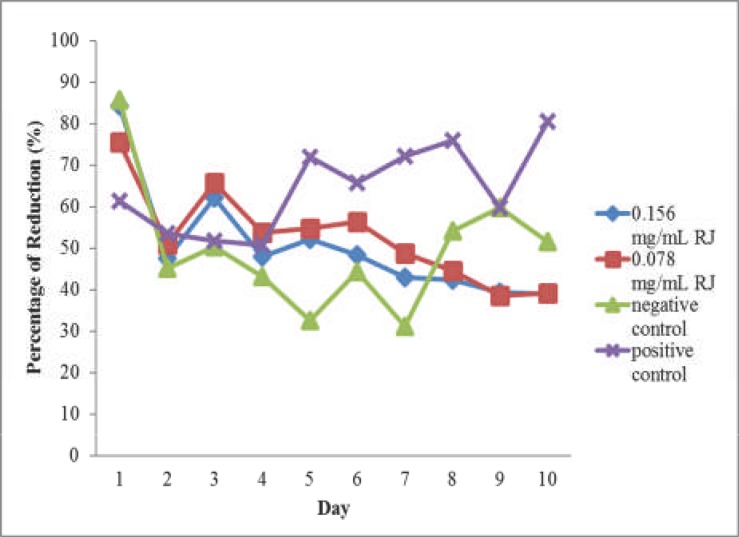
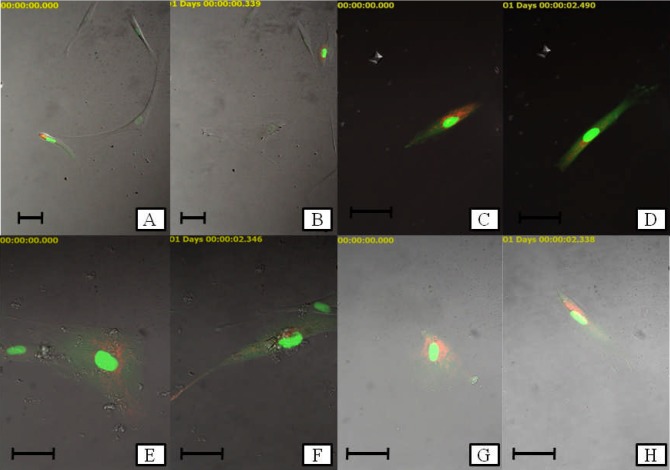
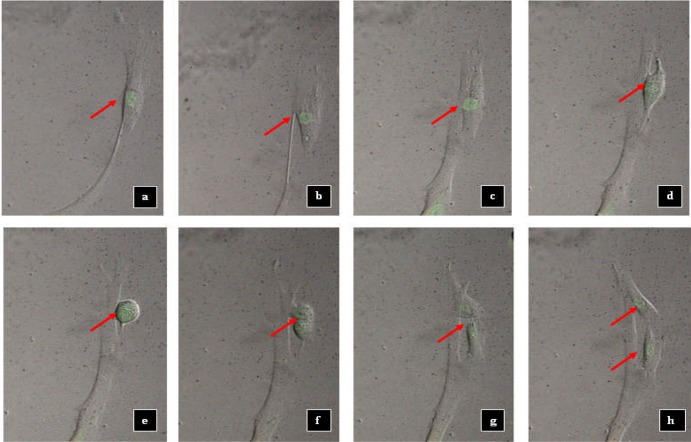
Materials and methods: MRC-5 cells were treated with various concentrations of royal jelly extract in MTT assay. The control groups were comprised of Alpha-Minimal Essential Medium (α-MEM) alone and α-MEM with 10% FBS. Subsequently, the cell proliferation was studied for 10 days using Alamar Blue assay and live cell imaging from 48 to 72 h. The population doubling time (PDT) was determined using trypan blue assay after live cell imaging.
Results: In MTT assay, 0.156 and 0.078 mg/ml of royal jelly produced higher cell viability compared to positive control group but were not significantly different (P > 0.05). In the Alamar Blue assay, 0.156 and 0.078 mg/ml of royal jelly produced greater percentage of reduction at day 3 even though no significant difference was found (P > 0.05). Based on live cell imaging, the PDT for positive, negative, 0.156 and 0.078 mg/ml of royal jelly groups were 29.09, 62.50, 41.67 and 41.67 h respectively. No significant difference was found in the PDT between all the groups (P > 0.05).
Conclusion: Royal jelly does not exhibit similar ability like FBS to facilitate cell growth under the present test conditions.
Keywords: Royal jelly; cell division; live cell imaging; proliferation.
Figures
References
-
- Alberts B, Bray D, Lewis J, Raff M, Roberts K, Watson J D. Molecular Biology of the Cell. New York, US, Garland: 1983.
-
- Bogdanov S. Royal jelly, bee brood: composition, health, medicine: A re-view. Bee Product Sci. 2011:1–31.
-
- Brouwers E, Ebert R, Beetsma J J. Behavioural and physiological aspects of nurse bees in relation to the composition of larval food during caste differentiation in the honeybee. Apic Res. 1987;26:11–23.
-
- Burgener A, Patrick M, Coombs K, Moffatt D, Huzel N, Butler M. The Modification of a Serum-Free Media Formulation for the Production of Reovirus and the Growth of Vero, MRC-5, MDCK and BHK Cell Lines. In: Lindner-Olsson E, Chatzissavidou N, Lüllau E, editors. Animal Cell Technology: From Target to Market. Netherlands: Springer; 2002. pp. 200–203.
-
- Byth H-A, McHunu B I, Dubery I A, Bornman L. Assessment of a simple, non-toxic Alamar blue cell survival assay to monitor tomato cell viability. Phytochem Analysis. 2001;12:340–346. - PubMed
Publication types
MeSH terms
Substances
LinkOut - more resources
Full Text Sources