


Inflammation-sleep interface in brain disease: TNF, insulin, orexin
- PMID: 24655719
- PMCID: PMC3994460
- DOI: 10.1186/1742-2094-11-51
Inflammation-sleep interface in brain disease: TNF, insulin, orexin
Abstract
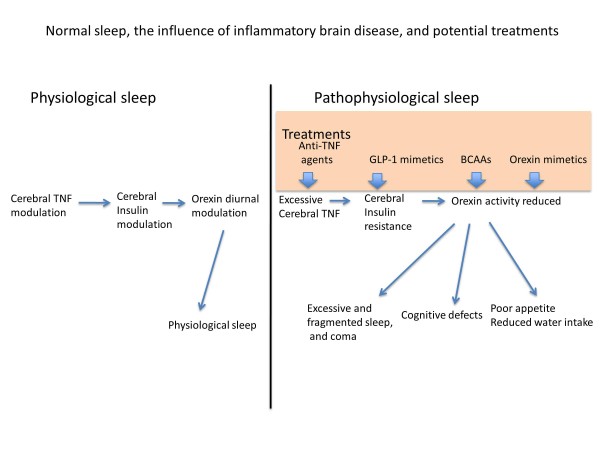
The depth, pattern, timing and duration of unconsciousness, including sleep, vary greatly in inflammatory disease, and are regarded as reliable indicators of disease severity. Similarly, these indicators are applicable to the encephalopathies of sepsis, malaria, and trypanosomiasis, and to viral diseases such as influenza and AIDS. They are also applicable to sterile neuroinflammatory states, including Alzheimer's disease, Parkinson's disease, traumatic brain injury, stroke and type-2 diabetes, as well as in iatrogenic brain states following brain irradiation and chemotherapy. Here we make the case that the cycles of unconsciousness that constitute normal sleep, as well as its aberrations, which range from sickness behavior through daytime sleepiness to the coma of inflammatory disease states, have common origins that involve increased inflammatory cytokines and consequent insulin resistance and loss of appetite due to reduction in orexigenic activity. Orexin reduction has broad implications, which are as yet little appreciated in the chronic inflammatory conditions listed, whether they be infectious or sterile in origin. Not only is reduction in orexin levels characterized by loss of appetite, it is associated with inappropriate and excessive sleep and, when dramatic and chronic, leads to coma. Moreover, such reduction is associated with impaired cognition and a reduction in motor control. We propose that advanced understanding and appreciation of the importance of orexin as a key regulator of pathways involved in the maintenance of normal appetite, sleep patterns, cognition, and motor control may afford novel treatment opportunities.
Figures
References
-
- Charles P, Elliott MJ, Davis D, Potter A, Kalden JR, Antoni C, Breedveld FC, Smolen JS, Eberl G, de Woody K, Feldmann M, Maini RN. Regulation of cytokines, cytokine inhibitors, and acute-phase proteins following anti-TNF-α therapy in rheumatoid arthritis. J Immunol. 1999;163:1521–1528. - PubMed
-
- Le J, Vilcek J. Tumor necrosis factor and interleukin-1: cytokines with multiple overlapping biological activities. Lab Invest. 1987;56:234–248. - PubMed
-
- Zhang Y, Lin JX, Vilcek J. Synthesis of interleukin 6 (interferon-β2/B cell stimulatory factor 2) in human fibroblasts is triggered by an increase in intracellular cyclic AMP. J Biol Chem. 1988;263:6177–6182. - PubMed
Publication types
MeSH terms
Substances
LinkOut - more resources
Full Text Sources
Other Literature Sources
Medical
