


The prevalence of infections and patient risk factors in home health care: a systematic review
- PMID: 24656786
- PMCID: PMC4438760
- DOI: 10.1016/j.ajic.2013.12.018
The prevalence of infections and patient risk factors in home health care: a systematic review
Abstract
Background: Home health care (HHC) has been the fastest growing health care sector for the past 3 decades. The uncontrolled home environment, increased use of indwelling devices, and the complexity of illnesses among HHC patients lead to increased risk for infections.
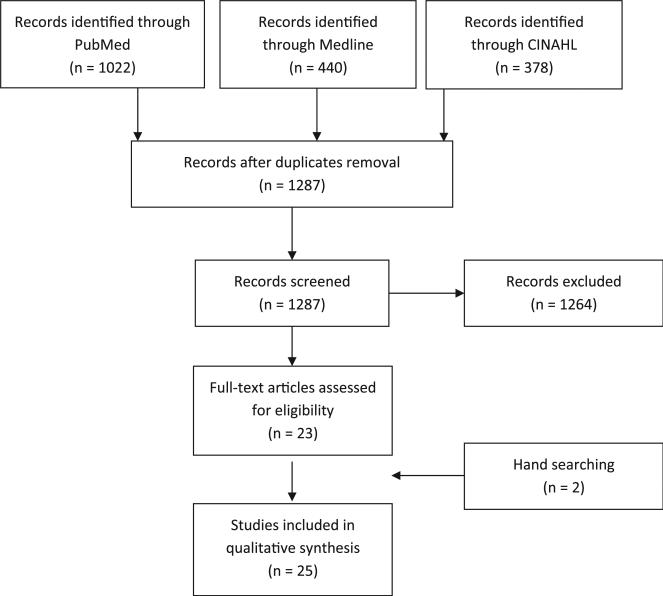
Methods: A systematic review of studies evaluating infection prevalence and risk factors among adult patients who received HHC services was conducted and guided by the Preferred Reporting Items for Systematic Reviews and Meta-Analyses. Literature was searched using Medline, PubMed, and the Cumulative Index to Nursing and Allied Health as well as hand searching. Two reviewers independently assessed study quality using validated quality assessment checklists.
Results: Twenty-five studies met the inclusion criteria and were reviewed. The infection rates and identified risk factors for infections varied dramatically between studies. In general, patients receiving home parental nutrition treatments had higher infection rates than patients receiving home infusion therapy. The identified risk factors were limited by small sample sizes and other methodologic flaws.
Conclusions: Establishing a surveillance system for HHC infections, identifying patients at high risk for infections, tailoring HHC and patient education based on patient living conditions, and facilitating communication between different health care facilities will enhance infection control in HHC settings. Future studies should use a nationally representative sample and multivariate analysis for the identification of risk factors for infections.
Keywords: Home environment; Home infusion; Hospice; Increased risk; Infection rate; Infectious disease.
Copyright © 2014 Association for Professionals in Infection Control and Epidemiology, Inc. Published by Mosby, Inc. All rights reserved.
Figures
References
-
- Home-based long-term care. World Health Organization; Geneva (Switzerland): 2000.
-
- Thome B, Dykes AK, Hallberg IR. Home care with regard to definition, care recipients, content and outcome: systematic literature review. J Clin Nurs. 2003;12:860–72. - PubMed
-
- Basic statistics about home care. The National Association for Home Care & Hospice; Washington (DC): 2010.
-
- Caffrey C, Sengupta M, Moss A, Harris-Kojetin L, Valverde R. Home health care and discharged hospice care patients: United States, 2000 and 2007. Natl Health Stat Rep. 2011:1–27. - PubMed
Publication types
MeSH terms
Grants and funding
LinkOut - more resources
Full Text Sources
Other Literature Sources
Medical
Miscellaneous
