


ICA-based artefact removal and accelerated fMRI acquisition for improved resting state network imaging
- PMID: 24657355
- PMCID: PMC4154346
- DOI: 10.1016/j.neuroimage.2014.03.034
ICA-based artefact removal and accelerated fMRI acquisition for improved resting state network imaging
Abstract
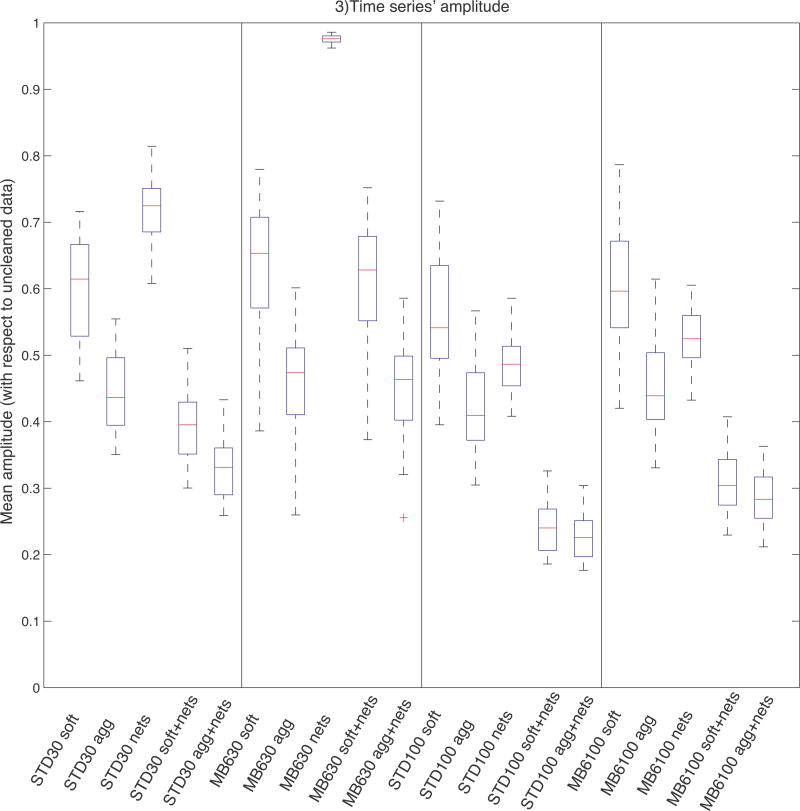
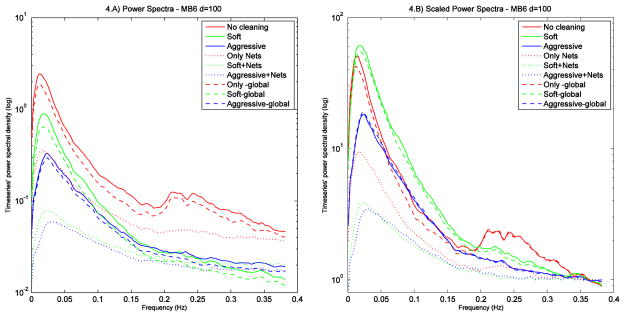
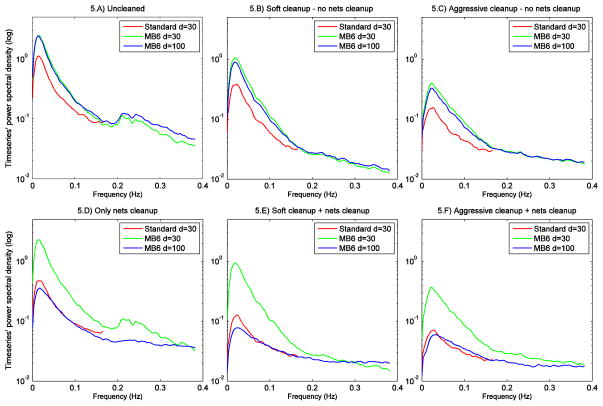
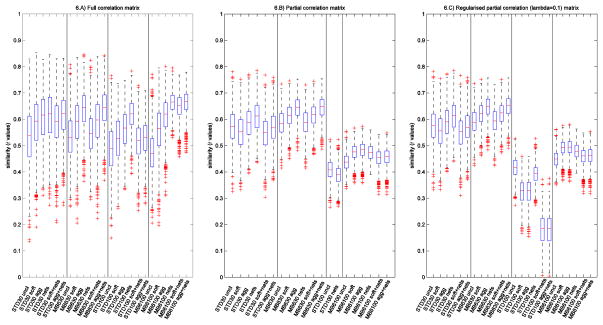
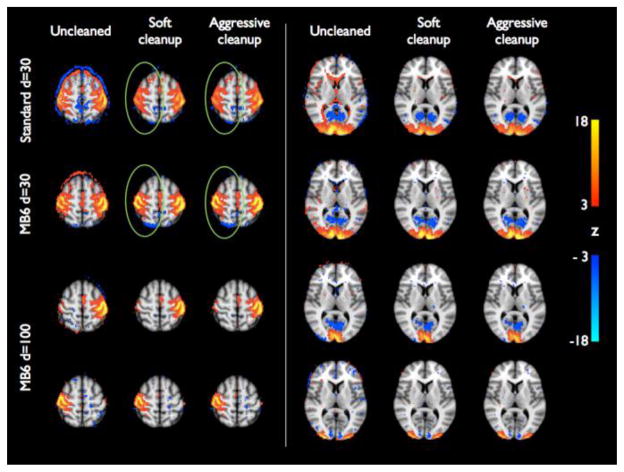
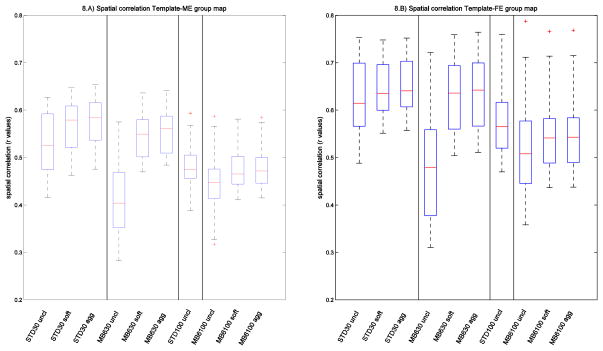
The identification of resting state networks (RSNs) and the quantification of their functional connectivity in resting-state fMRI (rfMRI) are seriously hindered by the presence of artefacts, many of which overlap spatially or spectrally with RSNs. Moreover, recent developments in fMRI acquisition yield data with higher spatial and temporal resolutions, but may increase artefacts both spatially and/or temporally. Hence the correct identification and removal of non-neural fluctuations is crucial, especially in accelerated acquisitions. In this paper we investigate the effectiveness of three data-driven cleaning procedures, compare standard against higher (spatial and temporal) resolution accelerated fMRI acquisitions, and investigate the combined effect of different acquisitions and different cleanup approaches. We applied single-subject independent component analysis (ICA), followed by automatic component classification with FMRIB's ICA-based X-noiseifier (FIX) to identify artefactual components. We then compared two first-level (within-subject) cleaning approaches for removing those artefacts and motion-related fluctuations from the data. The effectiveness of the cleaning procedures was assessed using time series (amplitude and spectra), network matrix and spatial map analyses. For time series and network analyses we also tested the effect of a second-level cleaning (informed by group-level analysis). Comparing these approaches, the preferable balance between noise removal and signal loss was achieved by regressing out of the data the full space of motion-related fluctuations and only the unique variance of the artefactual ICA components. Using similar analyses, we also investigated the effects of different cleaning approaches on data from different acquisition sequences. With the optimal cleaning procedures, functional connectivity results from accelerated data were statistically comparable or significantly better than the standard (unaccelerated) acquisition, and, crucially, with higher spatial and temporal resolution. Moreover, we were able to perform higher dimensionality ICA decompositions with the accelerated data, which is very valuable for detailed network analyses.
Keywords: Artefact removal; Functional connectivity; Functional magnetic resonance imaging (fMRI); Multiband acceleration; Resting-state.
Copyright © 2014 Elsevier Inc. All rights reserved.
Figures


References
-
- Aalkjaer C, Boedtkjer D, Matchkov V. Vasomotion - what is currently thought? Acta Physiologica (Oxford, England) 2011;202(3):253–269. - PubMed
-
- Andersson JLR, Jenkinson M, Smith S. Non-linear registration aka spatial normalisation. FMRIB Technial Report TR07JA2 2007
-
- Andersson JLR, Jenkinson M, Smith S. Non-linear optimisation. FMRIB Technical Report TR07JA1 2007
-
- Beall EB, Lowe MJ. Isolating physiologic noise sources with independently determined spatial measures. Neuroimage. 2007;37(4):1286–1300. - PubMed
-
- Beckmann CF, Smith SM. Probabilistic independent component analysis for functional magnetic resonance imaging. IEEE Transactions on Medical Imaging. 2004;23(2):137–152. - PubMed
Publication types
MeSH terms
Grants and funding
- P41 EB015894/EB/NIBIB NIH HHS/United States
- P30 NS076408/NS/NINDS NIH HHS/United States
- EB015894/EB/NIBIB NIH HHS/United States
- MR/K006673/1/MRC_/Medical Research Council/United Kingdom
- P41 RR008079/RR/NCRR NIH HHS/United States
- P41-RR08079/RR/NCRR NIH HHS/United States
- P30-NS057091/NS/NINDS NIH HHS/United States
- G1001354/MRC_/Medical Research Council/United Kingdom
- 1U54MH091657-01/MH/NIMH NIH HHS/United States
- P30 EY011374/EY/NEI NIH HHS/United States
- 098369/WT_/Wellcome Trust/United Kingdom
- U54 MH091657/MH/NIMH NIH HHS/United States
- P30 NS057091/NS/NINDS NIH HHS/United States
LinkOut - more resources
Full Text Sources
Other Literature Sources
Medical
Miscellaneous
