


Structural insight into the PTS sugar transporter EIIC
- PMID: 24657490
- PMCID: PMC4169766
- DOI: 10.1016/j.bbagen.2014.03.013
Structural insight into the PTS sugar transporter EIIC
Abstract
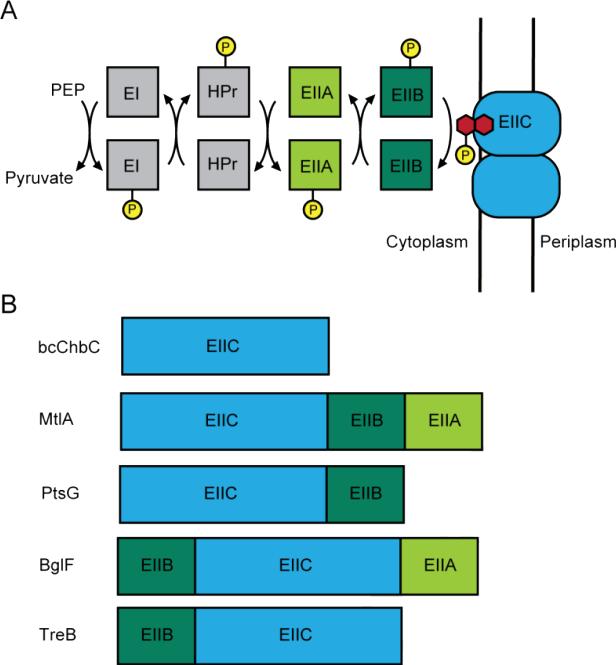
Background: The enzyme IIC (EIIC) component of the phosphotransferase system (PTS) is responsible for selectively transporting sugar molecules across the inner bacterial membrane. This is accomplished in parallel with phosphorylation of the sugar, which prevents efflux of the sugar back across the membrane. This process is a key part of an extensive signaling network that allows bacteria to efficiently utilize preferred carbohydrate sources.
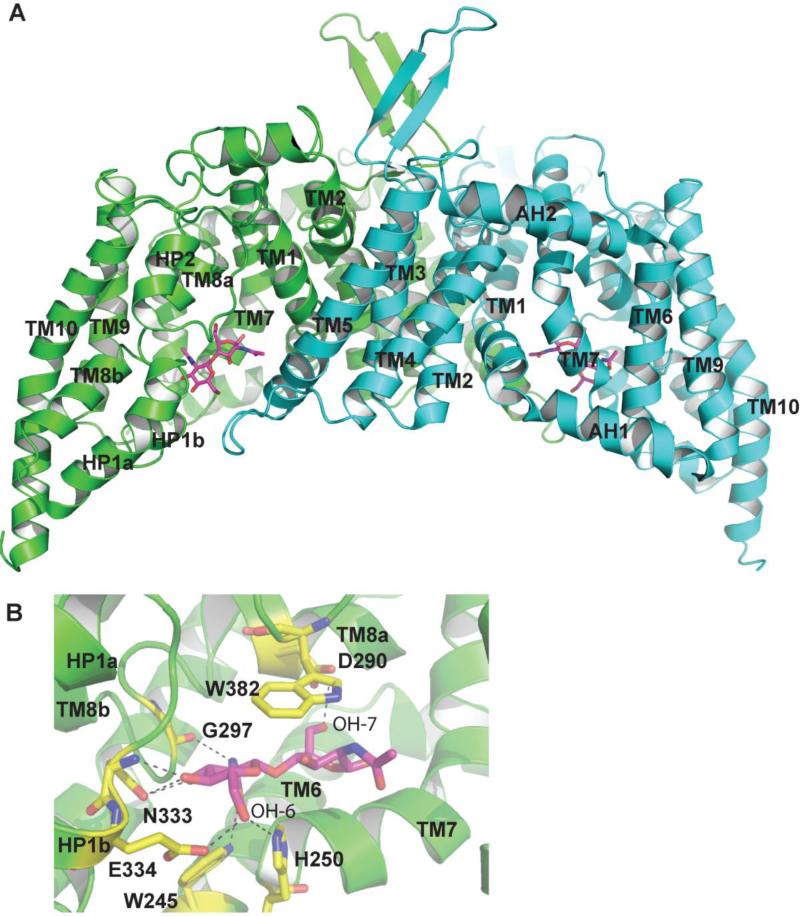
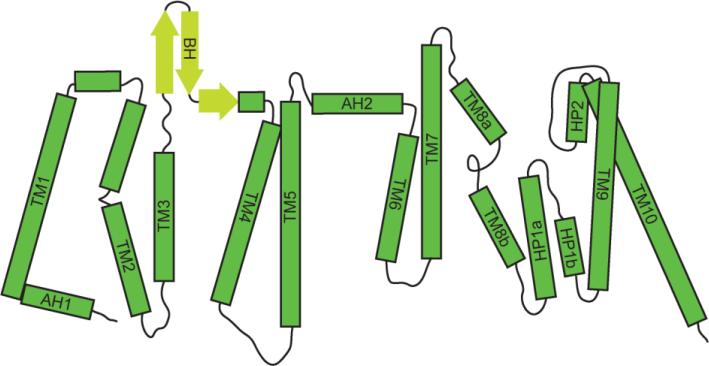
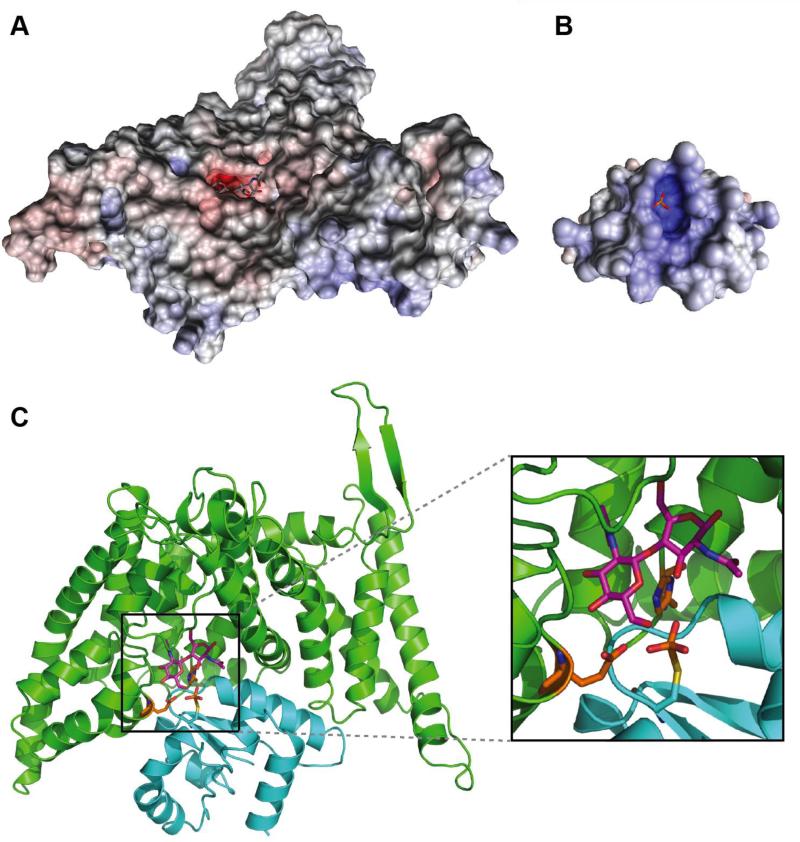
Scope of review: The goal of this review is to examine the current understanding of the structural features of the EIIC and how it mediates concentrative, selective sugar transport. The crystal structure of an N,N'-diacetylchitobiose transporter is used as a structural template for the glucose superfamily of PTS transporters.
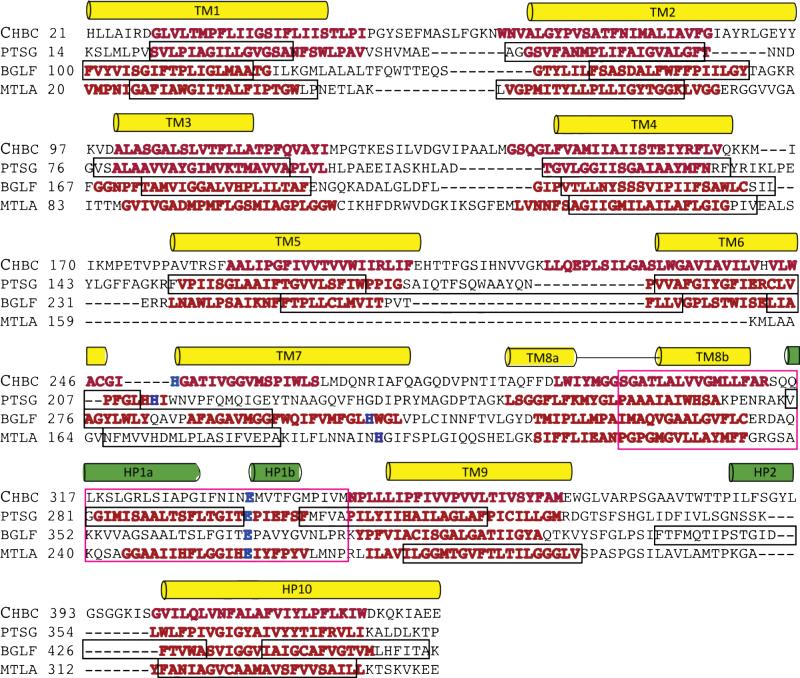
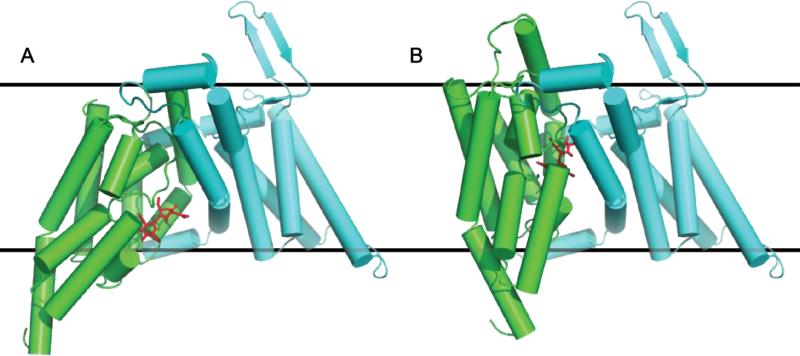
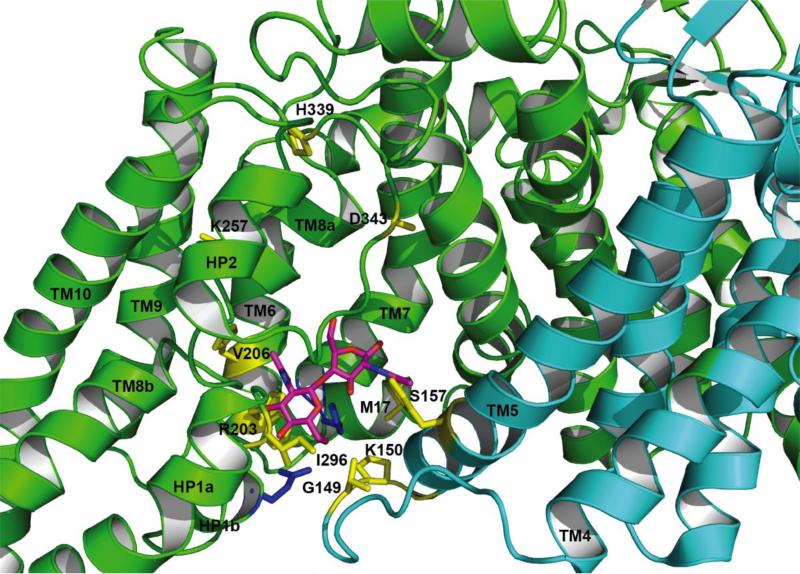
Major conclusions: Comparison of protein sequences in context with the known EIIC structure suggests that members of the glucose superfamily of PTS transporters may exhibit variations in topology. Despite these differences, a conserved histidine and glutamate appear to have roles shared across the superfamily in sugar binding and phosphorylation. In the proposed transport model, a rigid body motion between two structural domains and movement of an intracellular loop provide the substrate binding site with alternating access, and reveal a surface required for interaction with the phosphotransfer protein responsible for catalysis.
General significance: The structural and functional data discussed here give a preliminary understanding of how transport in EIIC is achieved. However, given the great sequence diversity between varying glucose-superfamily PTS transporters and lack of data on conformational changes needed for transport, additional structures of other members and conformations are still required. This article is part of a Special Issue entitled: Structural biochemistry and biophysics of membrane proteins.
Keywords: ChbC; Enzyme IIC; Membrane protein; Phosphotransferase system; Sugar transport; Transporter.
Copyright © 2014 Elsevier B.V. All rights reserved.
Figures
References
-
- Lengeler JW, Jahreis K. Bacterial PEP-dependent carbohydrate: phosphotransferase systems couple sensing and global control mechanisms. Contributions to microbiology. 2009;16:65–87. - PubMed
-
- Joyet P, Bouraoui H, Ake FM, Derkaoui M, Zebre AC, Cao TN, Ventroux M, Nessler S, Noirot-Gros MF, Deutscher J, Milohanic E. Transcription regulators controlled by interaction with enzyme IIB components of the phosphoenolpyruvate: sugar phosphotransferase system. Biochimica et biophysica acta. 2013;1834:1415–1424. - PubMed
-
- Chang AB, Lin R, Keith Studley W, Tran CV, Saier MH., Jr. Phylogeny as a guide to structure and function of membrane transport proteins. Molecular membrane biology. 2004;21:171–181. - PubMed
-
- Saier MH, Hvorup RN, Barabote RD. Evolution of the bacterial phosphotransferase system: from carriers and enzymes to group translocators. Biochemical Society transactions. 2005;33:220–224. - PubMed
Publication types
MeSH terms
Substances
Grants and funding
LinkOut - more resources
Full Text Sources
Other Literature Sources
Research Materials
