


Transgenerational effects of social stress on social behavior, corticosterone, oxytocin, and prolactin in rats
- PMID: 24657520
- PMCID: PMC4076950
- DOI: 10.1016/j.yhbeh.2014.03.005
Transgenerational effects of social stress on social behavior, corticosterone, oxytocin, and prolactin in rats
Abstract
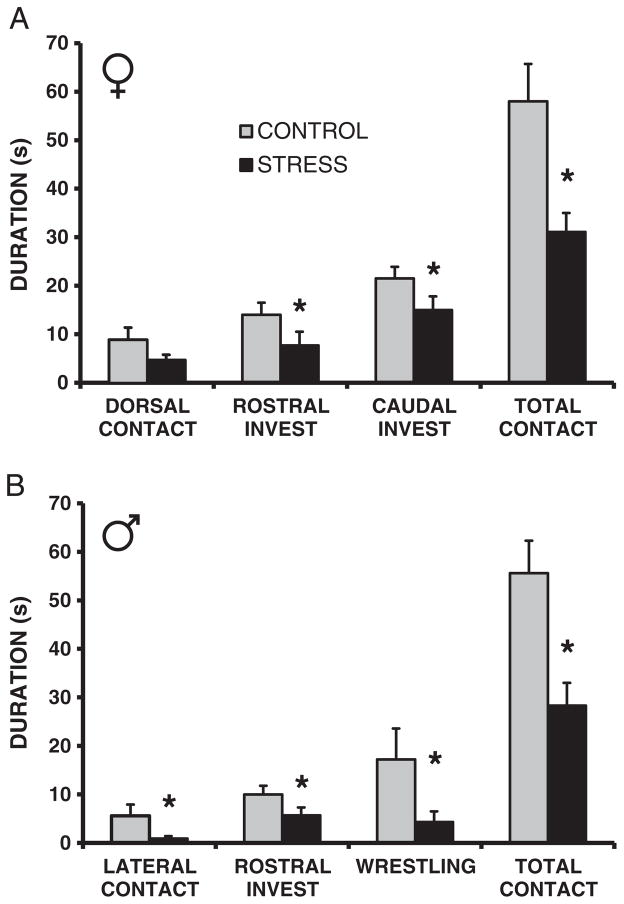
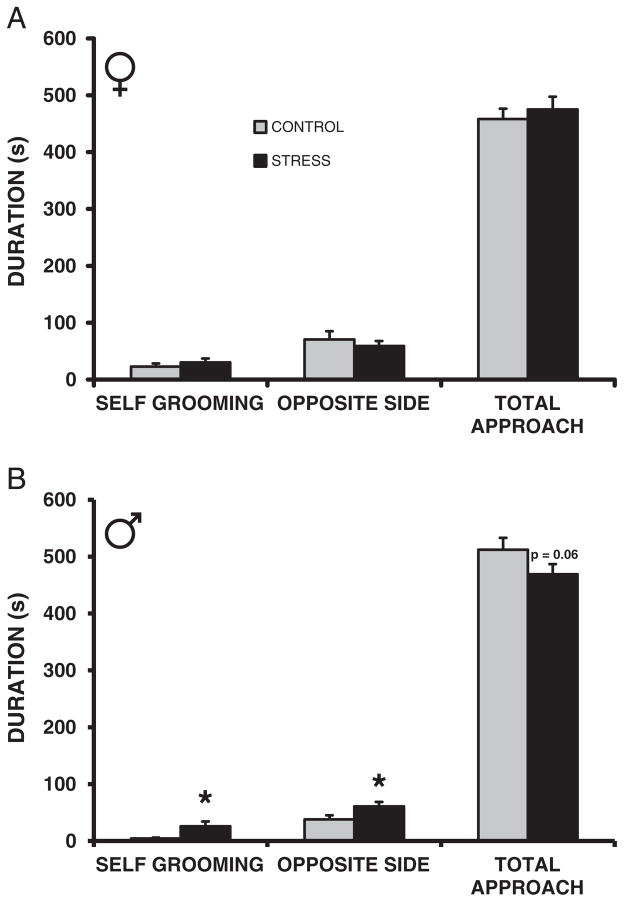
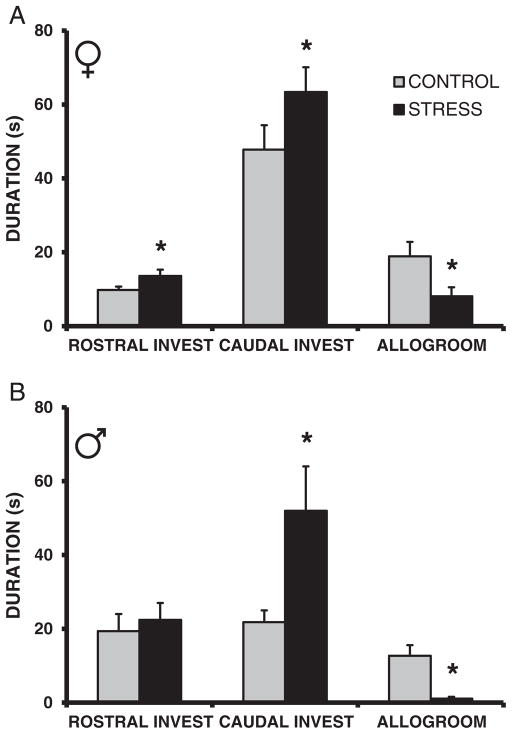
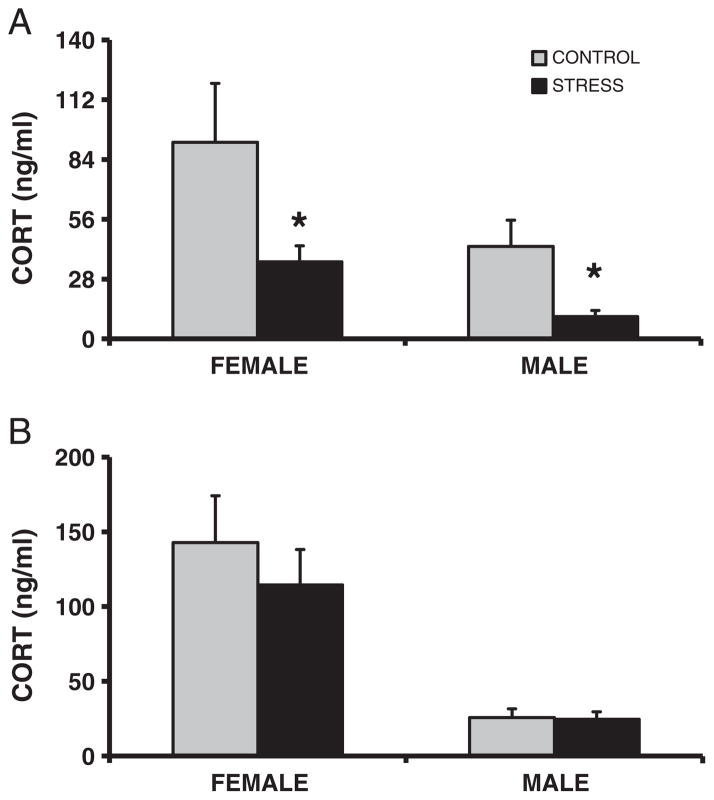
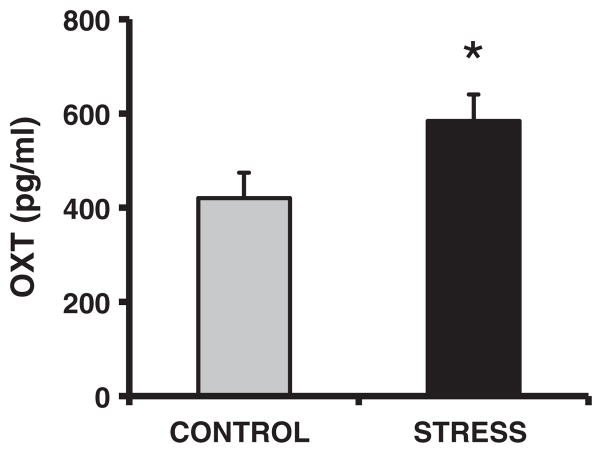
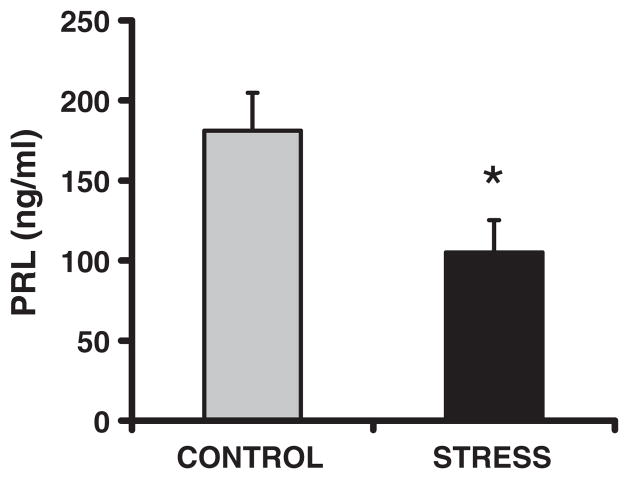
Social stressors such as depressed maternal care and family conflict are robust challenges which can have long-term physiological and behavioral effects on offspring and future generations. The current study investigates the transgenerational effects of an ethologically relevant chronic social stress on the behavior and endocrinology of juvenile and adult rats. Exposure to chronic social stress during lactation impairs maternal care in F0 lactating dams and the maternal care of the F1 offspring of those stressed F0 dams. The overall hypothesis was that the male and female F2 offspring of stressed F1 dams would display decreased social behavior as both juveniles and adults and that these behavioral effects would be accompanied by changes in plasma corticosterone, prolactin, and oxytocin. Both the female and male F2 offspring of dams exposed to chronic social stress displayed decreased social behavior as juveniles and adults, and these behavioral effects were accompanied by decreases in basal concentrations of corticosterone in both sexes, as well as elevated juvenile oxytocin and decreased adult prolactin in the female offspring. The data support the conclusion that social stress has transgenerational effects on the social behavior of the female and male offspring which are mediated by changes in the hypothalamic-pituitary-adrenal axis and hypothalamic-pituitary-gonadal axis. Social stress models are valuable resources in the study of the transgenerational effects of stress on the behavioral endocrinology of disorders such as depression, anxiety, autism, and other disorders involving disrupted social behavior.
Keywords: Anxiety; Autism; Corticosterone; Early life stress; Oxytocin; Postpartum depression; Prolactin; Social behavior; Social stress; Transgenerational.
Copyright © 2014 Elsevier Inc. All rights reserved.
Figures
References
-
- Bales KL, Perkeybile AM. Developmental experiences and the oxytocin receptor system. Horm Behav. 2012;61:313–319. - PubMed
-
- Belay H, Burton CL, Lovic V, Meaney MJ, Sokolowski M, Fleming AS. Early adversity and serotonin transporter genotype interact with hippocampal glucocorticoid receptor mRNA expression, corticosterone, and behavior in adult male rats. Behav Neurosci. 2011;125:150–160. - PubMed
-
- Benetti F, Andrade de Araujo P, Luiz Sanvitto G, Lucion AB. Effects of neonatal novelty exposure on sexual behavior, fear, and stress-response in adult rats. Dev Psychobiol. 2007;49:258–264. - PubMed
-
- Bosch OJ, Musch W, Bredewold R, Slattery DA, Neumann ID. Prenatal stress increases HPA axis activity and impairs maternal care in lactating female offspring: implications for postpartum mood disorder. Psychoneuroendocrinology. 2007;32:267–278. - PubMed
Publication types
MeSH terms
Substances
Grants and funding
LinkOut - more resources
Full Text Sources
Other Literature Sources
Medical
Miscellaneous
