


Exogenous asymmetric dimethylarginine (ADMA) in pathogenesis of ischemia-reperfusion-induced gastric lesions: interaction with protective nitric oxide (NO) and calcitonin gene-related peptide (CGRP)
- PMID: 24658439
- PMCID: PMC3975433
- DOI: 10.3390/ijms15034946
Exogenous asymmetric dimethylarginine (ADMA) in pathogenesis of ischemia-reperfusion-induced gastric lesions: interaction with protective nitric oxide (NO) and calcitonin gene-related peptide (CGRP)
Abstract
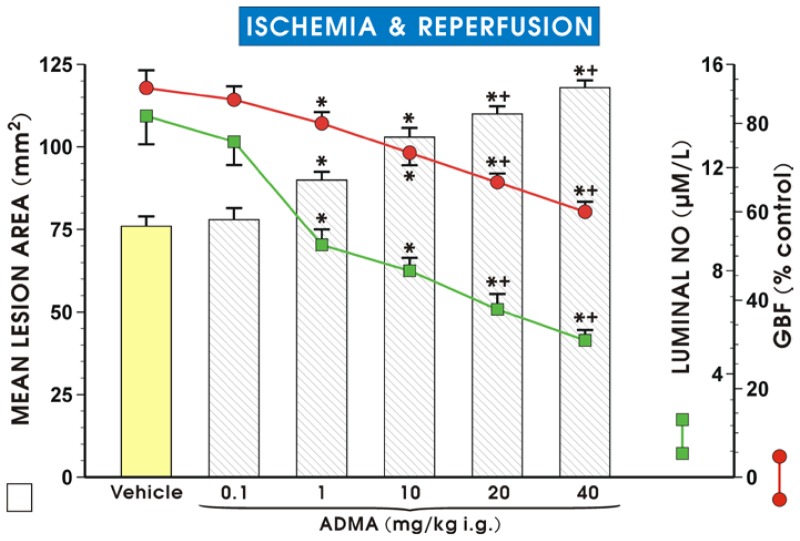
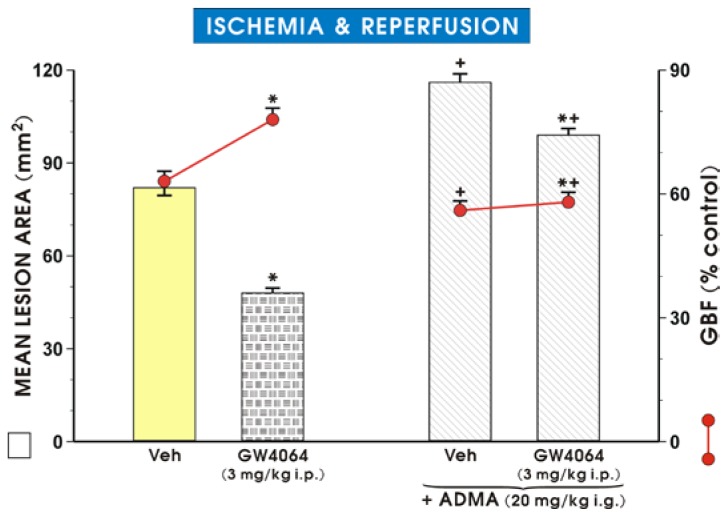
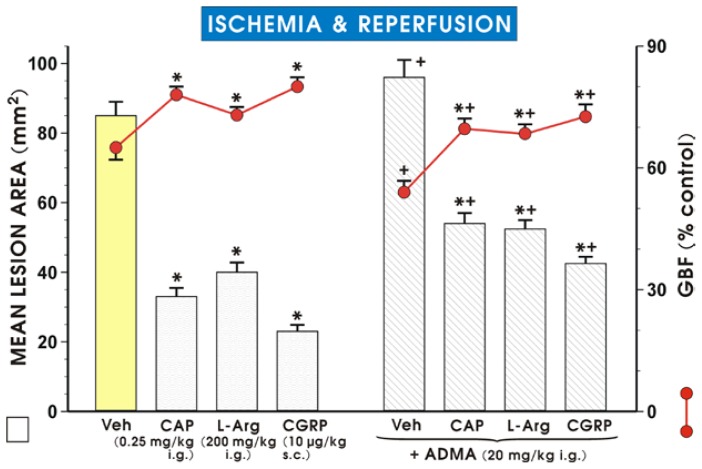
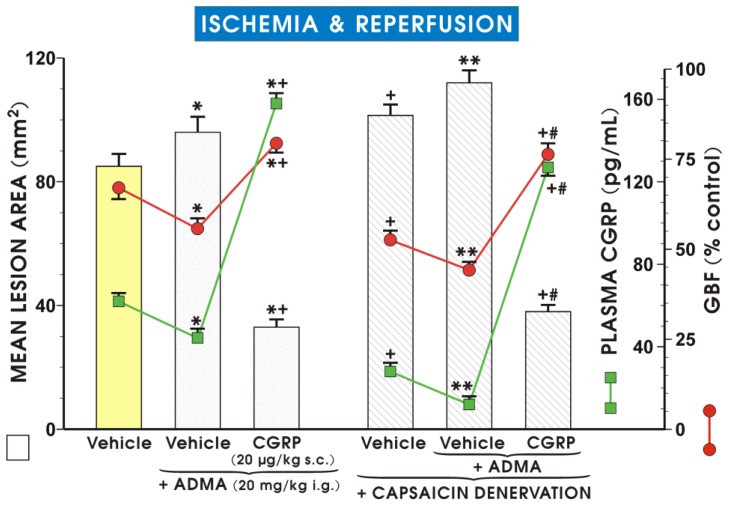
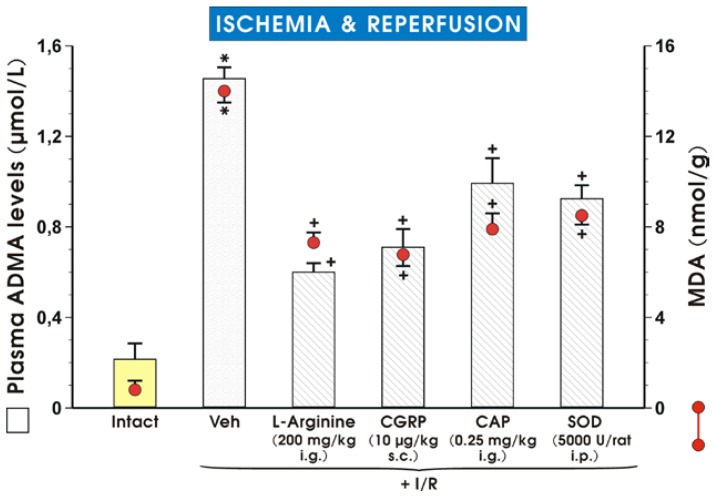
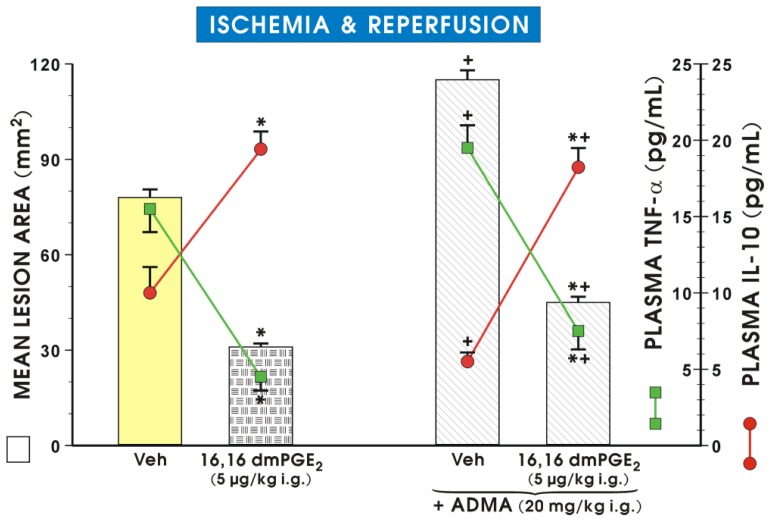
Asymmetric dimethylarginine (ADMA) is an endogenous nitric oxide (NO) synthesis inhibitor and pro-inflammatory factor. We investigated the role of ADMA in rat gastric mucosa compromised through 30 min of gastric ischemia (I) and 3 h of reperfusion (R). These I/R animals were pretreated with ADMA with or without the combination of L-arginine, calcitonin gene-related peptide (CGRP) or a small dose of capsaicin, all of which are known to afford protection against gastric lesions, or with a farnesoid X receptor (FXR) agonist, GW 4064, to increase the metabolism of ADMA. In the second series, ADMA was administered to capsaicin-denervated rats. The area of gastric damage was measured with planimetry, gastric blood flow (GBF) was determined by H2-gas clearance, and plasma ADMA and CGRP levels were determined using ELISA and RIA. ADMA significantly increased I/R-induced gastric injury while significantly decreasing GBF, the luminal NO content, and the plasma level of CGRP. This effect of ADMA was significantly attenuated by pretreatment with CGRP, L-arginine, capsaicin, or a PGE2 analogue. In GW4064 pretreated animals, the I/R injury was significantly reduced and this effect was abolished by co-treatment with ADMA. I/R damage potentiated by ADMA was exacerbated in capsaicin-denervated animals with a further reduction of CGRP. Plasma levels of IL-10 were significantly decreased while malonylodialdehyde (MDA) and plasma TNF-α contents were significantly increased by ADMA. In conclusion, ADMA aggravates I/R-induced gastric lesions due to a decrease of GBF, which is mediated by a fall in NO and CGRP release, and the enhancement of lipid peroxidation and its pro-inflammatory properties.
Figures
References
-
- Leiper J., Vallance P. Biological significance of endogenous methylarginines that inhibit nitric oxide synthases. Cardiovasc Res. 1999;43:542–548. - PubMed
-
- Leiper J., Vallance P. The synthesis and metabolism of asymmetric dimethylarginine (ADMA) Eur. J. Clin. Pharmacol. 2006;62:33–38.
-
- Beltowski J., Kedra A. Asymmetric dimethylarginine (ADMA) as a target for pharmacotherapy. Pharmacol. Rep. 2006;58:159–178. - PubMed
-
- Wilcken D.E., Sim A.S., Wang J., Wang X.L. Asymmetric dimethylarginine (ADMA) in vascular renal and hepatic disease and the regulatory role of l-arginine on its metabolism. Mol. Genet. Metab. 2007;91:309–317. - PubMed
Publication types
MeSH terms
Substances
LinkOut - more resources
Full Text Sources
Other Literature Sources
Research Materials
