Causes and patterns of spine trauma in children and adolescents in Saudi Arabia: implications for injury prevention
- PMID: 24658551
- PMCID: PMC6074928
- DOI: 10.5144/0256-4947.2014.31
Causes and patterns of spine trauma in children and adolescents in Saudi Arabia: implications for injury prevention
Abstract
Background and objectives: Knowledge regarding traumatic spine injuries (TSIs) is essential for effective prevention strategies, particularly in the developing world, where majority of the population is younger and organized prevention programs are scarce. Therefore, our objective was to describe TSI mechanisms, demographics, patterns, and outcomes in children and adolescents.
Design and settings: Retrospective chart review in a major trauma center from May 2001 to May 2009 in Riyadh, Saudi Arabia.
Patients and methods: Detailed chart reviews were done for all consecutive TSI patients ≤18 years old.Cases were identified through the trauma database registry that included admitted patients.
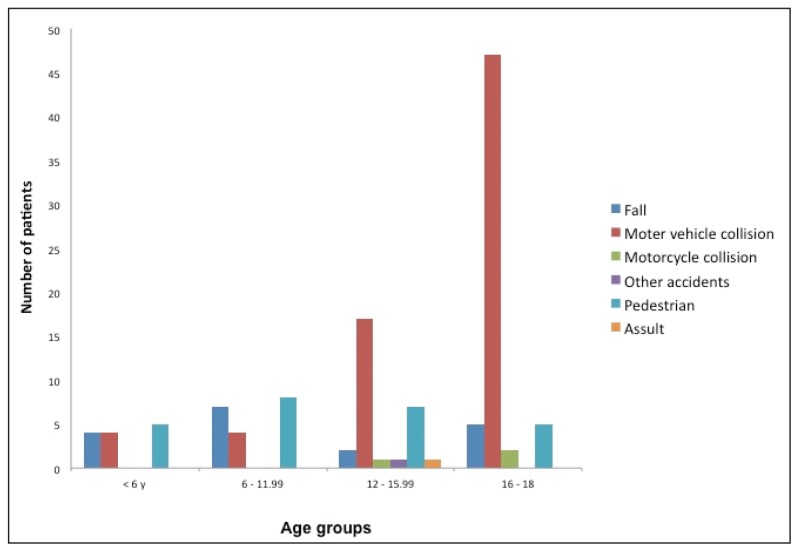
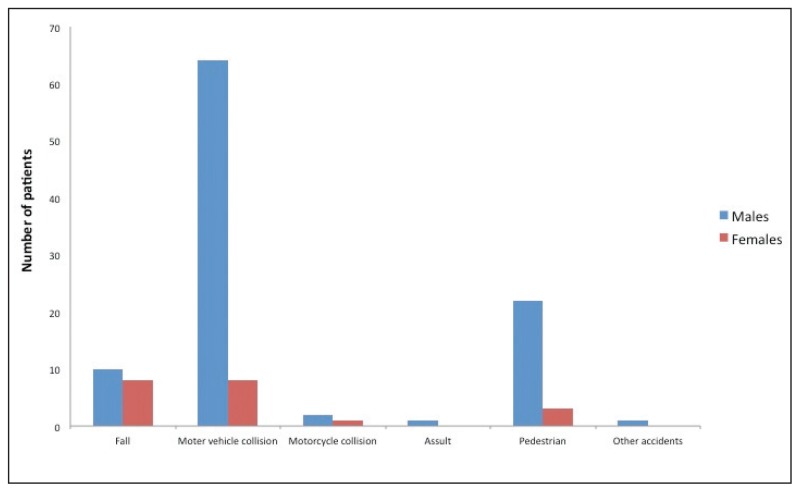
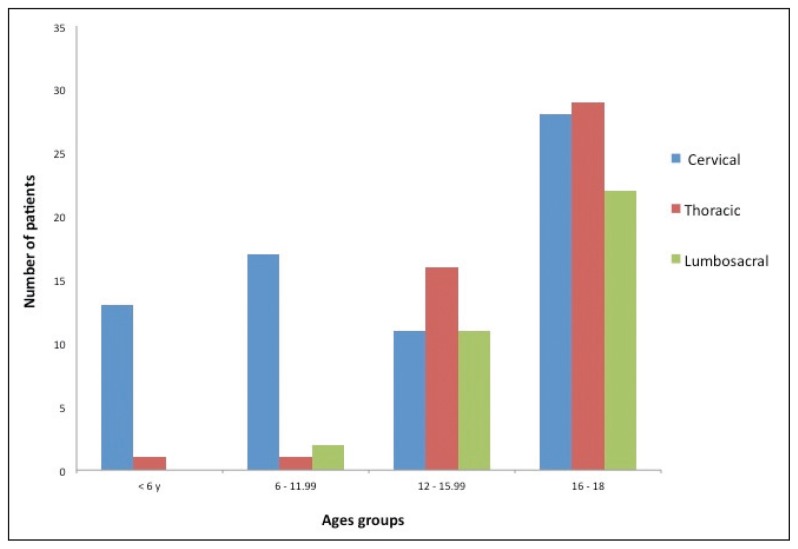
Results: Of the 3796 cases identified, 120 cases (3.2%) sustained 141 TSIs (mean age: 13.5 years; males:83.8%). TSI was most common among children from 16 to 18 years old. Overall, motor vehicle collision (MVC)was the most common injury mechanism (60.8%). However, younger patients (<12 years) sustained more pedestrian injuries (40.6%). Among MVC cases with known seat belt statuses (43.8%), 90.6% were not wearing seat belts. The cervical spine level was the most commonly affected (55.8%) region, especially in children <12 years old (88%). More than 1 affected spinal level was found in 23.3% cases. Spinal cord injuries were found in 19.2% cases. Overall, mortality was 8.3%, and half of these mortalities were secondary to pedestrian injuries. A total of 22.7% of cases were discharged with neurological deficits.
Conclusion: The high frequency and severity of MVC and pedestrian injuries observed in the present study raise significant concerns regarding the safety of children on the roads. Spine involvement was age specific;younger patients tended to have more cervical injuries, and older patients exhibited more thoracic spine involvement.
Figures
References
MeSH terms
LinkOut - more resources
Full Text Sources
Other Literature Sources
Medical