


Role of Grooming in Reducing Tick Load in Wild Baboons (Papio cynocephalus)
- PMID: 24659824
- PMCID: PMC3961061
- DOI: 10.1016/j.anbehav.2012.12.012
Role of Grooming in Reducing Tick Load in Wild Baboons (Papio cynocephalus)
Abstract
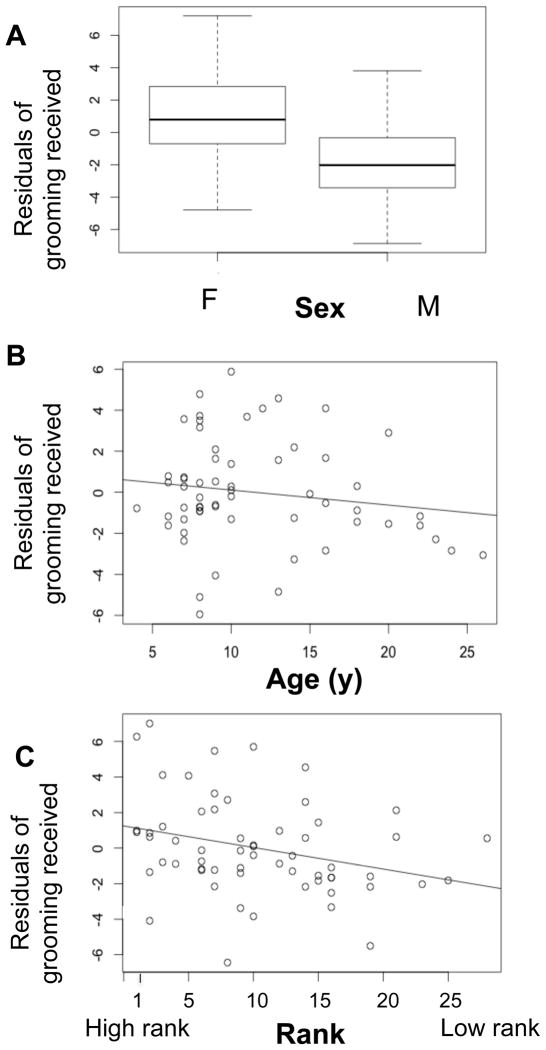
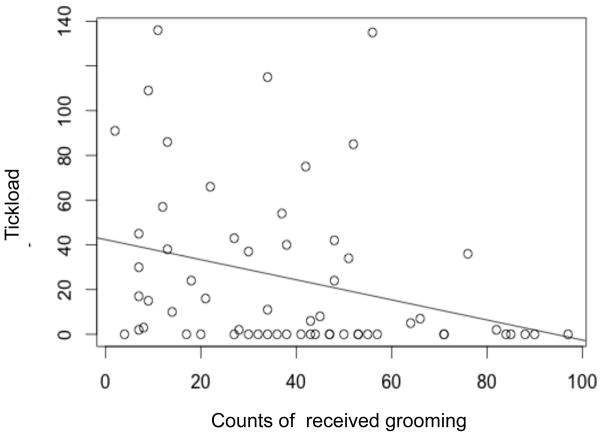
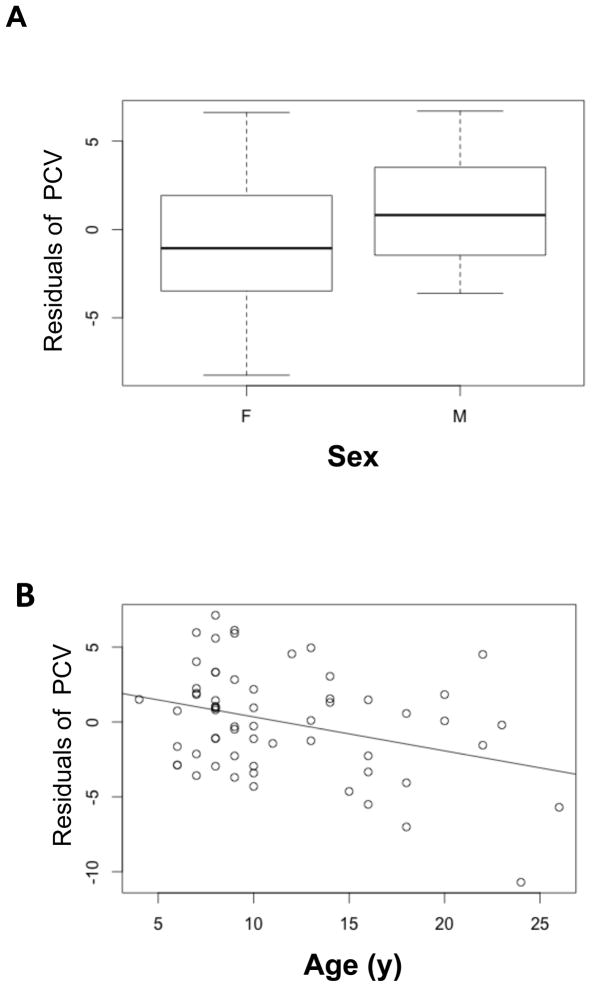
Nonhuman primate species spend a conspicuous amount of time grooming during social interactions, a behavior that probably serves both social and health-related functions. While the social implications of grooming have been relatively well studied, less attention has been paid to the health benefits, especially the removal of ectoparasites, which may act as vectors in disease transmission. In this study, we examined the relationship between grooming behavior, tick load (number of ticks), and haemoprotozoan infection status in a population of wild free-ranging baboons (Papio cynocephalus). We found that the amount of grooming received was influenced by an individual's age, sex and dominance rank. The amount of grooming received, in turn, affected the tick load of an individual. Baboons with higher tick loads had lower packed red cell volume (PCV or haematocrit), one general measure of health status. We detected a tick-borne haemoprotozoan, Babesia microti, but its low prevalence in the population precluded identifying sources of variance in infection.
Keywords: baboons; grooming; haemoparasitic infections; ticks.
Figures
References
-
- Alberts SC, Altmann J. Balancing Costs and Opportunities - Dispersal in Male Baboons. American Naturalist. 1995;145:279–306.
-
- Alberts SC, Altmann J. Immigration and hybridization patterns of yellow and anubis baboons in and around Amboseli, Kenya. American Journal of Primatology. 2001;53:139–154. - PubMed
-
- Alberts SC, Watts HE, Altmann J. Queuing and queue-jumping: long-term patterns of reproductive skew in male savannah baboons, Papio cynocephalus. Animal Behaviour. 2003;65:821–840.
-
- Altmann J. Observational Study of Behavior - Sampling Methods. Behaviour. 1974;49:227–267. - PubMed
-
- Altmann J. Baboon Mothers and Infants. Cambridge: Harvard University Press; 1980.
Grants and funding
LinkOut - more resources
Full Text Sources
Other Literature Sources