


The Effects of Approach-Avoidance Modification on Social Anxiety Disorder: A Pilot Study
- PMID: 24659832
- PMCID: PMC3960001
- DOI: 10.1007/s10608-013-9580-x
The Effects of Approach-Avoidance Modification on Social Anxiety Disorder: A Pilot Study
Abstract
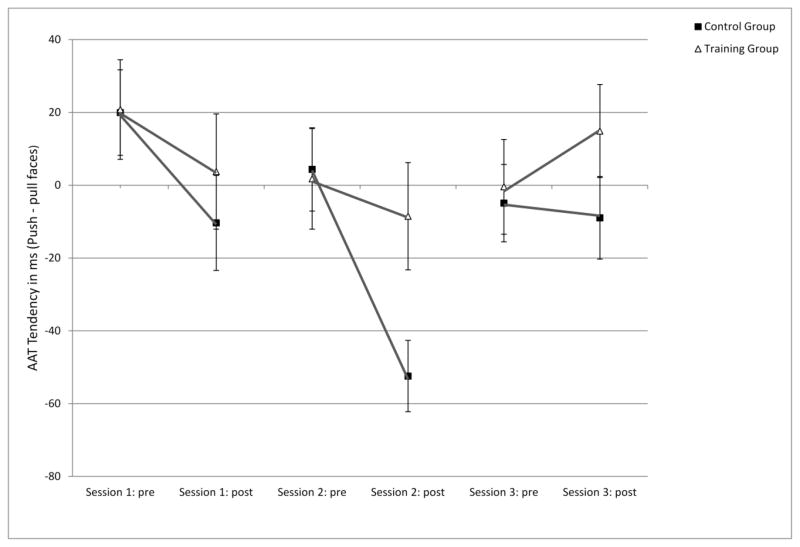
Cognitive bias modification has recently been discussed as a possible intervention for mental disorders. A specific form of this novel treatment approach is approach-avoidance modification. In order to examine the efficacy of approach-avoidance modification for positive stimuli associated with social anxiety, we recruited 43 individuals with social anxiety disorder and randomly assigned them to a training (implicit training to approach smiling faces) or a control (equal approach and avoidance of smiling faces) condition in three sessions over the course of a one-week period. Dependent measures included clinician ratings, self-report measures of social anxiety, and overt behavior during behavioral approach tasks. No group differences in any of the outcome measures were observed after training. In addition, while individuals in the training group showed increased approach tendency in one of the sessions, this effect was inconsistent across the three sessions and did not result in long-term changes in implicit approach tendencies between the groups over the course of the entire study. These results suggest that approach-avoidance modification might result in short-lasting effects on implicit approach tendencies towards feared positive stimuli, but this modification may not result in meaningful behavioral change or symptom reduction in individuals with social anxiety disorder.
Keywords: approach bias; cognitive bias modification; implicit interventions; social anxiety disorder.
Figures
References
-
- American Psychiatric Association. Diagnostic and statistical manual of mental disorders. 4. Washington, DC: APA; 2000. text revision.
-
- Beck AT, Ward C, Mendelson M, Mock J, Erbaugh J. An inventory for measuring depression. Archives of General Psychiatry. 1961;4:561–571. - PubMed
Grants and funding
LinkOut - more resources
Full Text Sources
Other Literature Sources