Do hassles and uplifts change with age? Longitudinal findings from the VA normative aging study
- PMID: 24660796
- PMCID: PMC4271845
- DOI: 10.1037/a0035042
Do hassles and uplifts change with age? Longitudinal findings from the VA normative aging study
Abstract
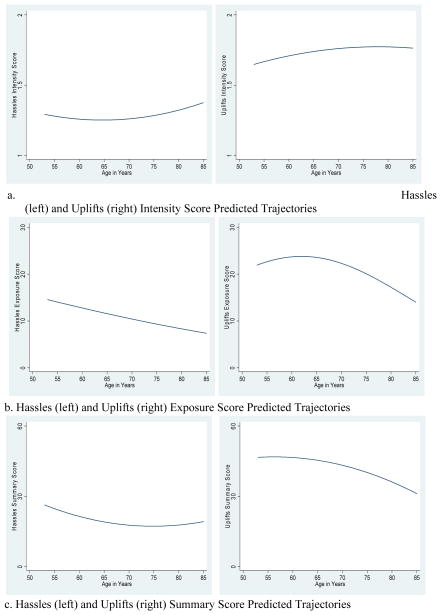
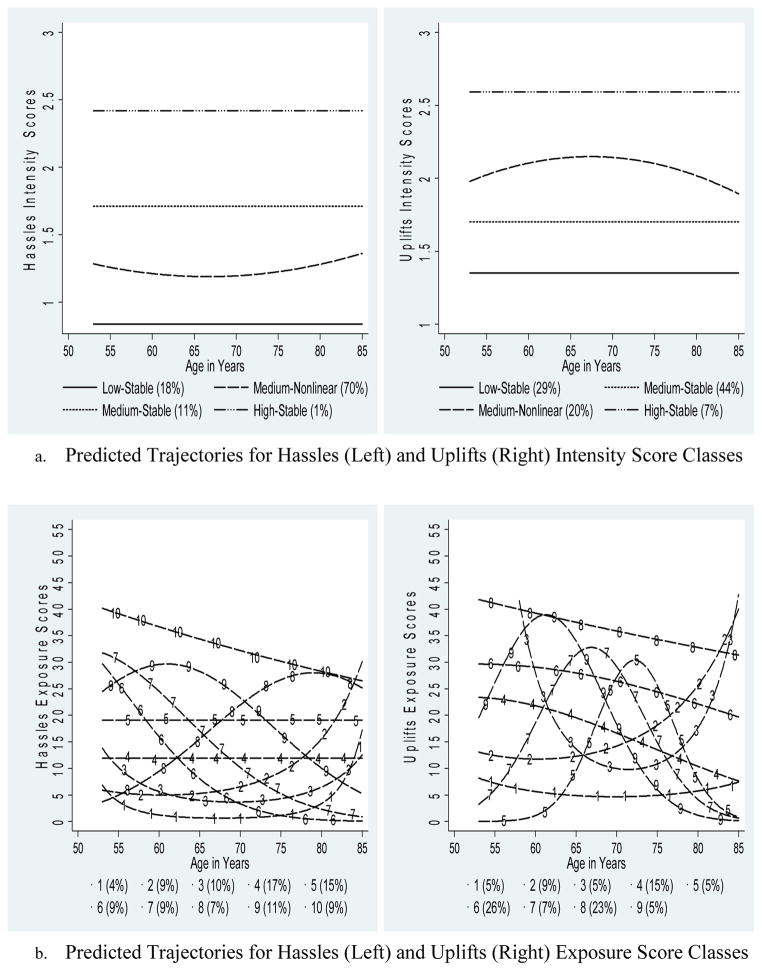
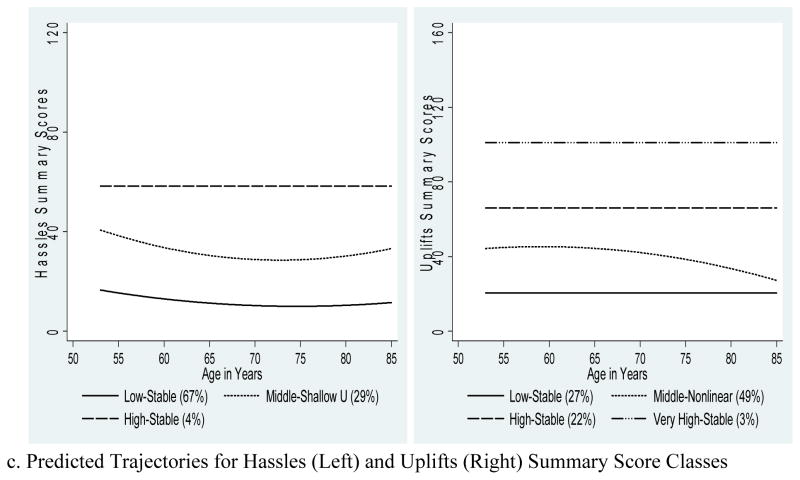
To examine emotion regulation in later life, we contrasted the modified hedonic treadmill theory with developmental theories, using hassles and uplifts to assess emotion regulation in context. The sample was 1,315 men from the VA Normative Aging Study aged 53 to 85 years, who completed 3,894 observations between 1989 and 2004. We computed 3 scores for both hassles and uplifts: intensity (ratings reflecting appraisal processes), exposure (count), and summary (total) scores. Growth curves over age showed marked differences in trajectory patterns for intensity and exposure scores. Although exposure to hassles and uplifts decreased in later life, intensity scores increased. Group-based modeling showed individual differences in patterns of hassles and uplifts intensity and exposure, with relative stability in uplifts intensity, normative nonlinear changes in hassles intensity, and complex patterns of individual differences in exposure for both hassles and uplifts. Analyses with the summary scores showed that emotion regulation in later life is a function of both developmental change and contextual exposure, with different patterns emerging for hassles and uplifts. Thus, support was found for both hedonic treadmill and developmental change theories, reflecting different aspects of emotion regulation in late life.
(c) 2014 APA, all rights reserved.
Figures
References
-
- Aldwin CM. Stress, coping, and development. 2. New York: Guilford; 2007.
-
- Aldwin CM, Sutton KJ, Chiara G, Spiro A., III Age differences in stress, coping, and appraisal: Findings from the Normative Aging Study. The Journals of Gerontology Series B, Psychological Sciences and Social Sciences. 1996;51(4):P179–88. - PubMed
-
- Aldwin CM, Skinner E, Zimmer-Gebeck M, Taylor A. Coping and self-regulation across the lifespan. In: Fingerman K, Berg C, Antonucci T, editors. Handbook of lifespan psychology. New York, NY: Springer; 2011. pp. 561–588.
-
- Aldwin CM, Park CL, Spiro A., III . Health psychology and aging: Moving to the next generation of research. In: Aldwin CM, Park CL, Spiro A III, editors. Handbook of health psychology and aging. New York, NY: Guilford Press; 2007. pp. 413–426.
-
- Almeida DM. Resilience and vulnerability to daily stressors assessed via diary methods. Current Directions in Psychological Science. 2005;14(2):64–68. doi: 10.1111/j.0963-7214.2005.00336.x. - DOI
Publication types
MeSH terms
Grants and funding
LinkOut - more resources
Full Text Sources
Other Literature Sources
Medical