


The structure of the human vaginal stratum corneum and its role in immune defense
- PMID: 24661416
- PMCID: PMC4024347
- DOI: 10.1111/aji.12230
The structure of the human vaginal stratum corneum and its role in immune defense
Abstract
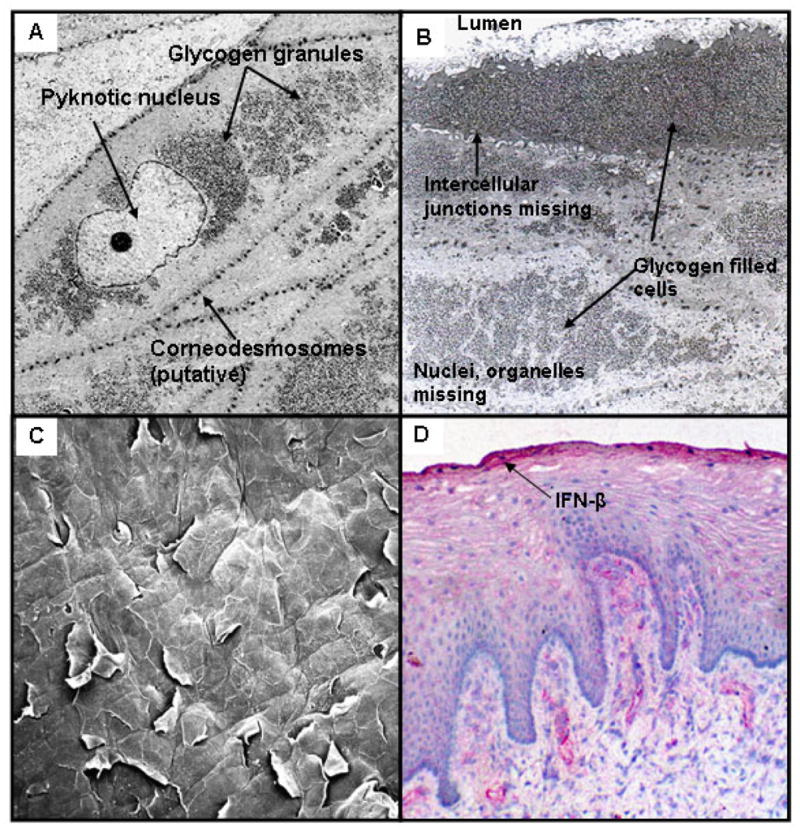
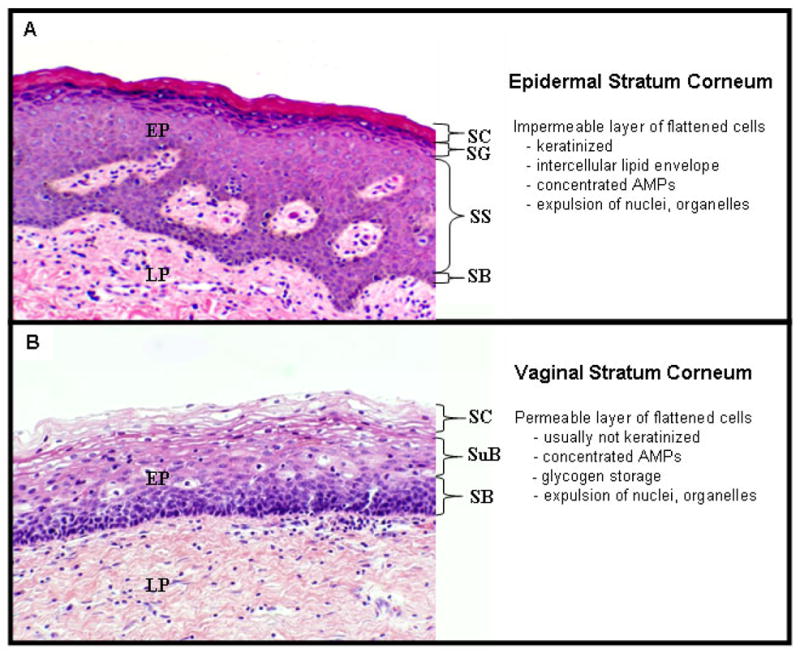
The superficial layers of the human vaginal epithelium, which form an interface between host and environment, are comprised of dead flattened cells that have undergone a terminal cell differentiation program called cornification. This entails extrusion of nuclei and intercellular organelles, and the depletion of functional DNA and RNA precluding the synthesis of new proteins. As a consequence, the terminally differentiated cells do not maintain robust intercellular junctions and have a diminished capacity to actively respond to microbial exposure, yet the vaginal stratum corneum (SC) mounts an effective defense against invasive microbial infections. The vaginal SC in reproductive-aged women is comprised of loosely connected glycogen-filled cells, which are permeable to bacterial and viral microbes as well as molecular and cellular mediators of immune defense. We propose here that the vaginal SC provides a unique microenvironment that maintains vaginal health by fostering endogenous lactobacilli and retaining critical mediators of acquired and innate immunity. A better understanding of the molecular and physicochemical properties of the vaginal SC could promote the design of more effective topical drugs and microbicides.
Keywords: Female genital tract; HIV; immunity; microbicides; microflora; stratum corneum; vagina.
© 2014 John Wiley & Sons A/S. Published by John Wiley & Sons Ltd.
Figures
References
-
- Pendergrass PB, Belovicz MW, Reeves CA. Surface Area of the Human Vagina as Measured from Vinyl Polysiloxane Casts. Gynecol Obstet Invest. 2003;55:110–113. - PubMed
-
- Brunham RC, Rey-Ladino J. Immunology of Chlamydia infection: Implications for a Chlamydia trachomatis vaccine. Nat Rev Immunol. 2005;5:149–161. - PubMed
Publication types
MeSH terms
Grants and funding
LinkOut - more resources
Full Text Sources
Other Literature Sources
Medical
Research Materials
