


A systematic review of special events to promote breast, cervical and colorectal cancer screening in the United States
- PMID: 24661503
- PMCID: PMC3987802
- DOI: 10.1186/1471-2458-14-274
A systematic review of special events to promote breast, cervical and colorectal cancer screening in the United States
Abstract
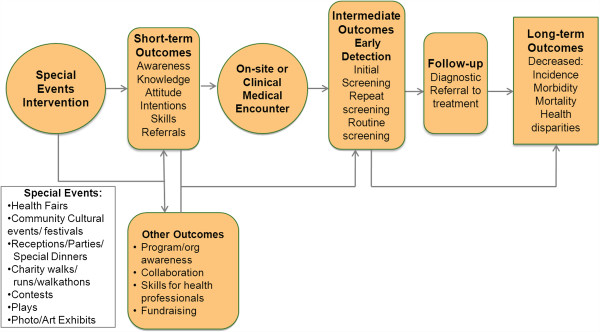
Background: Special events are common community-based strategies for health promotion. This paper presents findings from a systematic literature review on the impact of special events to promote breast, cervical or colorectal cancer education and screening.
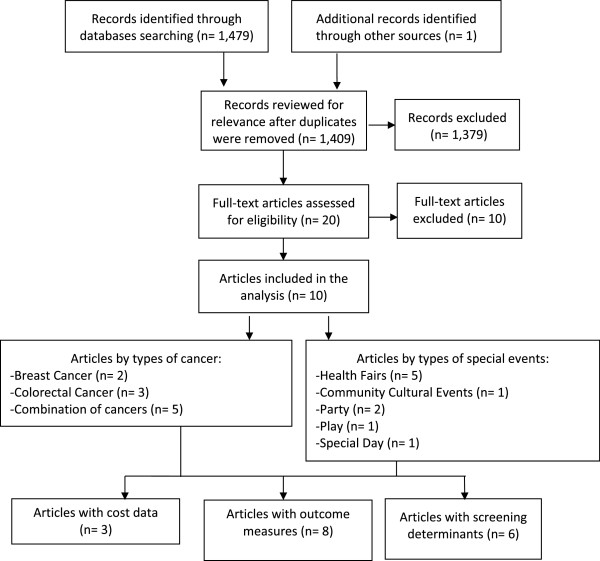
Methods: Articles in English that focused on special events involving breast, cervical, and/or colorectal cancer conducted in the U.S. and published between January 1990 and December 2011 were identified from seven databases: Ovid, Web of Science, CINAHL, PsycINFO, Sociological Abstract, Cochrane Libraries, and EconLit. Study inclusion and data extraction were independently validated by two researchers.
Results: Of the 20 articles selected for screening out of 1,409, ten articles on special events reported outcome data. Five types of special events were found: health fairs, parties, cultural events, special days, and plays. Many focused on breast cancer only, or in combination with other cancers. Reach ranged from 50-1732 participants. All special events used at least one evidence-based strategy suggested by the Community Guide to Preventive Services, such as small media, one-on-one education, and reducing structural barriers. For cancer screening as an outcome of the events, mammography screening rates ranged from 4.8% to 88%, Pap testing was 3.9%, and clinical breast exams ranged from 9.1% to 100%. For colorectal screening, FOBT ranged from 29.4% to 76%, and sigmoidoscopy was 100% at one event. Outcome measures included intentions to get screened, scheduled appointments, uptake of clinical exams, and participation in cancer screening.
Conclusions: Special events found in the review varied and used evidence-based strategies. Screening data suggest that some special events can lead to increases in cancer screening, especially if they provide onsite screening services. However, there is insufficient evidence to demonstrate that special events are effective in increasing cancer screening. The heterogeneity of populations served, event activities, outcome variables assessed, and the reliance on self-report to measure screening limit conclusions. This study highlights the need for further research to determine the effectiveness of special events to increase cancer screening.
Figures
References
-
- Hoyert DL, Xu J. Deaths: Preliminary data for 2011. National Vital Statistics Reports. 2012;61(6):1–51. - PubMed
-
- Eheman C, Henley SJ, Ballard-Barbash R, Jacobs E, Schymura MJ, Noone A, Edwards BK. Annual report to the nation on the status of cancer, 1975–2008, featuring cancers associated with excess weight and lack of sufficient physical activity. Cancer. 2012;118(9):2338–66. doi: 10.1002/cncr.27514. - DOI - PMC - PubMed
-
- CDC Wonder National Program of Cancer Registries, United States Department of Health and Human Services, Centers for Disease Control and Prevention and National Cancer Institute. 1999–2009 Incidence. 2011. http://wonder.cdc.gov/cancernpcr-v2009.html.
-
- United States Cancer Statistics, WONDER Online Database. 1999–2009 Mortality. 2011. http://wonder.cdc.gov/CancerMort-v2009.html.
Publication types
MeSH terms
Grants and funding
LinkOut - more resources
Full Text Sources
Other Literature Sources
Medical
Molecular Biology Databases
Research Materials
