


No clinically significant changes in pulmonary function following stereotactic body radiation therapy for early- stage peripheral non-small cell lung cancer: an analysis of RTOG 0236
- PMID: 24661663
- PMCID: PMC4058437
- DOI: 10.1016/j.ijrobp.2013.12.050
No clinically significant changes in pulmonary function following stereotactic body radiation therapy for early- stage peripheral non-small cell lung cancer: an analysis of RTOG 0236
Abstract
Purpose: To investigate pulmonary function test (PFT) results and arterial blood gas changes (complete PFT) following stereotactic body radiation therapy (SBRT) and to see whether baseline PFT correlates with lung toxicity and overall survival in medically inoperable patients receiving SBRT for early stage, peripheral, non-small cell lung cancer (NSCLC).
Methods and materials: During the 2-year follow-up, PFT data were collected for patients with T1-T2N0M0 peripheral NSCLC who received effectively 18 Gy × 3 in a phase 2 North American multicenter study (Radiation Therapy Oncology Group [RTOG] protocol 0236). Pulmonary toxicity was graded by using the RTOG SBRT pulmonary toxicity scale. Paired Wilcoxon signed rank test, logistic regression model, and Kaplan-Meier method were used for statistical analysis.
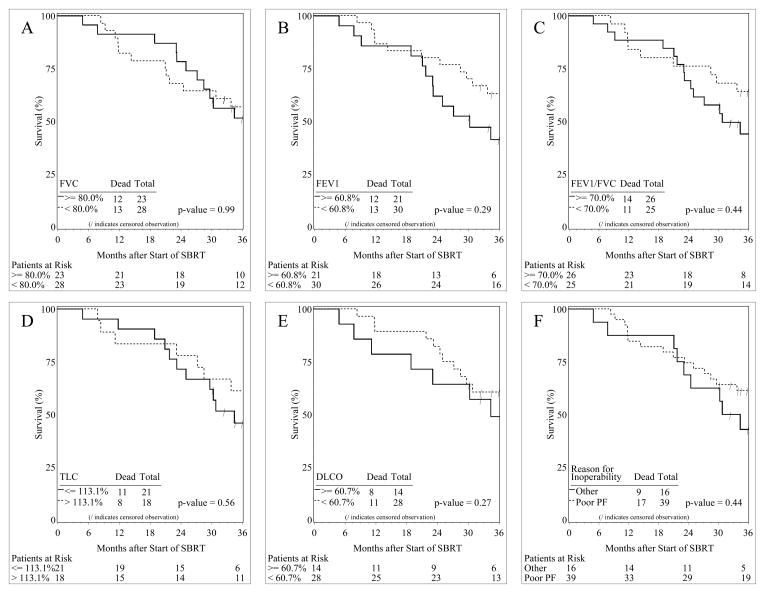
Results: At 2 years, mean percentage predicted forced expiratory volume in the first second and diffusing capacity for carbon monoxide declines were 5.8% and 6.3%, respectively, with minimal changes in arterial blood gases and no significant decline in oxygen saturation. Baseline PFT was not predictive of any pulmonary toxicity following SBRT. Whole-lung V5 (the percentage of normal lung tissue receiving 5 Gy), V10, V20, and mean dose to the whole lung were almost identical between patients who developed pneumonitis and patients who were pneumonitis-free. Poor baseline PFT did not predict decreased overall survival. Patients with poor baseline PFT as the reason for medical inoperability had higher median and overall survival rates than patients with normal baseline PFT values but with cardiac morbidity.
Conclusions: Poor baseline PFT did not appear to predict pulmonary toxicity or decreased overall survival after SBRT in this medically inoperable population. Poor baseline PFT alone should not be used to exclude patients with early stage lung cancer from treatment with SBRT.
Copyright © 2014 Elsevier Inc. All rights reserved.
Figures
References
-
- Nagata Y, Takayama K, Matsuo Y, et al. Clinical outcomes of a phase I/II study of 48 Gy of stereotactic body radiotherapy in 4 fractions for primary lung cancer using a stereotactic body frame. Int J Radiat Oncol Biol Phys. 2005;63:1427–31. - PubMed
-
- Baumann P, Nyman J, Hoyer M, et al. Outcome in a prospective phase II trial of medically inoperable stage I non-small-cell lung cancer patients treated with stereotactic body radiotherapy. J Clin Oncol. 2009;27:3290–6. - PubMed
-
- Timmerman R, Papiez L, McGarry R, et al. Extracranial stereotactic radioablation: results of a phase I study in medically inoperable stage I non-small cell lung cancer. Chest. 2003;124:1946–55. - PubMed
-
- Onimaru R, Shirato H, Shimizu S, et al. Tolerance of organs at risk in small-volume, hypofractionated, image-guided radiotherapy for primary and metastatic lung cancers. Int J Radiat Oncol Biol Phys. 2003;56:126–35. - PubMed
Publication types
MeSH terms
Substances
Grants and funding
LinkOut - more resources
Full Text Sources
Other Literature Sources
Medical
